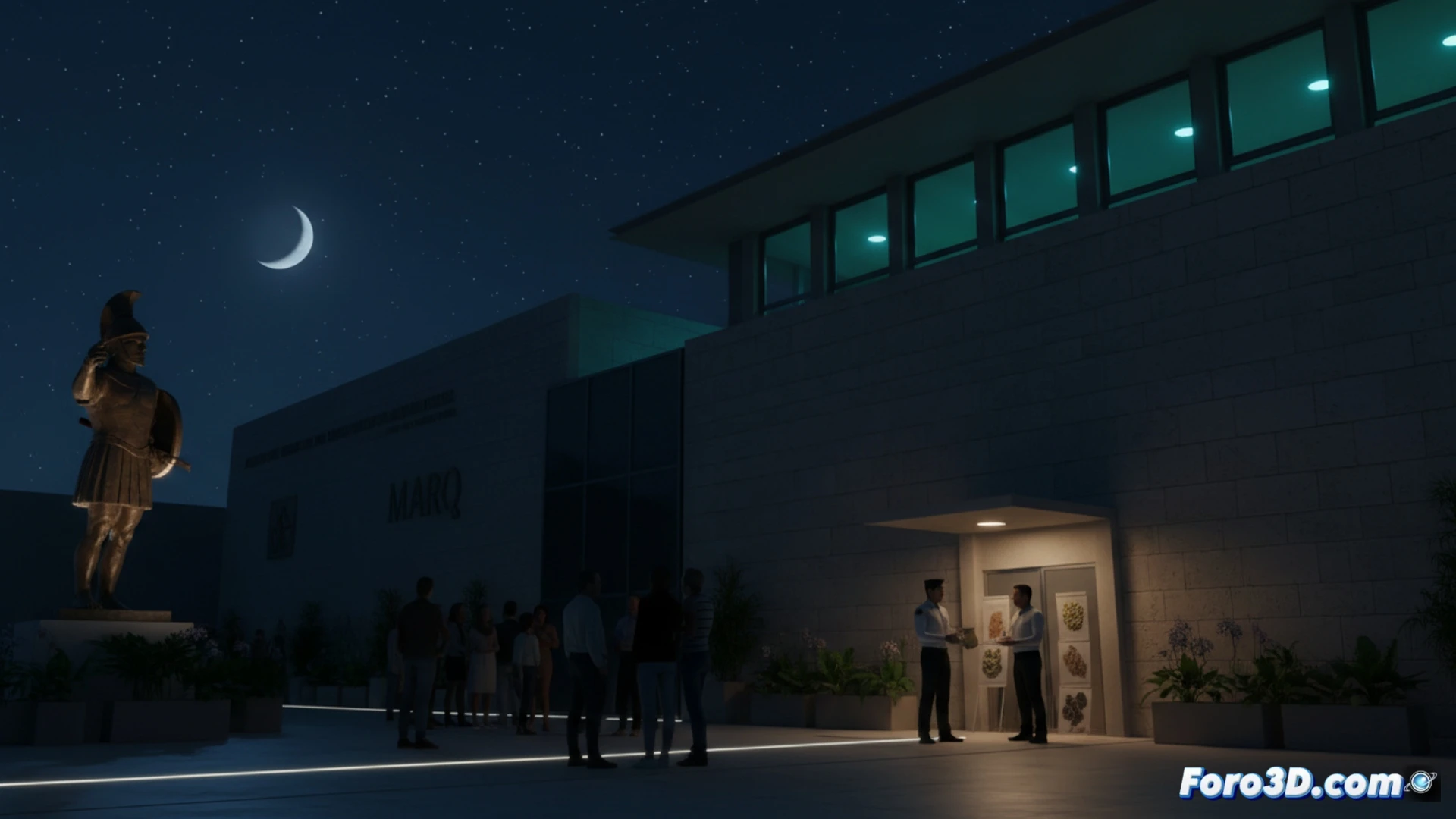
The Alicante Archaeological Museum, MARQ, joins Earth Hour with a symbolic gesture, turning off its facade and giving away seeds. This action demonstrates how cultural institutions expand their role, integrating environmental awareness into their discourse. But can a museum go further? The answer lies in technology, where 3D dissemination becomes a powerful bridge to connect heritage, education, and sustainability in an impactful way.
3D Tools for Immersive Ecological Awareness 🌱
3D technology allows transcending the one-time gesture. Imagine a virtual reconstruction at the MARQ that shows the evolution of the Alicante landscape over millennia, visualizing the effects of climate. Or an augmented reality experience that overlays data on resource consumption in antiquity versus today on an archaeological site. These tools turn abstract data into immersive visual narratives. The visitor not only receives a message but experiences it and understands the long-term consequences, making the call to action much more memorable and personal.
The Museum as a Laboratory for Sustainable Future 🔬
The true potential lies in using 3D dissemination to project solutions. Museums can employ interactive models to simulate the impact of different ecological policies on a territory or to visualize renewable energies integrated into heritage environments. Thus, they transform from guardians of the past into laboratories of the future, where technology serves to educate, inspire, and empower citizens. Sustainability ceases to be a distant concept to become a tangible and buildable future that also arises from culture.
How can museums and 3D disseminators use technology to create immersive experiences that educate about sustainability beyond symbolic gestures?
(PS: Teaching with 3D models is great, until the students ask to move the pieces and the computer crashes.)