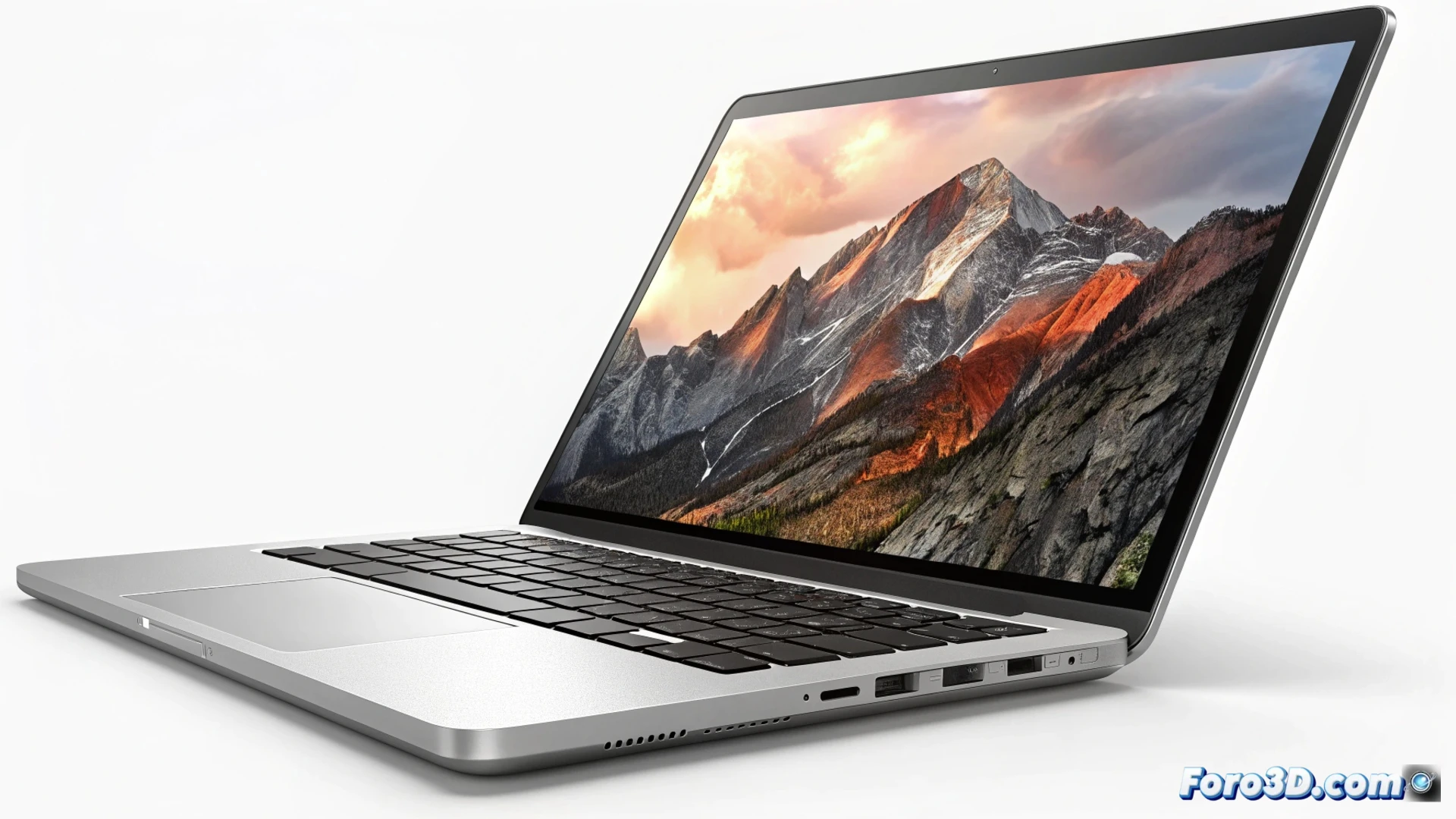
Apple has unveiled the MacBook Neo, an entry-level laptop priced at $599 whose overall performance matches that of the MacBook Air M1. The key lies in its hardware: it uses the same A18 Pro processor from the iPhone 16 Pro, a 6-core chip adapted for a laptop. For 3D artists on a tight budget, the key question arises: can this mobile architecture serve as a viable base for modeling, sculpting, or light rendering tasks? We analyze its specifications and limitations. 🤔
Technical Analysis: A18 Pro vs. M1, M3, and M4 in 3D Workloads 📊
In synthetic benchmarks, the Neo matches the M1 in multi-core performance, but its graphics performance is inferior. The version of the A18 Pro in this laptop has one fewer GPU core than in the iPhone, resulting in more modest Metal performance. In 3D applications, this implies limitations in complex viewports and GPU renders. Compared to an M3 or M4, the difference is abysmal in heavy scenes. Its strength is efficiency and a very contained price. For software that relies more on the CPU, such as certain simulation or baking operations, it could be functional, but it's not a machine for final renders or dense scenes.
Verdict: A First Step, with Clear Limitations ⚖️
The MacBook Neo positions itself as a learning tool or for very light 3D projects. It's an option for students or hobbyists who need portability and a stable ecosystem, but with awareness of its ceilings. For a studio or professional, even on a limited budget, a used laptop with an M1 chip or a PC with a dedicated GPU will offer much more power and future-proofing. The Neo is interesting only if price is the absolute priority and 3D performance expectations are very modest.
Can the MacBook Neo with the A18 Pro chip become a viable option for basic 3D modeling and learning, challenging traditional Windows laptops in the entry-level segment?
(P.S.: Your CPU heats up more than the debate between Blender and Maya)