The recent local phase of the Mathematics Olympiad in Lorca brought together more than a hundred students, fostering talent and logical thinking through traditional problems. This educational event, although effective, represents a perfect opportunity to ask ourselves: how could we transform these competitions with current technology? The integration of interactive 3D visualization could be the key to revolutionizing not only the way of competing, but also the way of understanding and teaching complex mathematical concepts.
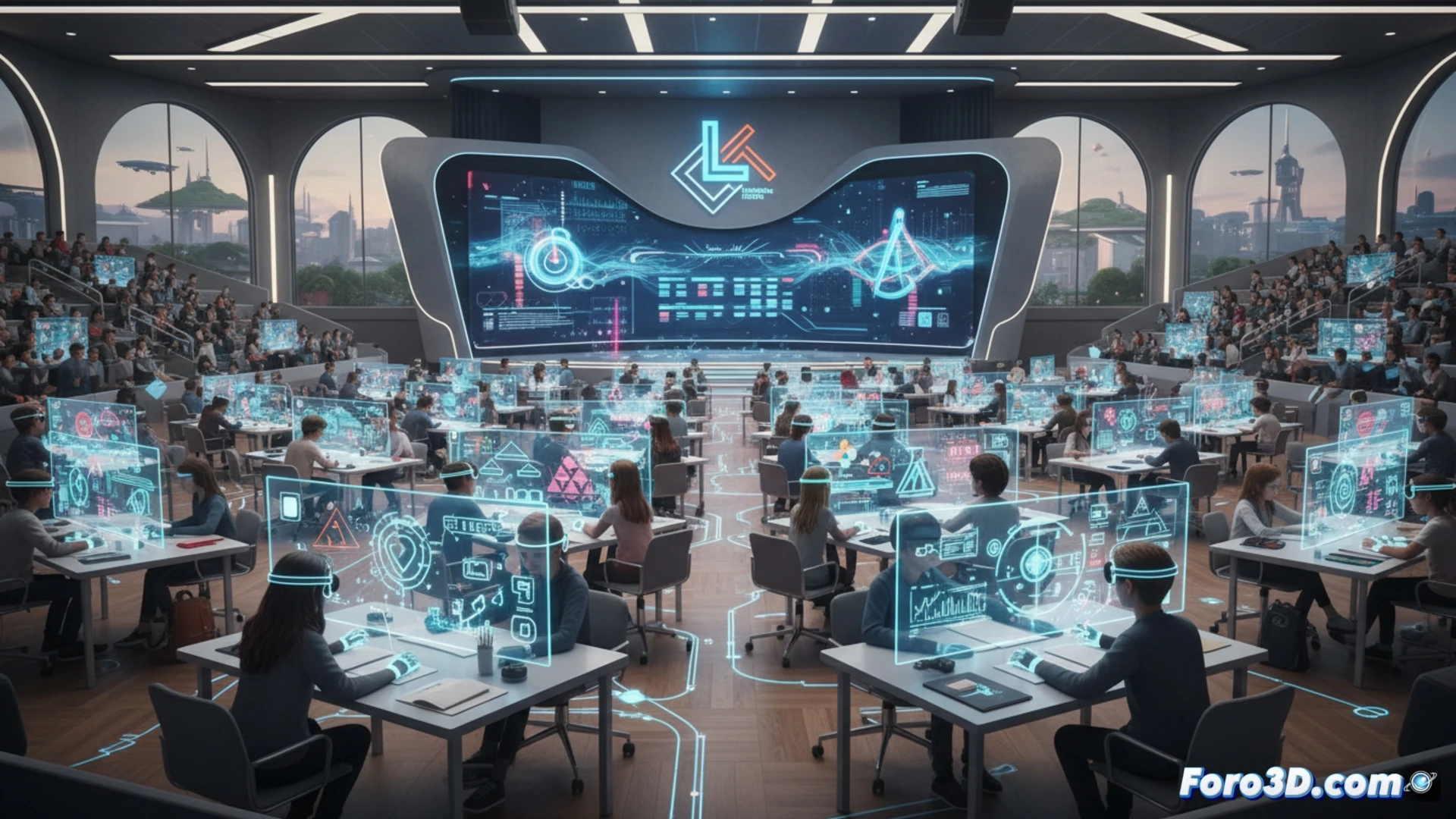
3D Modeling and VR: Tools for an Educational Revolution 🚀
Imagine that spatial geometry or optimization problems are not presented on paper, but within a Virtual Reality environment where the student can manipulate objects, change variables in real time, and observe the consequences in an immersive way. Software like Blender or web development tools like Three.js would allow creating interactive 3D models of the challenges. This turns solving into a tangible experience. Additionally, remote collaborative phases could be organized in virtual worlds, where teams manipulate the same model to find solutions, enhancing teamwork and making the competition accessible from anywhere.
Beyond the Competition: Immersive Outreach 🌍
The potential goes beyond the one-time event. The 3D models created for the olympiad would become valuable open outreach material. Interactive 3D infographics that explain the solutions to the problems could be published online, serving as a resource for teachers and students throughout the community. Thus, technology not only enriches the competition for a few, but democratizes and perpetuates knowledge, perfectly aligning with the ultimate goal of fostering interest in mathematics in a modern and deeply engaging way.
How could we use 3D modeling to visualize and solve complex geometric problems from the Mathematics Olympiad, transforming abstractions into interactive objects that improve understanding and learning?
(P.S.: Teaching with 3D models is great, until the students ask to move the pieces and the computer crashes.)