Spanish athlete Quique Llopis has won the silver medal in the 60-meter hurdles at the Torun World Championships, an achievement he attributes to years of effort and a support team. This success, part of a historic Spanish performance, is not the end, but a boost toward the next goal: the outdoor European Championships. Behind these elite marks, 3D technology has become an indispensable ally for breaking down every millisecond and every movement.
3D Biomechanics: breaking down hurdling technique 🏃♂️
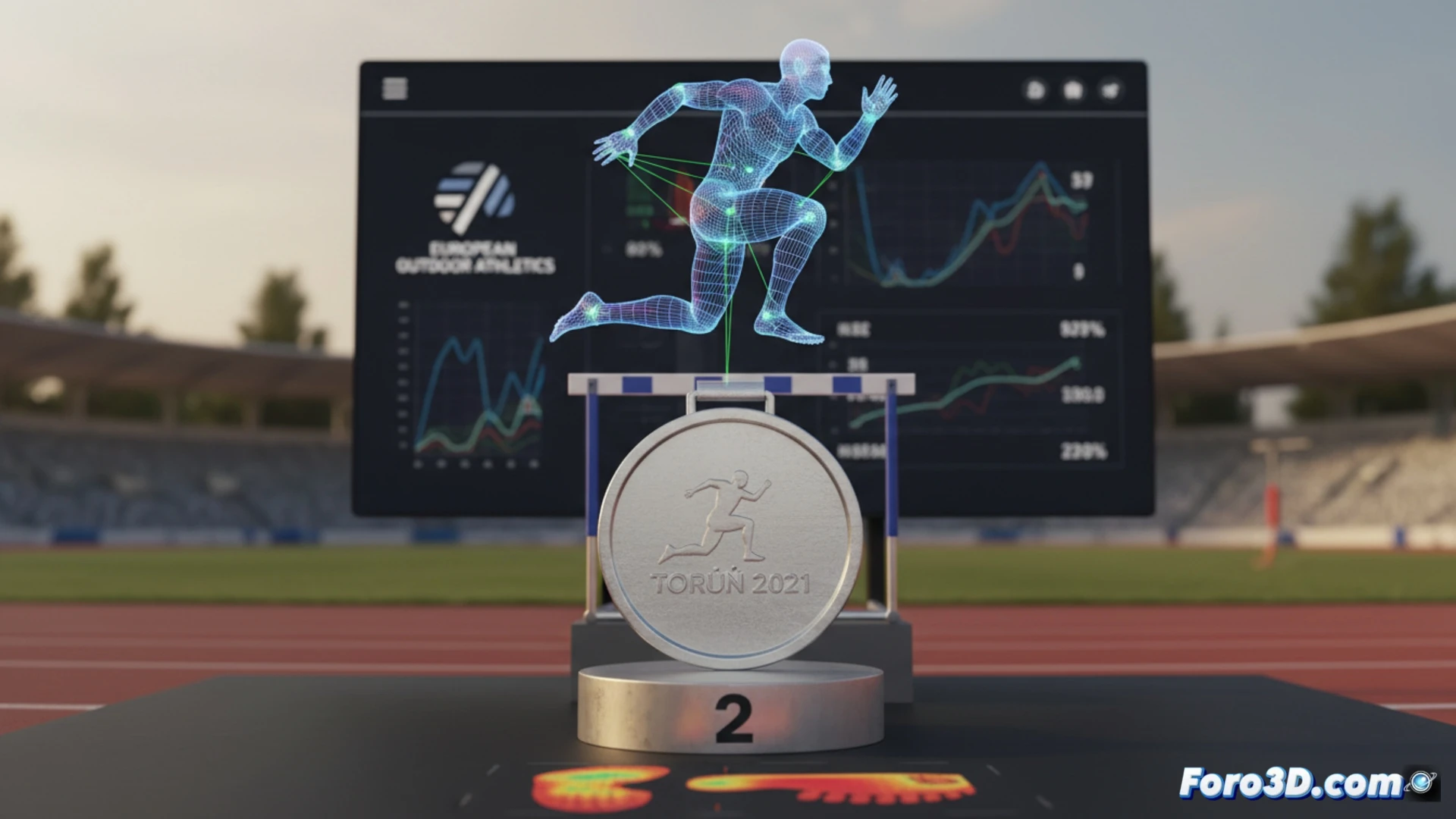
3D simulation and scanning enable a deep biomechanical analysis of gestures such as the takeoff, clearance, and landing at each hurdle. Using high-speed cameras and reconstruction software, an exact digital model of the athlete is generated. This allows measuring joint angles, center of gravity trajectories, and applied forces with a precision impossible to the naked eye. For a hurdler like Llopis, optimizing these parameters minimizes flight time and improves transitions between barriers, key in an event where errors are costly.
From data to strategy: planning with technology 📊
3D visualization of movements helps convert complex data into understandable information for the athlete and their coach. It allows identifying inefficiencies and working on specific corrections, reducing the risk of injuries from improper technical gestures. This scientific approach complements the coach's experience and the athlete's feel, creating a personalized training plan. Llopis's ambition for new titles will undoubtedly be supported by these tools, which transform the art of athletics into an applied science.
How has 3D motion analysis contributed to optimizing Quique Llopis's hurdling technique to reach the world podium?
(PS: at Foro3D we know that a 3D simulated penalty always goes in... unlike in real life)