The open source AI ecosystem faces a trust crisis following a serious security incident in LiteLLM, a project downloaded millions of times daily. Attackers compromised a dependency, the Trivy scanner, and injected malware into versions distributed for three hours. The situation is aggravated because the project boasted SOC 2 and ISO 27001 certifications issued by Delve, a startup publicly accused of fabricating audits. This case exposes critical systemic risks.
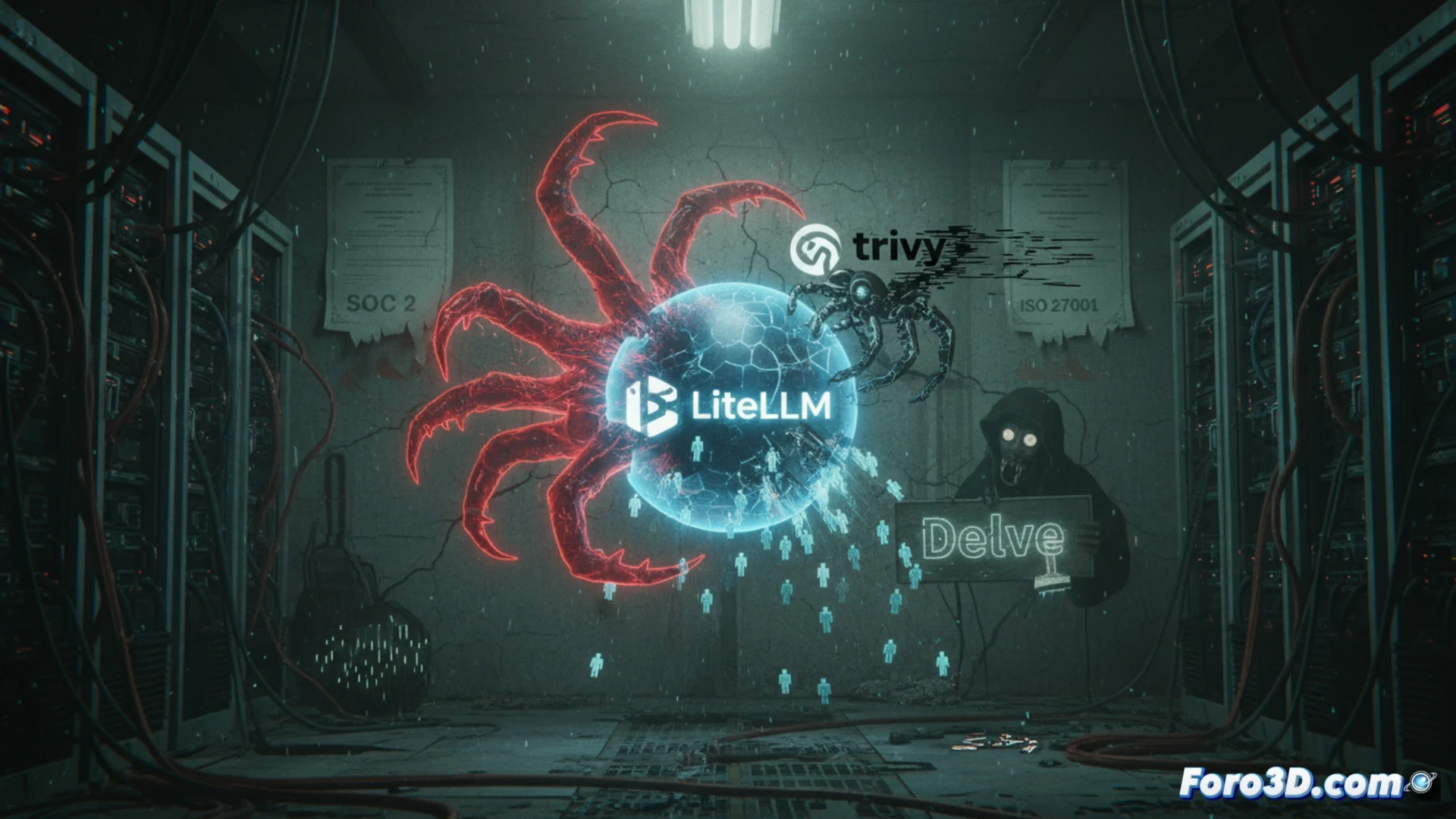
Anatomy of the attack: compromised supply chain and hollow security seals 🔍
The attack exploited two fundamental weak points. First, the fragility of the supply chain: by compromising Trivy, a security tool, the attackers poisoned a trusted dependency. Second, the possible ineffectiveness of security certifications. LiteLLM displayed SOC 2 and ISO 27001 seals, which theoretically audit rigorous controls. However, the issuer, Delve, is under accusations of providing fake audits. This creates a dangerous paradox: users trusted a certified project whose audit process may have been fraudulent, leaving security as mere theater.
Critical lessons: beyond trust and download ⚠️
This incident is a call to action for the community. It is not enough to trust a project's reputation or certification seals. Developers must verify the origin and rigor of audits, and assume that any dependency, especially security tools, is a potential attack vector. Responsibility lies in active verification and demanding total transparency in compliance processes, challenging the theatricality of security.
How can we ensure security and trust in open source AI projects without stifling the innovation and collaboration that make them valuable?
(P.S.: moderating an internet community is like herding cats... with keyboards and no sleep)