When setting up a 3D workstation, processor cooling is key to sustained performance. Although liquid cooling (AIO) is perceived as superior, the real difference with the best tower air coolers is often smaller than expected. The choice should not be based solely on aesthetics, but on a technical evaluation of the CPU's thermal needs and the chassis airflow. A wrong decision can mean unnecessary expense without tangible benefits in long renders or complex simulations.
Technical advantages for professional workflow 🔧
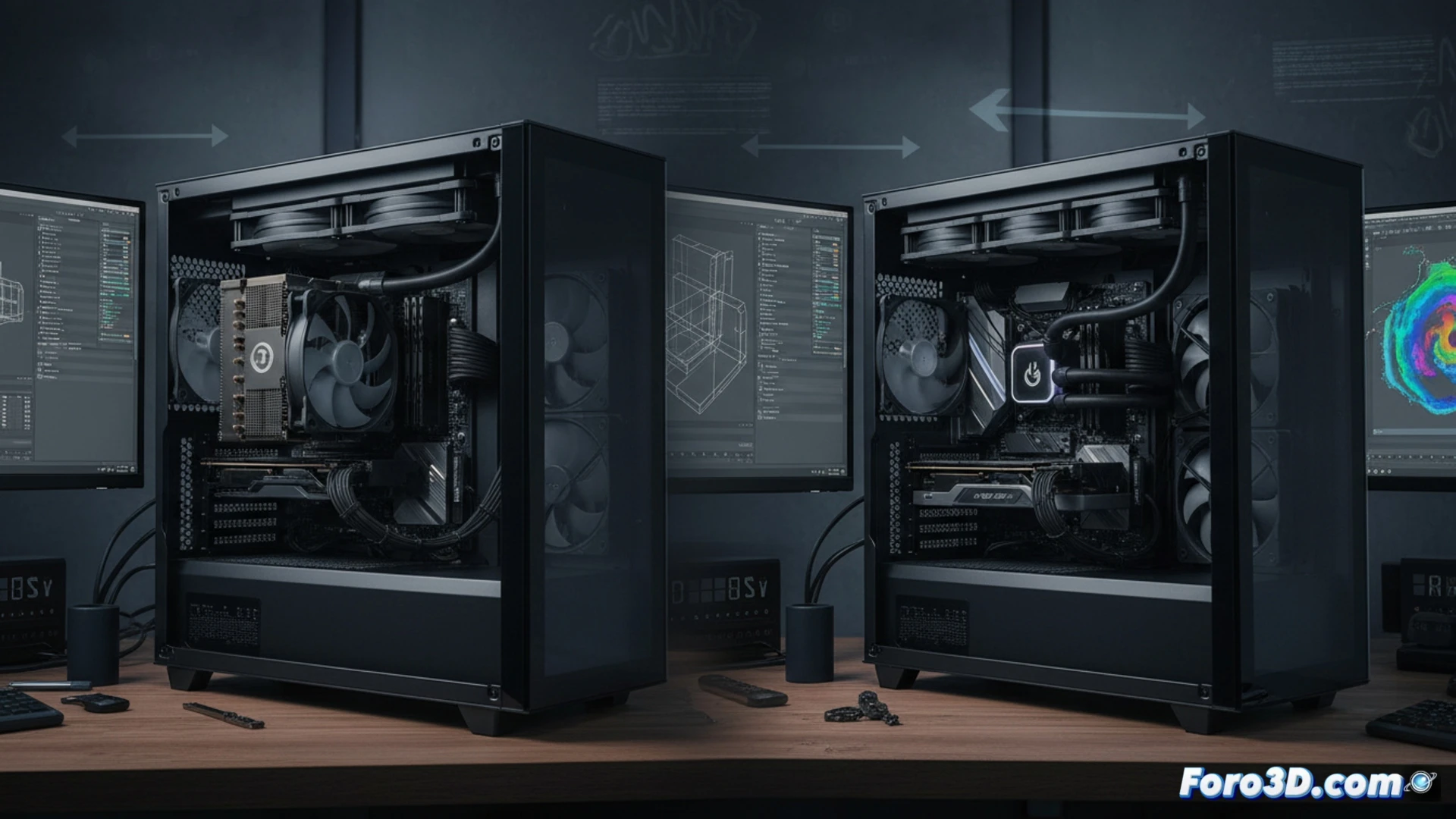
The main advantage of liquid cooling is its greater heat capacity. The liquid absorbs thermal load spikes more gradually than an air cooler, resulting in more stable temperatures during prolonged tasks like final rendering. This avoids sudden and noisy fan spikes, improving acoustics. In compact ITX cases, it is especially effective, as the radiator expels heat directly outside the chassis without overheating other components like RAM or GPU, and frees up critical space around the socket. For demanding overclocking seeking maximum sustained frequency in simulation applications, a large radiator offers superior dissipation.
Prioritize efficiency over fashion ⚖️
In conclusion, for a 3D workstation, first evaluate the real thermal loads of your software and CPU. A good high-end air cooler is usually sufficient and simpler. Opt for liquid cooling if you prioritize absolute silence, work in a small chassis, or perform aggressive overclocking to reduce render times. The investment must be justified by specific technical needs of your workflow, not by trends. Long-term thermal stability is the true goal.
Is liquid cooling really the best option to maintain sustained performance in prolonged renders, or do high-end air coolers offer a more reliable and quieter solution for a 3D workstation?
(PS: Your CPU heats up more than the debate between Blender and Maya)