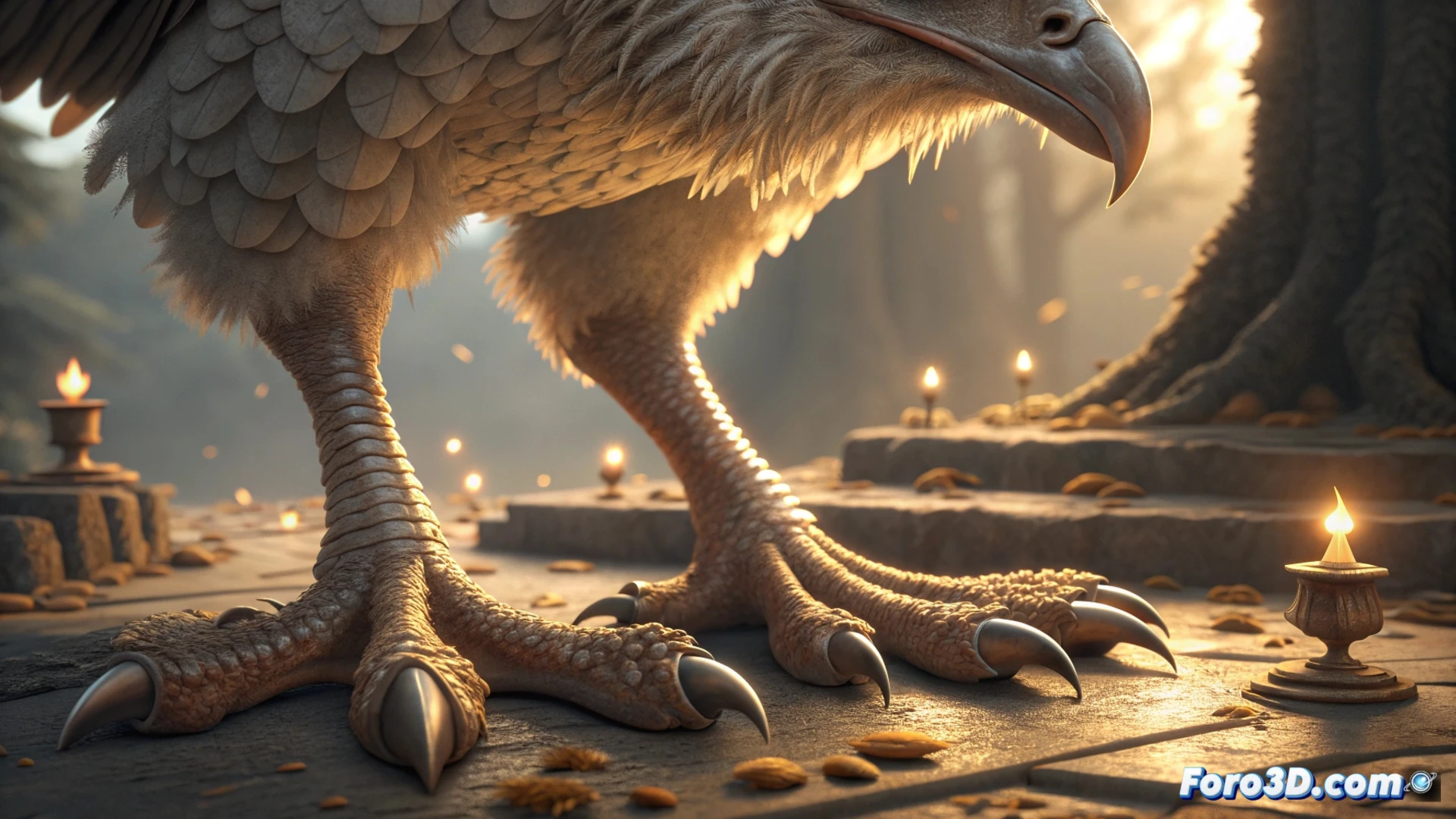
Jörg Grubmüller has released LimbKit, a free Blender add-on that automates the creation of hands and feet using Geometry Nodes. Designed to speed up initial character blocking, it is ideal for stylized video game styles. Artists can assemble limbs from prefabricated fingers, fusing them into clean, editable geometry. With options for claws, bird feet, or human shapes, this tool reduces hours of manual modeling in prototyping and pre-production phases.
Technical functioning and integration into the development pipeline 🛠️
LimbKit operates within Blender 4.5 or higher's Geometry Nodes system. Its process is non-destructive: the user places guides on a base mesh and the add-on generates the final geometry, controlling parameters such as phalanx length, finger separation, and thickness. This allows for rapid iteration between variants without breaking the topology. For video game development, it is especially useful in the greyboxing phase or for creating low-poly characters with personality. The resulting mesh serves as a solid base for sculpting later details or for direct use in stylized projects with tight deadlines, such as game jams.
Beyond the tool: efficiency in stylized art 🎨
LimbKit goes beyond being a simple asset generator; it represents a pragmatic approach to indie production. By solving a repetitive but crucial task, it allows artists to focus their effort on character design and art direction. Its free nature and specialization in non-realistic styles democratize the creation of viable prototypes, where expressiveness takes precedence over anatomical realism. It is a reminder that, in video game development, tools that optimize initial blocking are key to validating ideas and maintaining creative agility.
How can LimbKit for Blender optimize the character modeling workflow by generating procedural hands and feet? 🤔
(P.S.: a game developer is someone who spends 1000 hours making a game that people complete in 2)