The LHCb experiment at CERN has confirmed the observation of the Xi cc ++ particle. This particle, composed of two charm quarks and one up quark, is a heavier and more unstable version of the proton. The discovery resolves a two-decade discrepancy, as in 2002 another experiment reported a similar signal but with a different mass and lower statistical confidence.
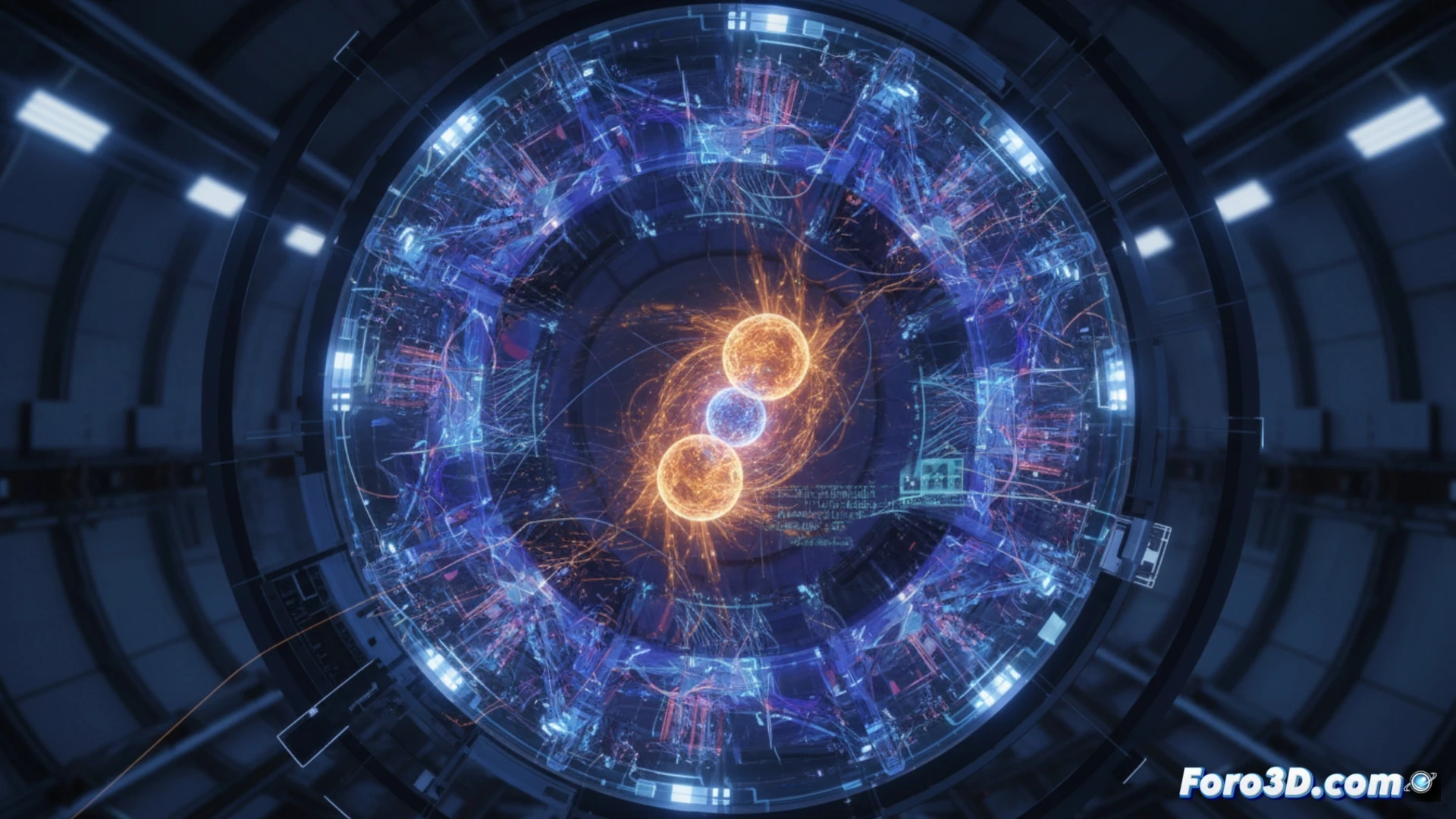
Key improvements in the detector to capture an ephemeral particle 🔬
The detection was possible after the improvements made to the LHCb detector during its second phase. The life of the Xi cc ++ is so brief that it disintegrates before traveling a few millimeters. The upgraded detector, with improved temporal resolution, allowed for precise reconstruction of its trajectory and mass. The statistical significance of the result exceeds 7 sigma, solidly confirming the predictions of quantum chromodynamics on the binding of heavy quarks.
The 2002 "ghost" finally shows up in a clear photo 👻
It seems that the 2002 particle was the equivalent of a sighting of a pixelated and blurry ghost. Two decades later, LHCb has achieved the high-resolution passport photo. Now we know that the beast exists, has the mass that was supposed, and it wasn't an illusion caused by background noise or a coffee that was too strong. The theory can breathe a sigh of relief; its predictions were not based on a mirage.