Lenovo has presented a prototype that challenges planned obsolescence: the ThinkBook Modular AI PC. This transformable laptop concept allows physically detaching its 14-inch secondary screen and keyboard, reconfiguring the device at will. Its open architecture, based on magnetic connections, not only promises usage flexibility but also invites deep analysis through reverse engineering. This approach allows us to break down its design to understand its true potential for modularity, customization, and future upgrades, central themes in our community.
Digitalization and Parametric Design of Magnetic Modules 🔍
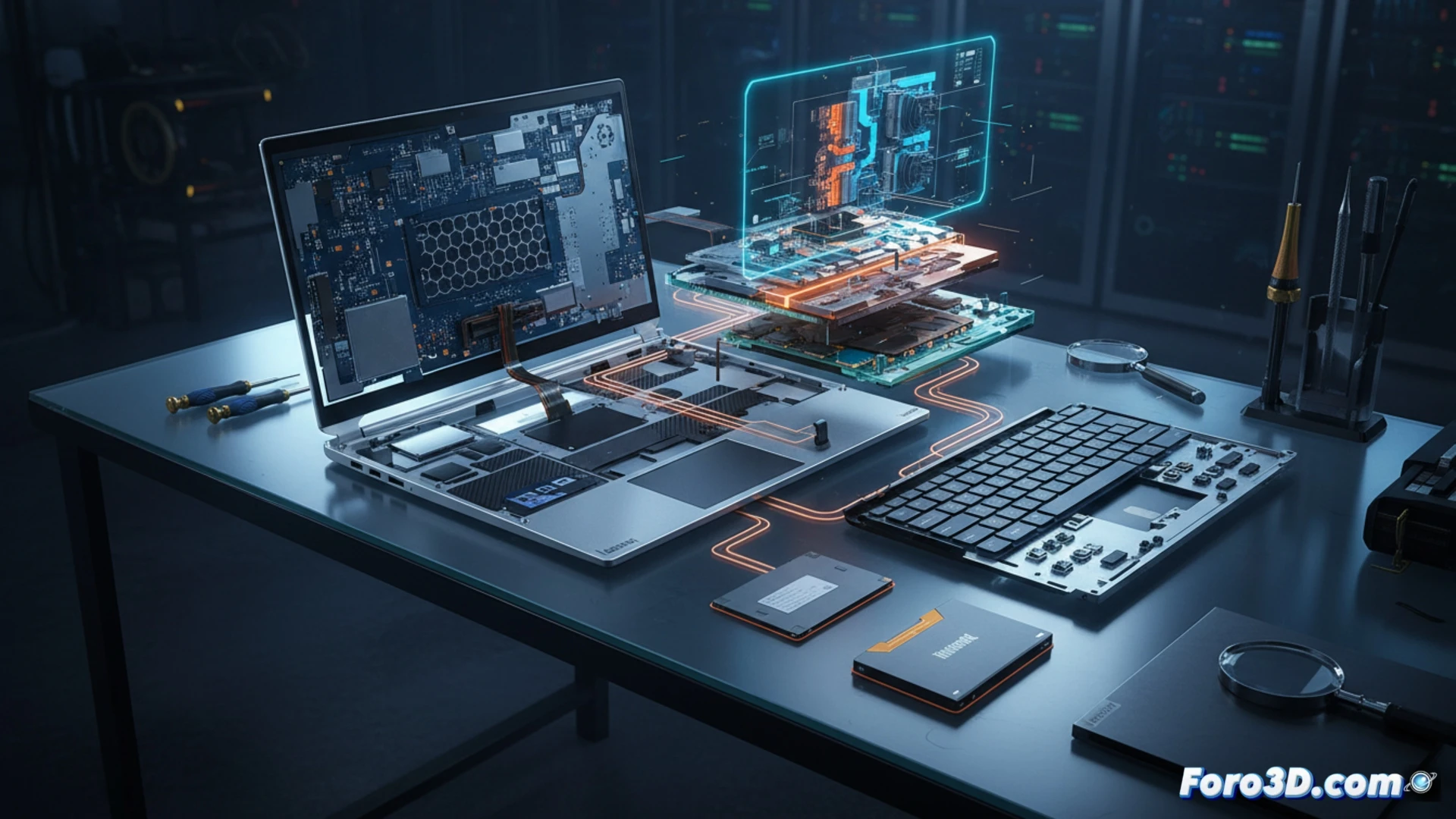
The heart of this concept lies in its modular interfaces with magnetic pins. From a reverse engineering perspective, these connectors are a crucial starting point. Their design allows theorizing about the 3D digitalization of each module through scanning, to then replicate or improve parts with 3D printing. Imagine scanning the keyboard assembly or the secondary screen base to create a parametric CAD model. This would open the door to designing custom accessories, alternative cases, or even adapters to connect third-party hardware, transforming a closed device into an open platform for experimentation and repair.
Towards a DIY Future for Consumer Hardware 🛠️
Although it is just a prototype, the ThinkBook Modular raises deep reflection. Are we facing a first step towards the democratization of laptop hardware? Its philosophy aligns with the DIY movement and maker culture, where the end user can intervene, modify, and extend their equipment. Reverse engineering would be the key tool to decipher the communication protocols of those magnetic pins, eventually allowing the creation of unofficial compatible modules. This concept, therefore, is not just a laptop, but a statement of intent about a future where customization and sustainability through modular upgrades could be standard.
What reverse engineering methodologies would be key to documenting and standardizing the physical and logical interfaces of a modular laptop like the ThinkBook, ensuring its evolution and future compatibility? (PD: if the CAD model doesn't fit, you can always say it's industrial tolerance)