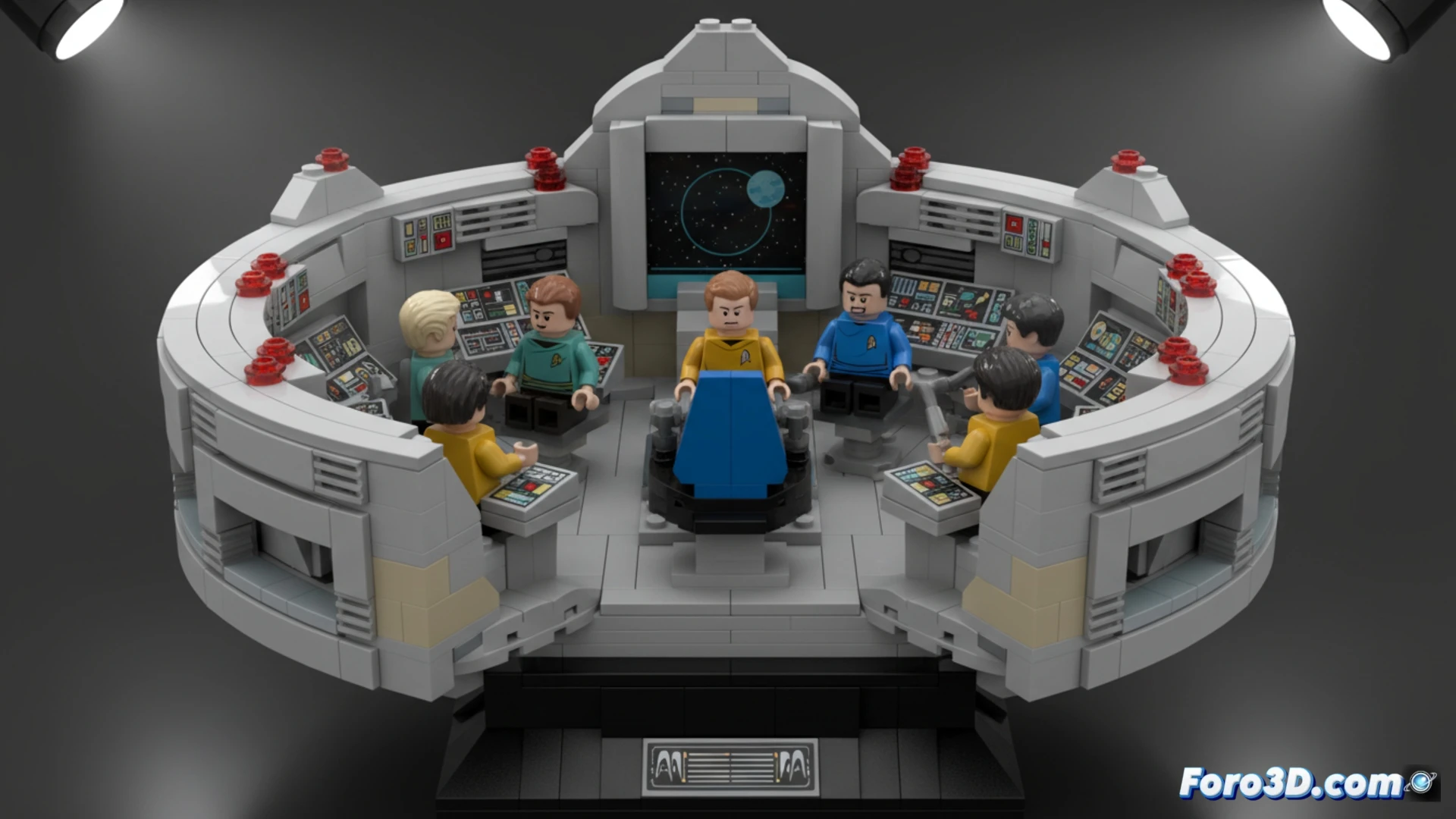
Rumors about a LEGO diorama of the Enterprise NCC-1701 bridge are not just news for collectors. For video game developers, this set represents a fascinating case study in tangible scenario design. Translating an iconic narrative space into a buildable model involves abstraction decisions, emphasis on key elements, and composition that directly reflect a level designer's work in creating an immersive and recognizable scenario for the player.
Deconstructing a Narrative Scenario: Abstraction and Focal Points 🧩
The design of this diorama requires deconstructing the original bridge to identify its essential components. The captain's chair, navigation station, main screen, and engineering console are not just plastic pieces; they are the focal points that define the space's function and hierarchy. The placement of the minifigures, as positionable assets, reinforces the environmental narrative and the team's social interactions. This process of selection and synthesis is identical to that performed by a level designer when recreating a known environment in a game, where gameplay and readability require simplification without losing the place's identifying essence.
Buildable Nostalgia: Inspiration Beyond the Pixel 🧱
Beyond the technique, this set highlights the power of nostalgia as a design tool. A level designer can learn from how LEGO captures the emotion of a classic scenario, using specific shapes and colors to trigger immediate memories. Creating spaces that evoke a similar emotional connection is a key goal in game development. This physical diorama serves as a reminder that the fundamental principles of scenic composition and environmental storytelling are universal, whether in brick or in a graphics engine.
How can the physical design and spatial constraints of a LEGO diorama, like the Enterprise bridge, inspire fundamental principles of level design in video game development?
(P.S.: Optimizing for mobile is like trying to fit an elephant into a Mini Cooper)