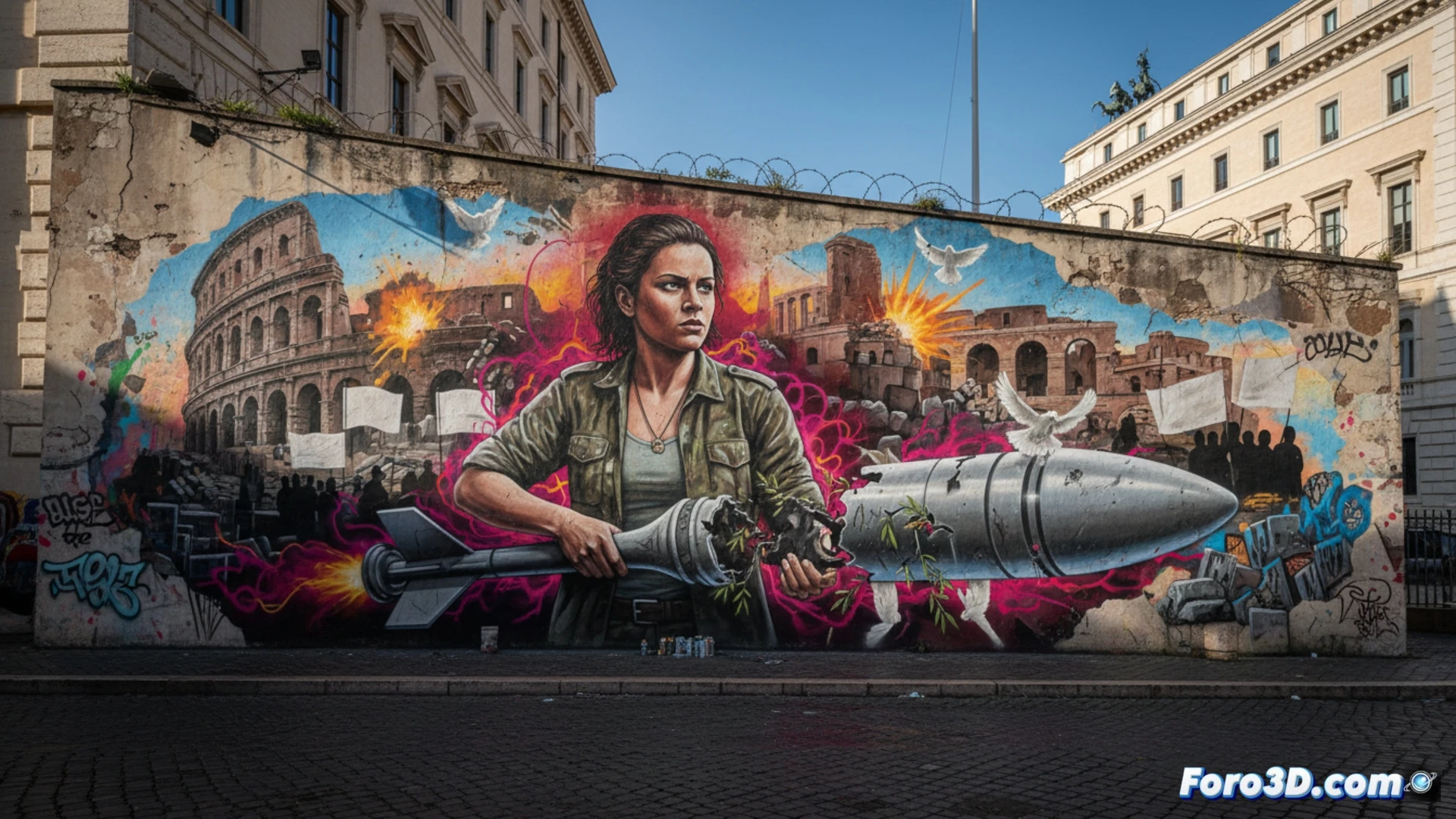
On the occasion of 8M, street artist Laika has intervened in Rome's public space with a new work of strong political charge. Titled War is Patriarchy, the mural shows a transfeminist militant destroying a missile with a kick. Located near the U.S. Embassy, the piece denounces the global escalation of war and directly connects it to the patriarchal structure, which prioritizes force and domination.
Public space as a canvas for visual protest 🎨
This intervention is a case study on the effectiveness of urban art as an activist communication tool. Laika uses a direct and symbolic visual language, where the physical action of destroying the weapon represents resistance. The choice of location, a high-traffic point with political charge, maximizes impact. This approach links to current digital possibilities: 3D modeling can plan such interventions, augmented reality could add narrative layers to the physical mural, and digital documentation ensures the permanence of ephemeral works, amplifying their message globally.
From the street to history: art as positioning 📜
Laika's work transcends one-off protest to pose a historical positioning. By defining war as the ultimate expression of patriarchy, her art unites seemingly separate struggles. Her call to mobilization and strike reinforces the idea that activist art is not just representation, but a call to action. In a context of regressive laws, such as the DDL Bongiorno that she denounces, the mural stands as a crucial visual testimony, affirming that opposing these systems is to be on the right side of history.
Could this work function as an interactive installation in a museum?