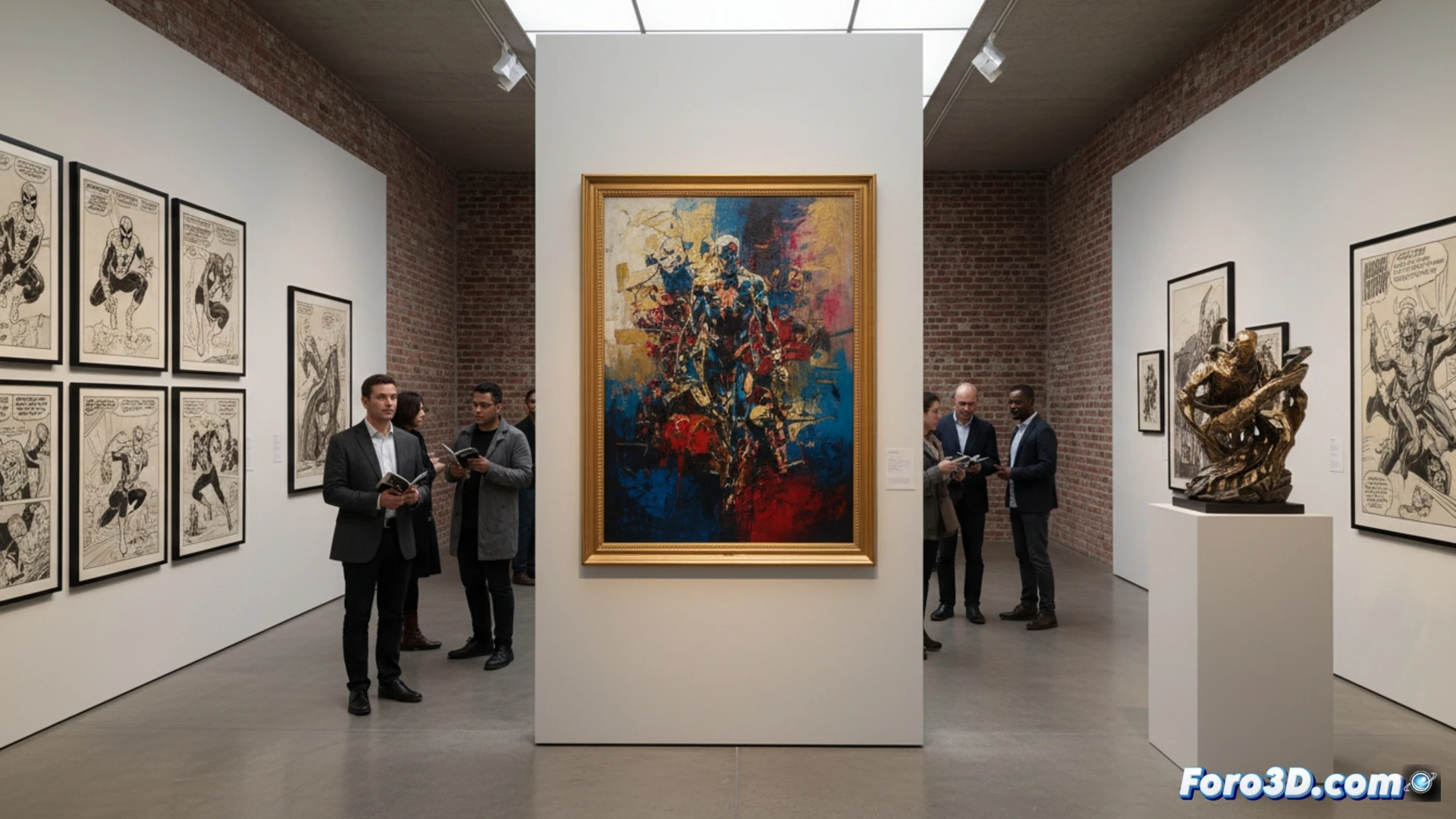
Klaus Janson, legendary inker and artist with over five decades of career in Marvel, stars in a personal milestone: his first art exhibition in New York. Recognized for his seminal work on Daredevil and, above all, for his collaboration with Frank Miller on The Dark Knight Returns, Janson now transcends the comic panels. This leap to the gallery is not just a display of original work; it is the materialization of a life philosophy centered on constant growth, offering an inspiring case study for any digital creator. 🎨
Narrative Technique and the Comic's Imprint on the Canvas ✒️
Janson's exhibition allows tracing how the visual language of comics permeates his autonomous artistic work. His mastery of chiaroscuro, texture through inking, and dynamic composition—essential tools for guiding narrative on a page—transfer to exhibition formats with singular potency. 3D and digital artists can analyze here how technical decisions in service of a story like The Dark Knight Returns become a personal aesthetic vocabulary. The show evidences that training in sequential narrative endows the artist with a unique sensitivity for rhythm, visual impact, and communication of complex ideas, resources applicable in any medium.
Evolution as a Fundamental Creative Act 🚀
Janson's central message goes beyond technique. He emphasizes that prolonged success depends on virtues like curiosity, self-awareness, and perseverance. For the digital artist, this translates into a need not to stagnate in a style or software. Janson's trajectory, from inker to gallery exhibitor, embodies this evolution. His story is a powerful reminder that the artistic career is a process of continuous metamorphosis, where adaptability and personal ambition are as crucial as technical mastery.
How can a comic artist's transition from commercial comics to the gallery space redefine the boundaries of digital art as a tool for cultural activism?
(P.S.: digital political art is like an NFT: everyone talks about it but no one really knows what it is)