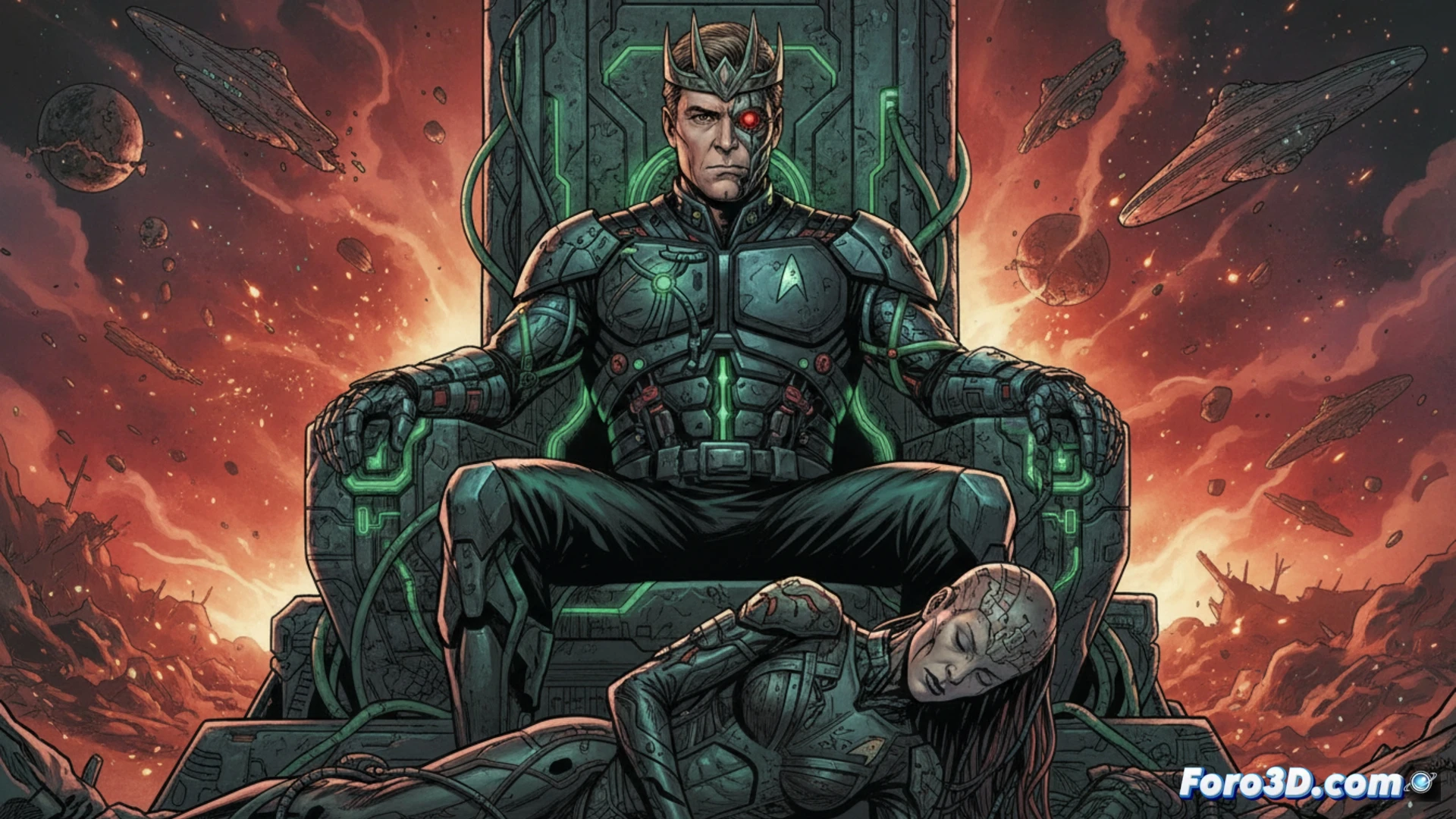
The Star Trek The Last Starship #8 comic presents a radical reinvention: a resurrected Captain Kirk turned into a monarch of the Borg. This plot twist, beyond its impact on fans, is a perfect case study for video game developers. It illustrates how transmedia narratives explore alternative premises (what if) that can enrich a saga's lore and offer new perspectives for character design and playable mechanics, demonstrating the creative fluidity between media.
From artistic concept to gameplay mechanics: a technical analysis 🎮
This reinvention of Kirk operates on two key levels for development. First, the visual design: his transformation into Borg King is essentially a skin or extreme conceptual variant, an exercise in reinterpreting an icon that reflects concept art and 3D modeling work. Second, the narrative premise: the choice to abandon humanity to save the galaxy is the core of a moral choice mechanic. In a video game, this could translate into a karma or alignment system where player decisions physically alter the character, unlock unique abilities, and branch the plot, offering high replayability.
Inspiration beyond the license: universal narrative resources 💡
The lesson transcends Star Trek. This dark twist on an iconic hero is a powerful narrative resource applicable to original sagas. Twisting known archetypes generates immediate emotional engagement and deep conflicts. For a developer, asking what if the hero embraced corruption? can be the seed of a memorable story, driving both narrative and gameplay design. Transmedia storytelling reminds us that the best ideas often arise from boldly reinterpreting the established.
How can transmedia narrative, like the reinvention of an iconic character in a comic, influence character design and lore building for a video game?
(P.S.: a game developer is someone who spends 1000 hours making a game that people complete in 2)