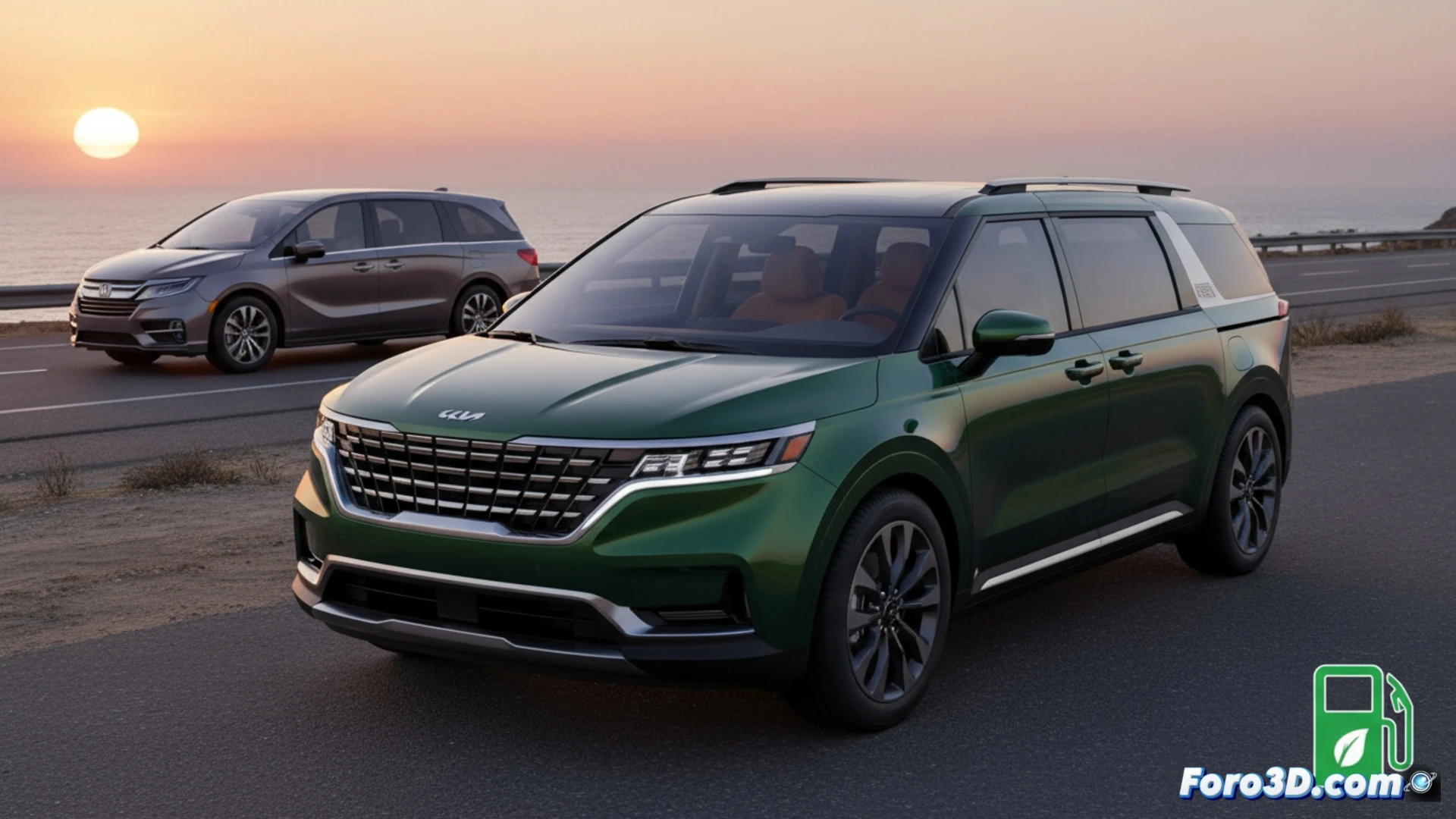
The Kia Carnival 2026 Hybrid is not just a minivan; it's an exercise in visual and functional reengineering. To break the traditional mold, its designers turned to advanced 3D modeling tools, sculpting a body with angular lines and a prominent grille that evokes the robustness of an SUV. This digital process was crucial to achieve a balance between an attractive design and aerodynamic optimization, laying the foundation for its efficiency.
Hybrid System Simulation and Integration 🧩
The true innovation is modeled under the hood. Integrating the hybrid powertrain required complex simulations in 3D environments to package the thermal engine, electric unit, and batteries without compromising interior space. These tools allowed analysis of heat flows, structural stresses, and optimal component layout. Visualizing the entire electrical and propulsion architecture in 3D was key to predicting and validating its performance and the fuel savings that justify its initial premium.
Efficiency as a Product of Digital Design ⚙️
The Carnival Hybrid exemplifies how 3D-assisted design transcends aesthetics. Every design decision, from the shape of the mirrors to the battery placement, was iterated and simulated digitally to maximize efficiency. This approach reduces long-term operating costs, transforming the value proposition. Thus, the minivan becomes a case study where 3D visualization is fundamental to creating vehicles that are attractive, spacious, and economically viable.
How were 3D modeling and aerodynamic simulation tools integrated to optimize the hybrid's energy efficiency without compromising the disruptive design of the Kia Carnival 2026?
(P.S.: simulating an ECU is like programming a toaster: it seems easy until you ask for a croissant)