Foundry has released Katana 9.0, a major update that strengthens its position as an essential tool for look development and lighting in VFX. The star of this version is UsdSuperLayer, a new framework that allows artists to directly edit USD primitives within the node graph using Python. This deep integration with the Universal Scene Description ecosystem marks a before and after, offering unprecedented control and optimizing workflows in modern and complex production pipelines. 🚀
UsdSuperLayer: Direct USD Editing in the Node Graph ⚙️
The true revolution of Katana 9.0 lies in UsdSuperLayer. Traditionally, manipulating USD data within Katana could involve indirect processes or conversions. Now, this framework allows lighting technicians and artists to access and modify USD primitives natively from the Python API within the node graph itself. This means adjusting geometries, materials, visibility, or any USD attribute in real time, while maintaining data integrity and non-destructiveness. The result is a more agile and flexible workflow, where iterations are faster and the artist has total granular control over assets, eliminating bottlenecks in high-complexity scenes with thousands of USD layers.
A Key Step Toward Unified and Efficient VFX Pipelines 🌉
Beyond performance improvements and the optimized interface, Katana 9.0 consolidates the trend toward unified USD-based pipelines. By closing the gap between scene editing and look dev, Foundry not only improves a tool but drives a more cohesive production methodology. For VFX studios, this translates to greater predictability, fewer translation errors between software, and superior responsiveness in demanding projects, where technical and artistic iteration is constant and time is a critical resource.
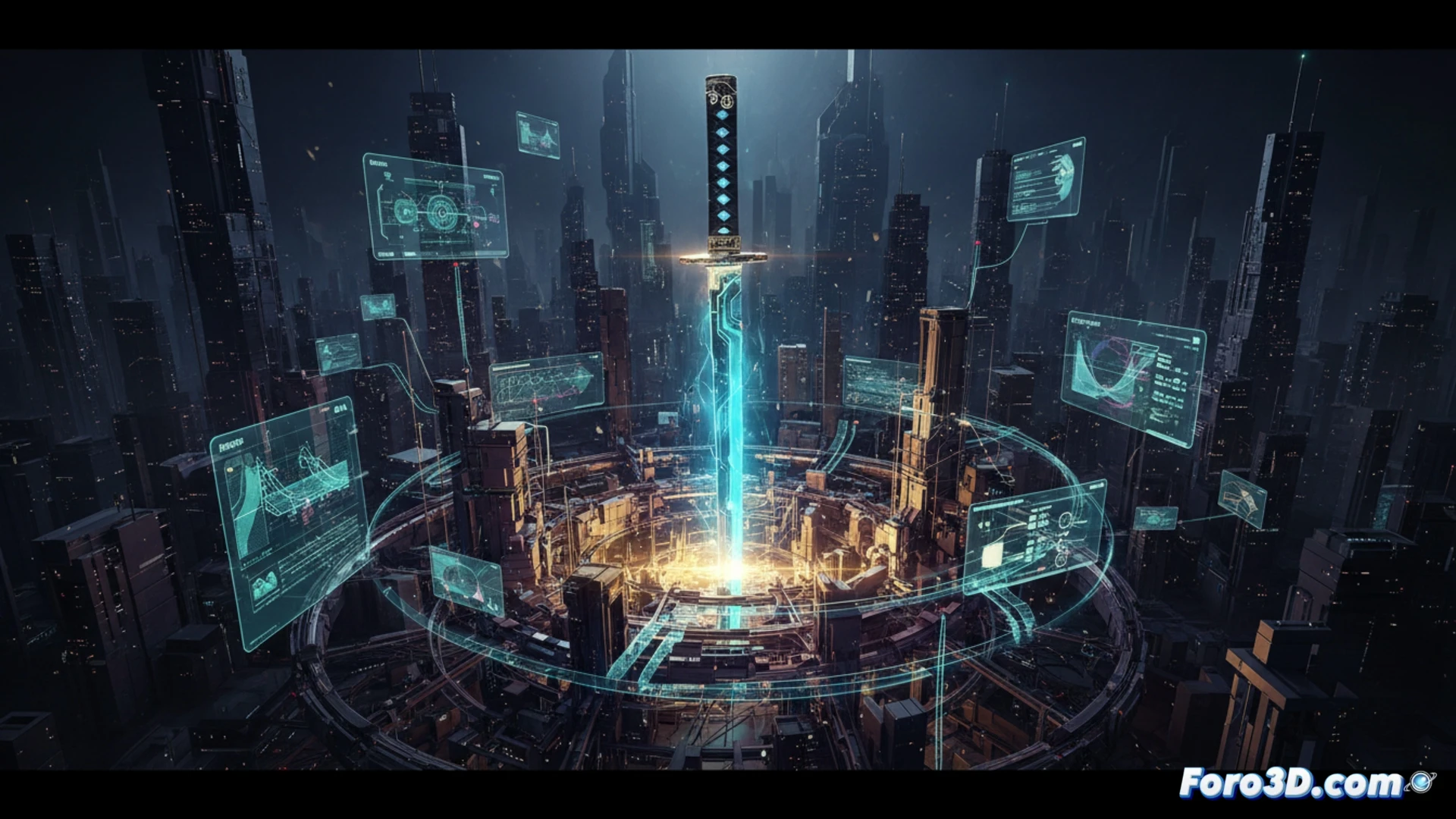
Technical Development 🔬
The true revolution of Katana 9.0 lies in UsdSuperLayer. Traditionally, manipulating USD data within Katana could involve indirect processes or conversions. Now, this framework allows lighting technicians and artists to access and modify USD primitives natively from the Python API within the node graph itself. This means adjusting geometries, materials, visibility, or any USD attribute in real time, while maintaining data integrity and non-destructiveness. The result is a more agile and flexible workflow, where iterations are faster and the artist has total granular control over assets, eliminating bottlenecks in high-complexity scenes with thousands of USD layers.
A Key Step Toward Unified and Efficient VFX Pipelines 🌉
Beyond performance improvements and the optimized interface, Katana 9.0 consolidates the trend toward unified USD-based pipelines. By closing the gap between scene editing and look dev, Foundry not only improves a tool but drives a more cohesive production methodology. For VFX studios, this translates to greater predictability, fewer translation errors between software, and superior responsiveness in demanding projects, where technical and artistic iteration is constant and time is a critical resource.
How does the native USD integration in Katana 9.0 redefine the look dev workflow in complex and collaborative VFX pipelines?
(P.S.: VFX are like magic: when they work, no one asks how; when they fail, everyone sees it.)