Netflix and McDonald's launch a promotional collaboration for K-Pop Demon Hunters, offering themed menus and collectible photochromes. This strategy, common in the video game industry, brings the logic of franchise expansion to the physical world. We analyze how these campaigns function as tangible DLCs, expanding the narrative universe experience beyond the screen and creating deep engagement with the audience.
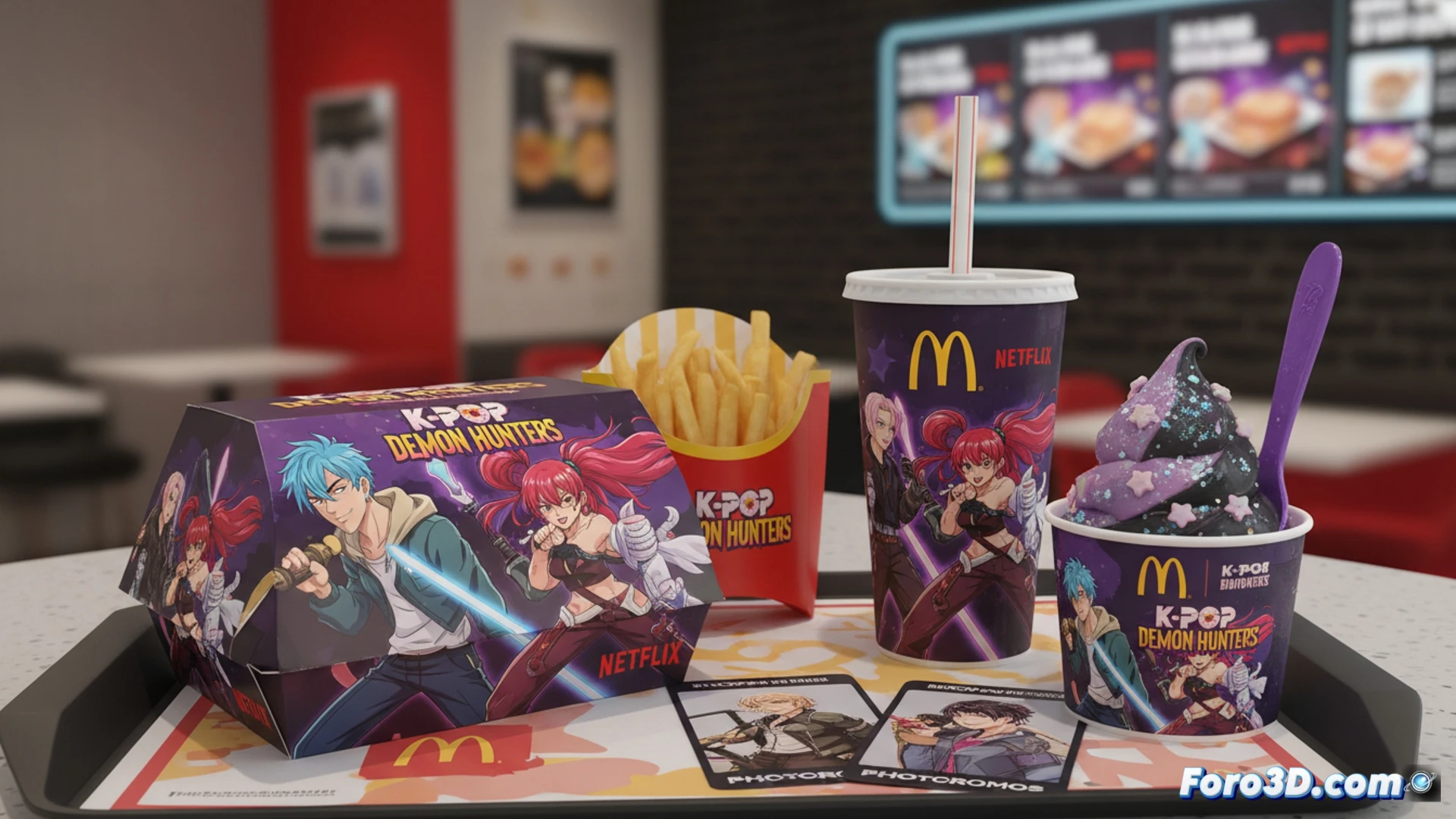
The Physical as a Platform: Merchandising and Universe Expansion 🍟
This collaboration operates under the same principles as a video game expansion or a microtransactions pack. The menus and photochromes act as collectible physical assets, analogous to skins or downloadable content. The campaign transforms restaurants into an immersive experience platform, similar to an in-game event. This cross-media model seeks to monetize and enrich the intellectual property outside its original medium, building fan loyalty through possession of exclusive items that extend the narrative.
Lessons for Developers: Franchises Beyond the Digital 🎮
For developers, this alliance underscores the importance of planning comprehensive franchise strategies from the start. Character and world design must consider their potential adaptation to merchandise and collaborations. A solid narrative and distinctive art, like the demon-hunting idols, are the key asset for successfully transitioning between digital and physical, creating resilient, multi-platform brand ecosystems.
How can indie video game studios replicate cross-media marketing strategies like the K-Pop Demon Hunters and McDonald's collaboration to maximize their reach and audience?
(P.S.: 90% of development time is polishing, the other 90% is fixing bugs)