Following the announcement of Jujutsu Kaisen Season 4, The Culling Game Part 2, attention is focused on Studio MAPPA and its technical capacity. For the game development community, this release is an opportunity to analyze a high-stress digital production pipeline. Adapting battles with complex visual effects and supernatural choreographies from the manga presents challenges analogous to creating cinematics or special abilities in a AAA video game, where optimization and fluidity are crucial.
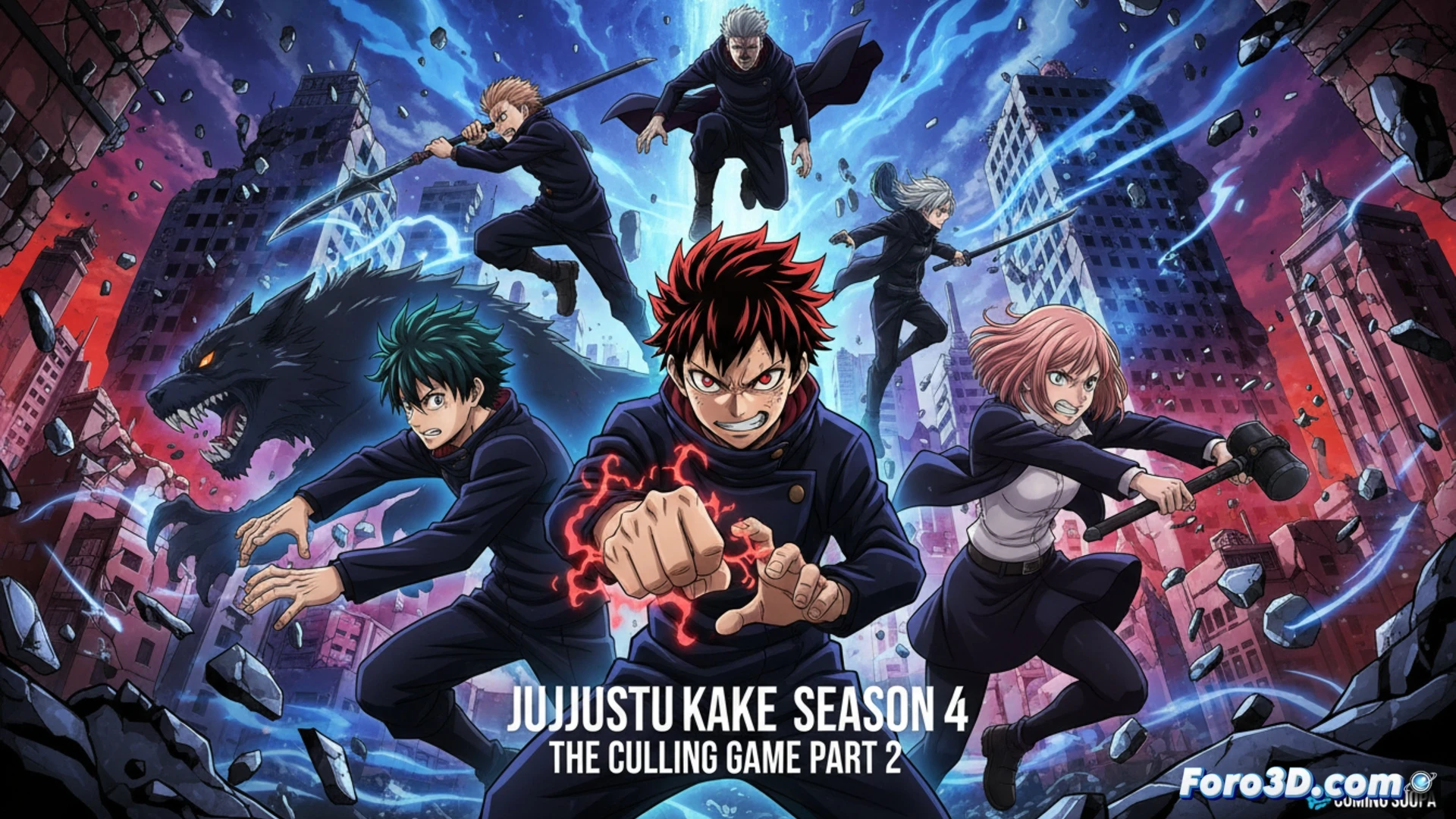
From Manga to Frame: Technical Challenges in Skill Animation 🎞️
The Culling Game arc raises visual complexity with domain expansions and intricate cursed techniques. For MAPPA, this involves traditional 2D animation work combined with CGI and digital effects, a process similar to integrating 2D sprites into 3D environments or using particles and shaders in engines like Unity or Unreal Engine. The workload to maintain quality, with rumors of a 2027 premiere, reflects the crunch cycles of the video game industry, where tight deadlines and artistic ambition collide. Human and technical resource management in this environment is a common topic of debate in both industries.
Digital Production: A Mirror of Two Industries 🔄
The uncertainty about the season's date and platform underscores the reality of modern digital production. Like a video game in development, an anime of this magnitude depends on meticulous planning, rendering capacity, and team stability. MAPPA's situation serves as a case study on creative sustainability. For developers, observing this process from the outside reinforces the importance of efficient pipelines and the need to balance technical innovation with team well-being, lessons applicable on both sides of the screen.
How can video game developers adapt and apply animation pipeline techniques like those of MAPPA in Jujutsu Kaisen to optimize asset and cinematic production in projects with tight deadlines?
(P.S.: a game developer is someone who spends 1000 hours making a game that people complete in 2)