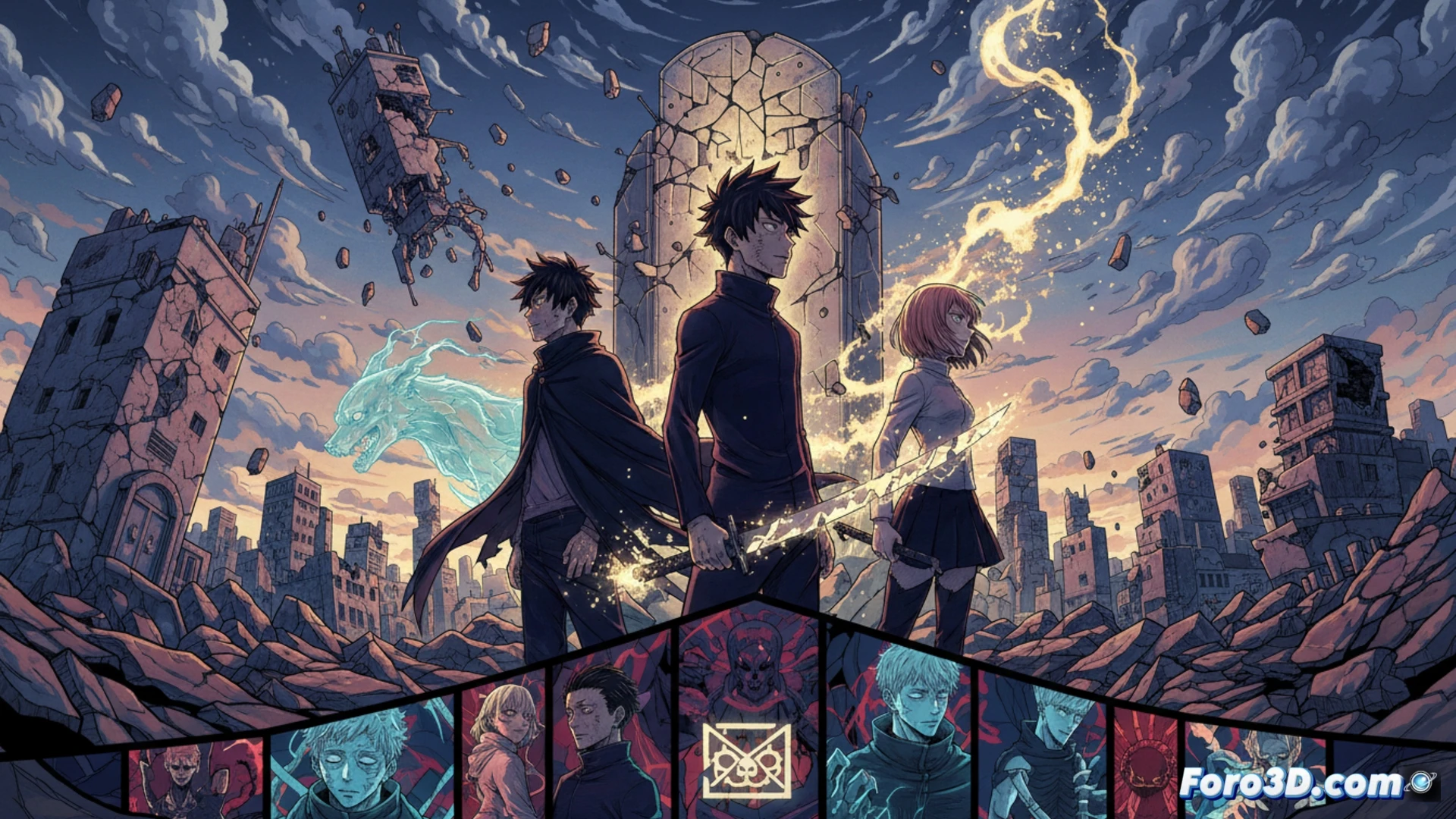
The epilogue sequel to Jujutsu Kaisen, Modulo, set a century later, offers a fascinating case study on narrative expansion in franchises. Beyond introducing new characters, its value lies in how it redefines the legacy of the originals through dark fates and long-term consequences. This approach, where the protagonist Yuji Itadori becomes a figure tormented by his power and longevity, reflects common narrative challenges in video game sagas: how to close cycles while maintaining emotional and thematic coherence.
Design of Consequences and Character Evolution as a Narrative Tool 🧠
Modulo builds its impact on the logical but heartbreaking evolution of its characters. Yuji, by transcending humanity, transforms from protagonist to a solitary tool, a weapon condemned to eternity. This fate underscores a key principle in story design for video games or series: the importance of power having a real narrative cost. Panda's tragedy, even more brutal, acts as an emotional enhancer that redefines the tone of the entire previous franchise. These decisions are not merely shock value, but an exercise in internal coherence where the universe's rules and the characters' past decisions reap definitive consequences, a fundamental pillar in the worldbuilding of interactive sagas.
The Price of Expanding a Universe: Lessons for Transmedia Franchises ⚖️
Modulo's narrative poses a crucial reflection for developers: expanding a story beyond its climax entails risks and opportunities. The epilogue works because it does not seek to reopen the main conflict, but to explore its psychological and existential aftermath, a useful resource in DLCs or distant sequels. However, its somber tone redefines the perception of the original work forever. In video games, similar decisions in extended endings or sequels can enrich the universe's depth or, if not handled with precision, dilute its impact. Modulo demonstrates that the most effective narrative extension is one that has something significant to say about what came before.
How can the analysis of the tragic and extended epilogue of Jujutsu Kaisen: Modulo inform the design of non-linear narratives and legacy building in RPG or adventure video games?
(P.S.: 90% of development time is polishing, the other 90% is fixing bugs)