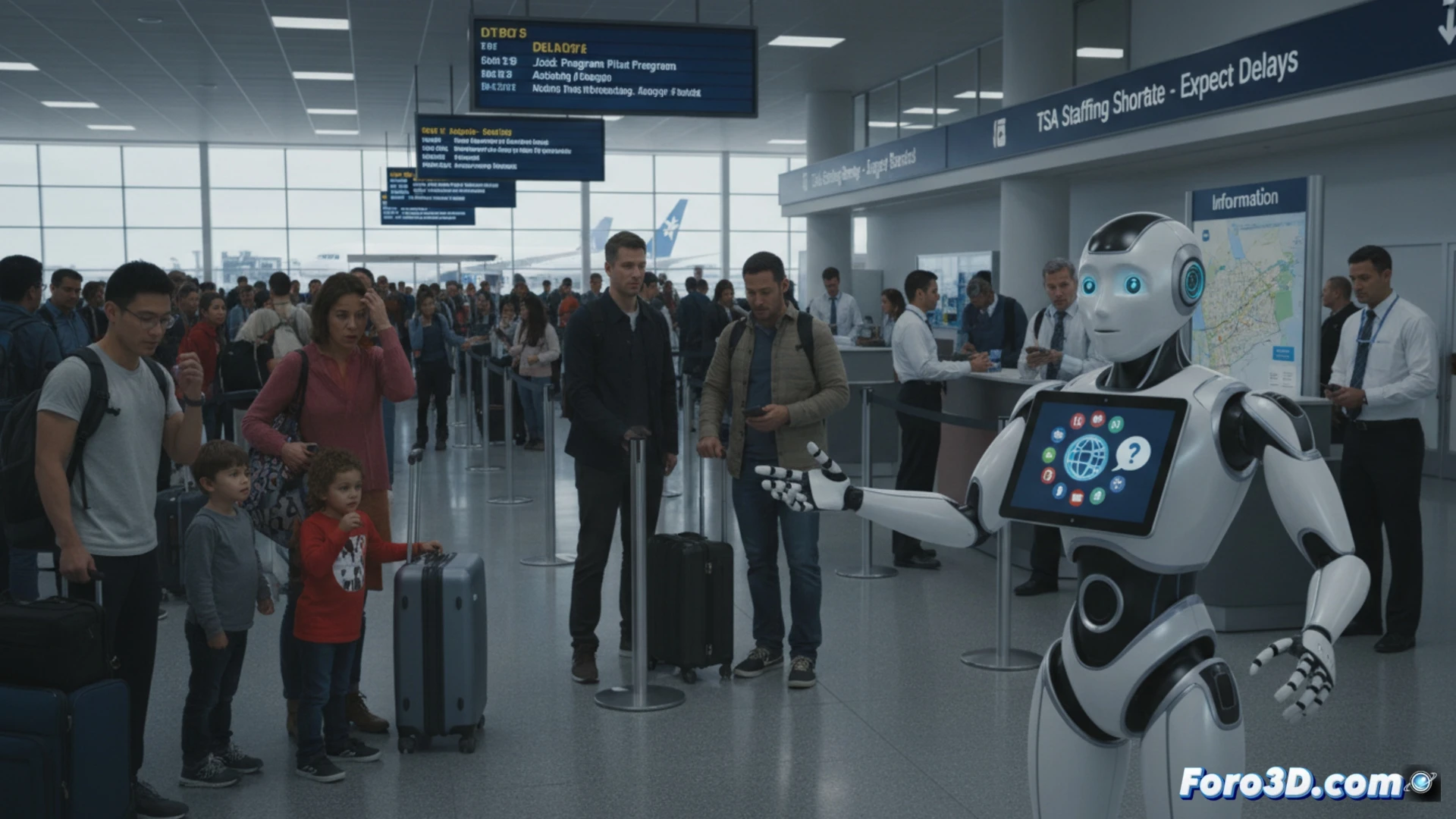
In a context of tension at the TSA with long queues and labor problems, Mineta Airport in San José has started a four-month pilot with a robotic assistant named José. Developed by IntBot, this humanoid robot operates in Terminal B, providing passengers with real-time information, directions, and responses in more than 50 languages. Its deployment, presented as a technological test and not a replacement for staff, aims to improve the traveler experience in a complex operational scenario.
3D Simulation and Digital Twins in Service Robot Development 🤖
The implementation of a system like José underscores the critical importance of 3D simulation and modeling in robotics. Before its physical deployment, simulation platforms allow testing and refining the robot's interaction in a virtual environment identical to the real one, a digital twin of the terminal. This is vital for training computer vision and navigation algorithms in crowded spaces, optimizing movements to avoid collisions, and predicting behavior in the face of thousands of unpredictable human interactions. This virtual phase reduces costs and risks, ensuring that the robot's AI is prepared for the complexity of an airport before its real operation.
Between Technological Demonstration and Comprehensive Operational Solution ⚖️
Although José represents a notable advance in robotic integration in public services, its current role seems closer to a demonstration of capabilities than a comprehensive solution. The irony of its deployment during a labor crisis highlights the debate on automation. The success of the pilot will not be measured solely by its technical functionality, but by its ability to integrate usefully and complementarily into a human ecosystem where trust and problem-solving efficacy in unforeseen situations remain a greater challenge for AI.
Can the implementation of humanoid robots like José in airports represent a significant advance toward the automation of customer services in high-pressure logistics environments?
(P.S.: Simulating robots is fun, until they decide not to follow your orders.)