In a crossover of universes, editor J. Jonah Jameson expounds his editorial philosophy: his contempt is not toward superpowers, but toward the mask. For him, this visual artifact symbolizes irresponsibility and generates institutional distrust, invalidating any altruistic motive. Thus, he declares that Batman, like Spider-Man, would be an unstable vigilante in his pages. The fundamental irony, which his discourse ignores, is that Superman, his favorite hero, relies on an even more effective mask: the secret identity. This narrative framework reveals how public legitimacy is constructed not by acts, but by perceived symbols.
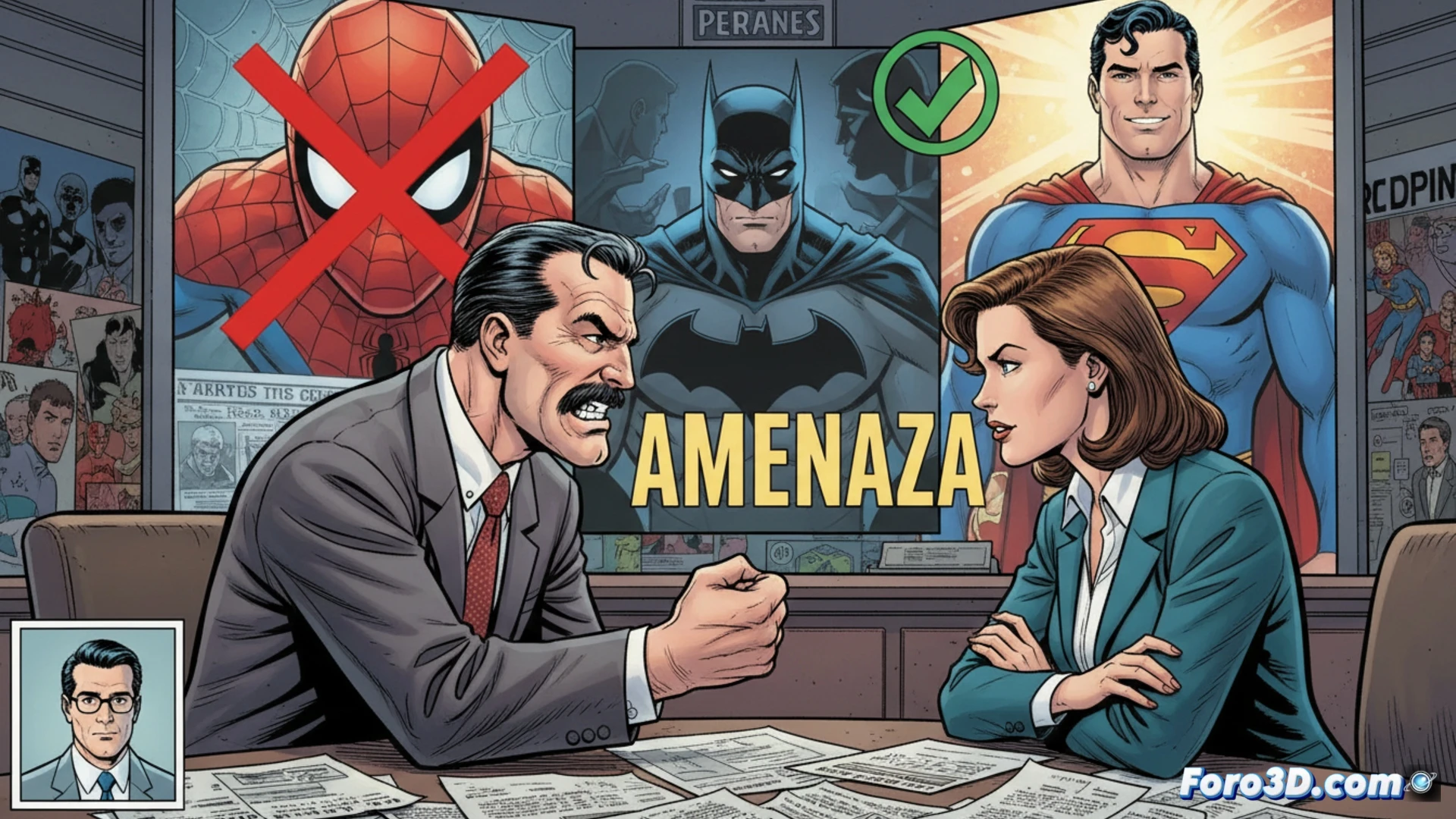
Deconstruction of the visual framework: mask versus dual identity 🎭
Jameson operates with a binary and simplifying visual framework: visible face equals transparency and responsibility, mask equals concealment and threat. This framework allows him to categorize quickly and build a coherent public narrative. However, the logic collapses when analyzing his praise for Superman. Clark Kent is a more complex performative mask than any fabric, a deliberate construction to separate the person from the symbol. Jameson's blindness to this is a clear cognitive bias: his narrative accepts the socially conventional disguise while rejecting the visually disruptive one. This reflects how in real politics, simplistic frameworks (like outsider versus establishment) are used to direct perception, disconnecting analysis from internal coherence and focusing it on an easy symbol to attack.
Opposing narratives and the manufacturing of consensus 📰
Jameson's stance is not just an opinion; it is an instrument to manufacture editorial consensus. By stigmatizing the mask, he builds a category of illegitimacy that his audience assimilates. Batman and Spider-Man are relegated to the realm of threat, regardless of their acts. This strategy is common in political discourse: creating a negative signifier (like populist or elite) that groups and delegitimizes diverse opponents without needing to examine specific cases. The final irony is that the most persuasive power is not held by those who wear masks, but by those who, like Jameson, control the narrative that defines them.
How does the visual analysis of J. Jonah Jameson's anti-mask rhetoric reveal the construction of a public enemy through discursive framing and media iconography?
(P.S.: deepfakes are like polygons: the closer you look, the more imperfections you find)