Episode 56 of Jujutsu Kaisen transcends physical battle to build a powerful device for social critique. Hiromi Higuruma's Domain Expansion, Courtroom, is not just a cursed technique, it is a narrative digital work of art. It transforms the conflict into a symbolic trial, using the aesthetics of a courtroom as an extended visual metaphor to interrogate concepts of guilt, justice, and institutional failure. This approach places the animation in the niche of activist art, employing a regulated virtual environment to question real systems of power.
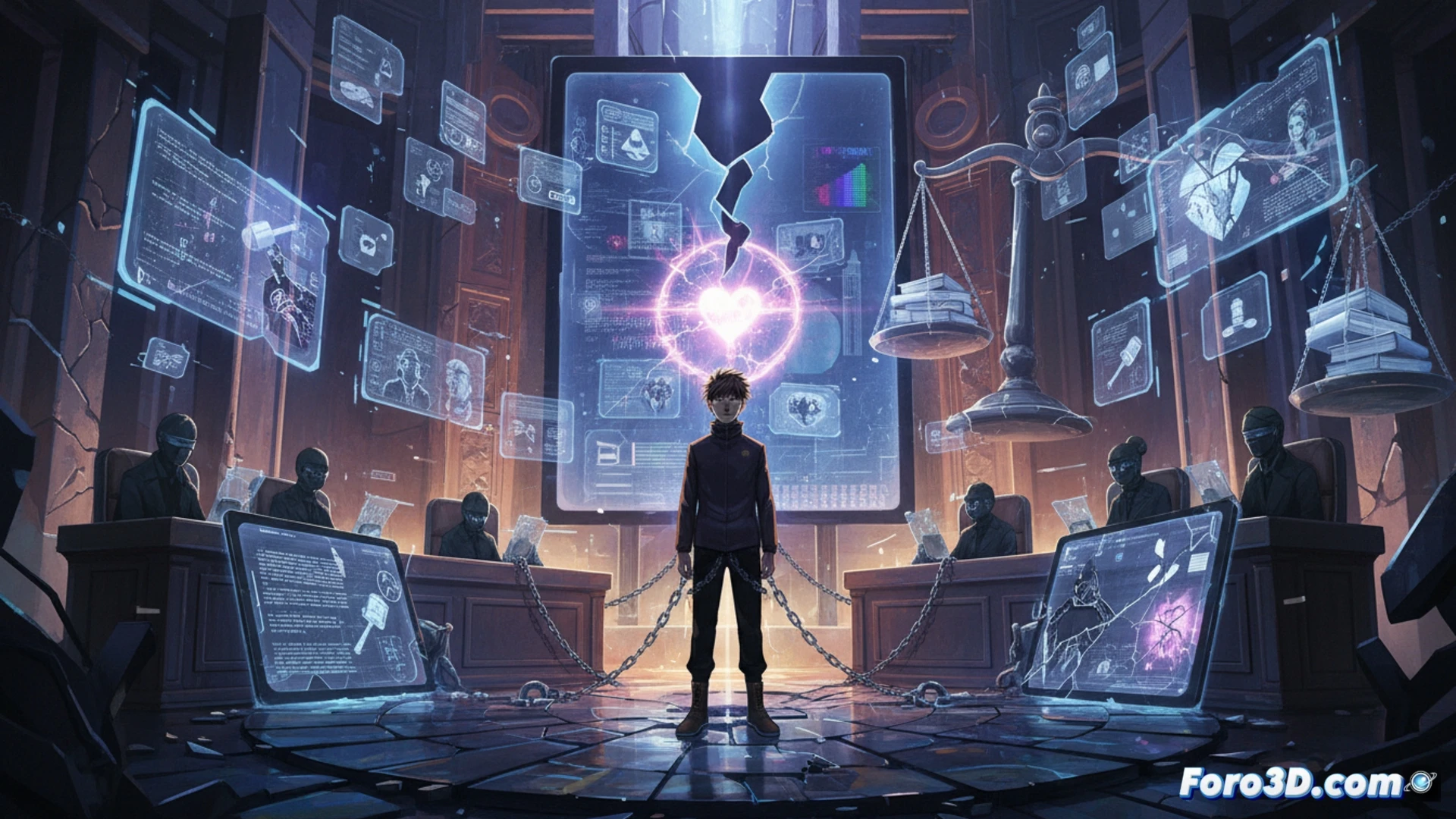
Domain design: the 3D environment as activist narrative space 🎨
The effectiveness of the activist message lies in the technical-conceptual design of the domain. This space is not a passive stage; its automatic and unappealable rules personify the rigidity and dehumanization of a corrupt or ineffective judicial system. The animation uses this simulated 3D environment to visualize abstract concepts: guilt materializes as evidence, the sentence is a logical but unjust consequence. This reflects digital art projects that use game engines and immersive virtual environments to simulate social experiences and criticize institutions. Higuruma's cursed technique, as a tool of a disillusioned former lawyer, underscores the critique from within the system.
Collective guilt and the future of narrative activism ⚖️
The core of the episode is the psychology of Yuji Itadori, forced to assume collective guilt and become the villain of his own story. The trial does not seek truth, but to confirm his self-condemnation, exposing how systems can exploit the desire for expiation. This narrative is an act of digital activism, using the trial metaphor to comment on scapegoats and diffuse responsibility in mass tragedies. The conclusion is not a victory, but a pessimistic reflection on the possibility of redemption within failed structures, a recurring theme in contemporary critical art that employs digital media to interrogate us.
What 3D tools would you use to amplify this activist message?