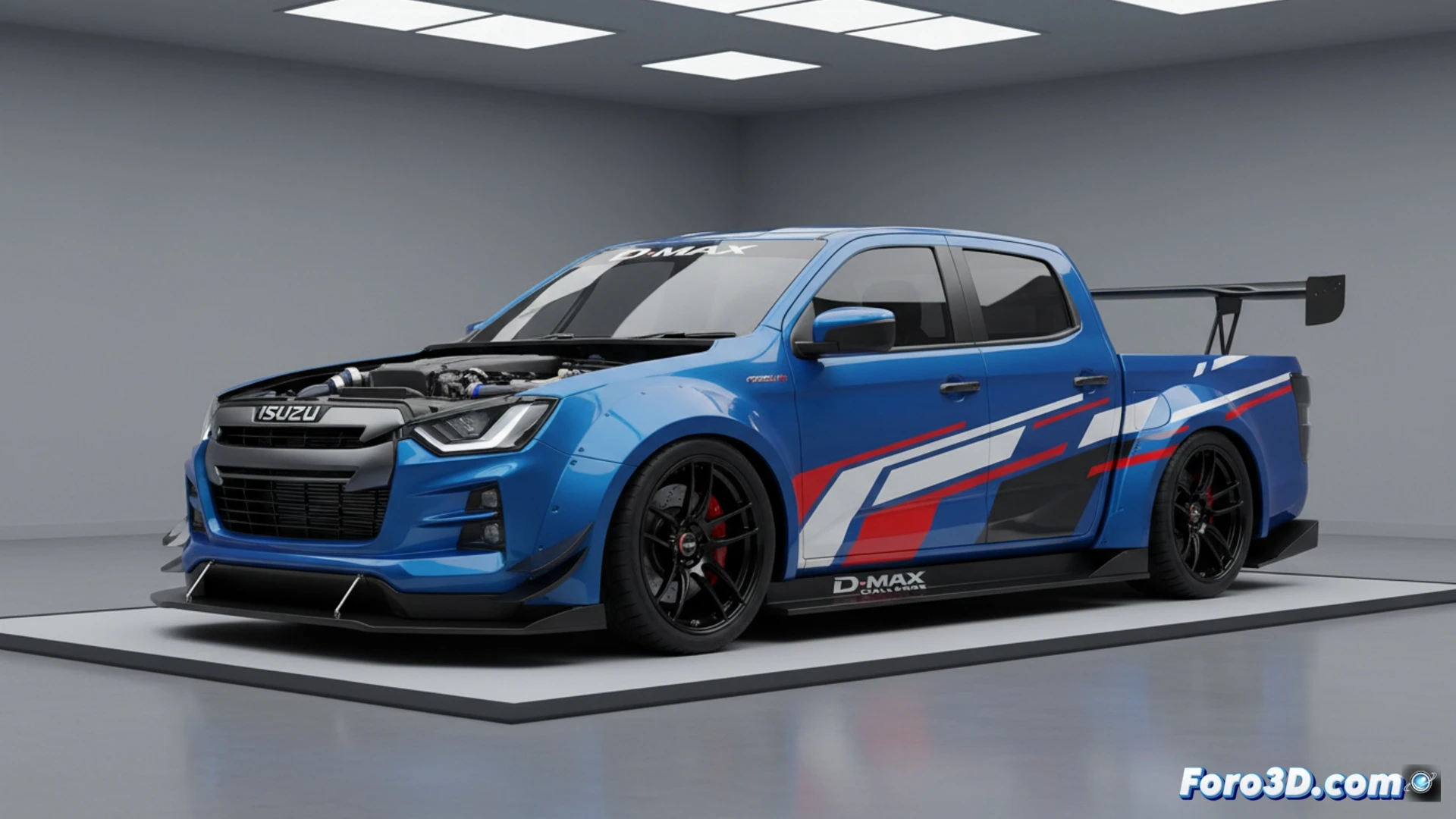
Isuzu has presented the D-Max Challenge at the Bangkok Motor Show, a race pickup for a single-make championship in 2026. Based on the stock diesel D-Max, this radical prototype incorporates an extensive aerodynamic kit, 18-inch wheels, high-performance brakes, and a modified 2.2-liter engine to reach 285 HP. This project demonstrates the brand's capability for high performance and serves as a perfect example of how modern vehicle development relies on digital tools.
Design and Digital Simulation: Keys in Aerodynamics and Cooling 🌀
The development of a competition vehicle like the D-Max Challenge would be unthinkable without 3D modeling and simulation software. These tools are crucial for designing and validating the effectiveness of the complex aerodynamic kit, which includes a spoiler, diffuser, and wheel arches, optimizing aerodynamic downforce and stability. Likewise, CFD simulation (Computational Fluid Dynamics) allows analyzing and improving airflow to the high-performance brakes, ensuring optimal cooling under extreme track conditions, all before manufacturing a single physical component.
Accelerating Innovation in Competition 🏁
The D-Max Challenge case highlights how 3D technologies drastically shorten development cycles for competition prototypes. The virtual integration of components like the six-speed manual transmission or the limited-slip differential avoids costly errors. This methodology allows manufacturers like Isuzu to quickly explore high-performance concepts, transforming a work pickup into a digitally validated race machine, marking a before and after in its technological image.
How is 3D design and simulation used to transform a production pickup like the Isuzu D-Max into a safe and competitive competition vehicle?
(PD: at Foro3D our cars have more polygons than horsepower)