Tension in the Red Sea escalates following Iran's threat to attack the logistical support facilities of the US aircraft carrier USS Gerald Ford. Tehran points to ports and service centers in the region that facilitate the operations of the carrier strike group. This direct warning introduces a new risk factor in an already complex scenario, where protecting an extensive logistics chain becomes an operational challenge.
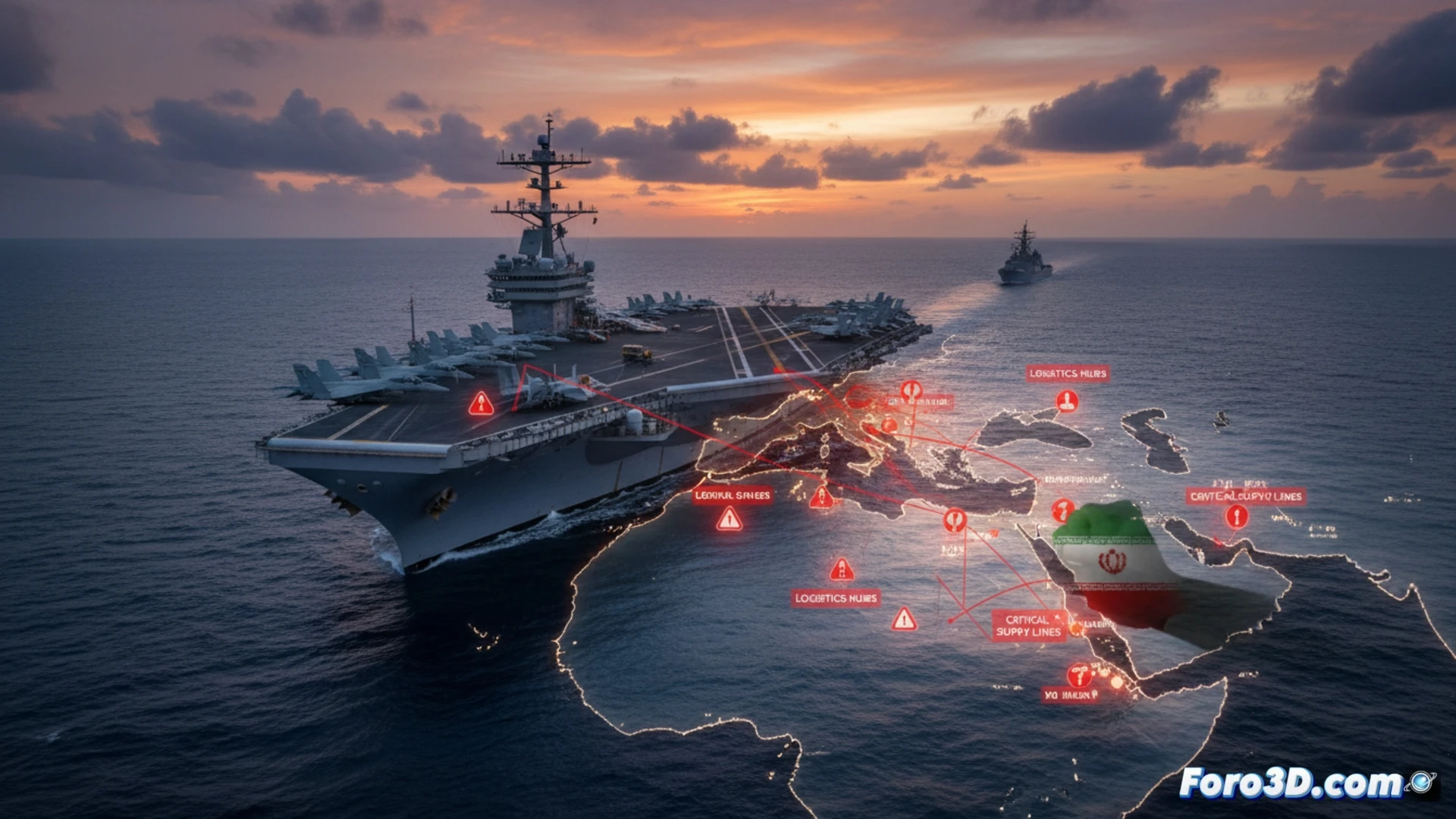
The vulnerability of the naval supply chain in hostile environments ⚓
The threat underscores the dependence of carrier strike groups on a fixed and predictable logistics network. Ports like Jebel Ali or Duqm require static protection, unlike the mobile carrier strike group. An attack on these nodes, even if it does not directly impact the ship, affects its operational autonomy by limiting resupply of provisions, spare parts, fuel, and ammunition. The defense of these fixed points against drones or cruise missiles demands additional anti-aircraft and point defense systems.
When your trusted workshop becomes a priority military target 🎯
The situation puts minor logistical setbacks into perspective. Imagine that, after a tough day of maneuvers, the Ford sends a routine request: I need 5000 liters of ice cream and 12 tons of frozen pizza for the crew. The logistics center's response might be: We regret to inform you that your order is delayed. Our dock and snack warehouse are now a strategic target. Can you fish your dinner?. Modern warfare is also fought by disrupting the candy supply chain.