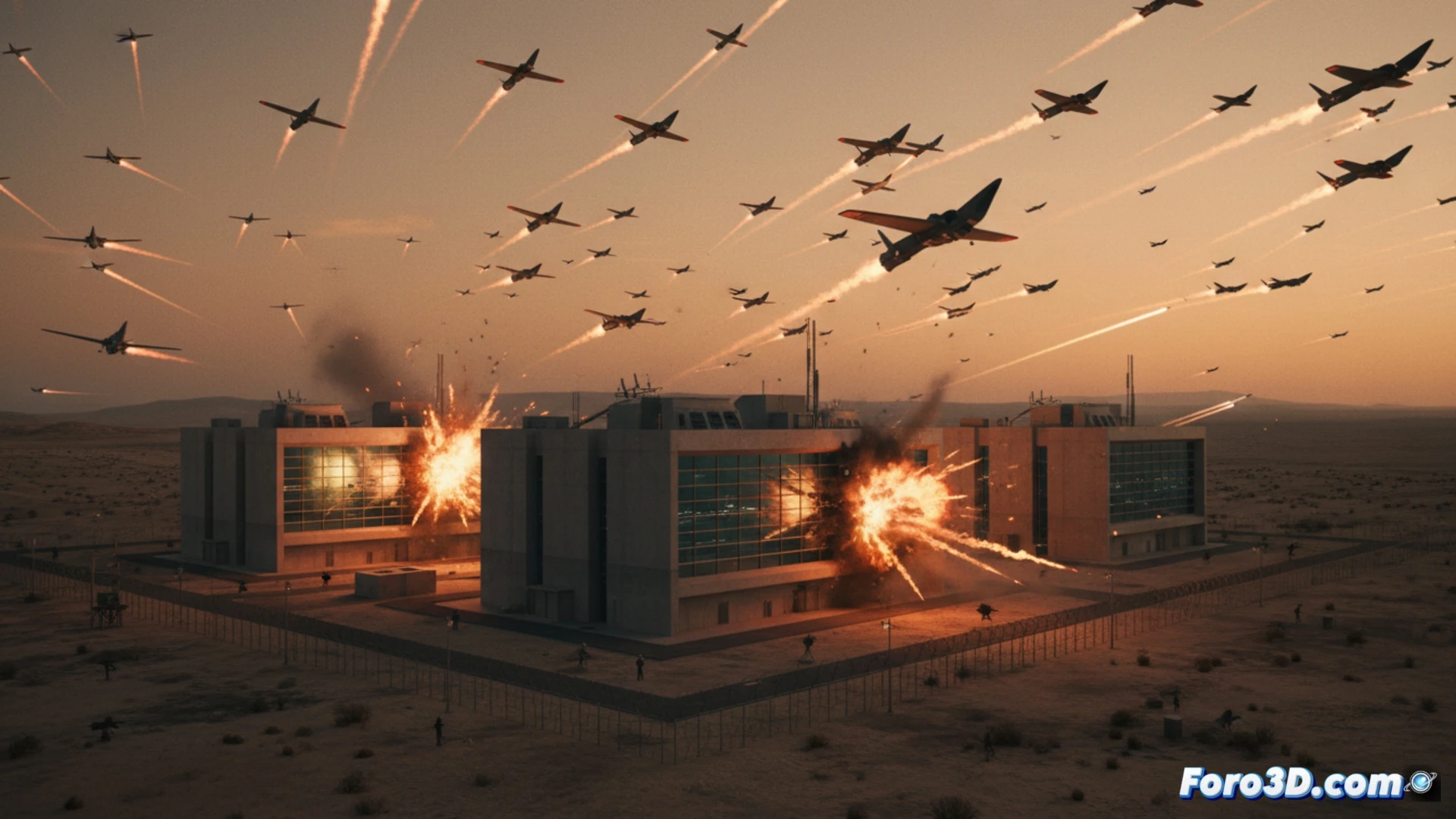
Statements from Iranian authorities introduce a physical risk factor for the artificial intelligence industry. They have indicated that they could attack critical infrastructures, such as data centers, using swarms of drones. This direct warning focuses on the vulnerability of the material base that supports current AI models.
The Vulnerability of Physical Infrastructure in the Cloud ⚡
The threat underscores a critical dependency: AI does not operate in the ether, but in massive physical facilities with high energy consumption. A coordinated attack on electrical substations or the server buildings themselves could cause prolonged disruptions. Geographic redundancy of data is presented as a countermeasure, but a large-scale attack would test its real effectiveness. Cybersecurity is relegated in the face of a risk of direct physical damage.
Could Your Next Prompt Require a Bulletproof Vest? 💥
The evolution of AI takes an unexpected turn. Now, along with debates on ethics or singularity, air defense must be considered. Perhaps the next NVIDIA module won't be a GPU, but a C-RAM laser system. We might see DevOps engineers checking not only the server uptime, but also the perimeter radars. A new layer of meaning for turning servers off and on.