The Heweliusz series, about the sinking of the Polish ferry in 1993, demonstrates how visual effects must serve the story. ROJO Studio employed invisible VFX to immerse the viewer in the Baltic storm and the human tragedy, prioritizing emotional realism over spectacle. Their work supports the dual narrative: the struggle to survive at sea and the search for justice on land, without the technique breaking the immersion.
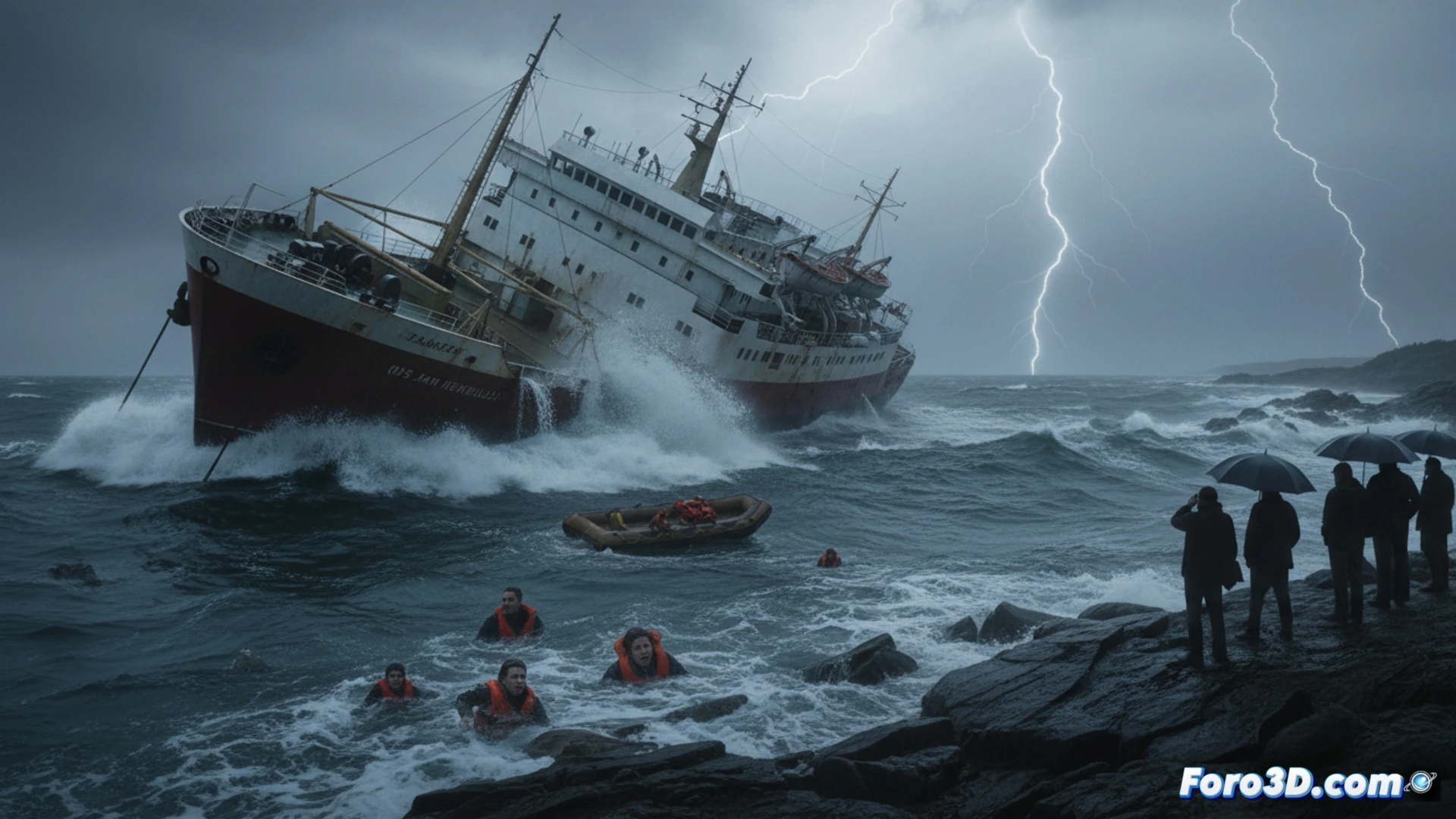
Technical challenges: recreating chaos with historical precision 🎯
The main challenge was to recreate a documented event with authenticity. This required rigorous 3D modeling of the ferry, based on plans and photographs, and complex fluid simulations for the raging sea and storm. The compositing integrated these elements with real footage, actors, and practical sets, ensuring visual continuity between intense action sequences and intimate dramatic moments. Every water simulation and atmospheric effect was calibrated to reinforce the narrative, not to stand out on its own.
When technique is subordinated to human drama 💔
The Heweliusz case redefines VFX success. It is not measured by its visibility, but by its ability to enhance emotional impact and historical verisimilitude. ROJO Studio's work sets a standard for narratives based on real events, where 3D art and simulation are tools in service of collective memory and respect for the victims, not an end in themselves.
How does the Heweliusz series make its visual effects invisible to enhance human drama and historical truth?
(P.S.: Previz in cinema is like the storyboard, but with more chances for the director to change their mind.)