The film Sentimental Value, winner of the Cannes Grand Prix and an Oscar, is a family drama where emotion and realism are paramount. Under the direction of Joachim Trier, the visual effects had a clear mandate: to be absolutely imperceptible. The studio Stardust Effects, led by supervisor Kai Kiønig Bortne and Brian Yuan Zhang, took on the challenge of creating VFX that were invisible but essential for deepening the story's emotional narrative, focusing on two key sequences in the family home.
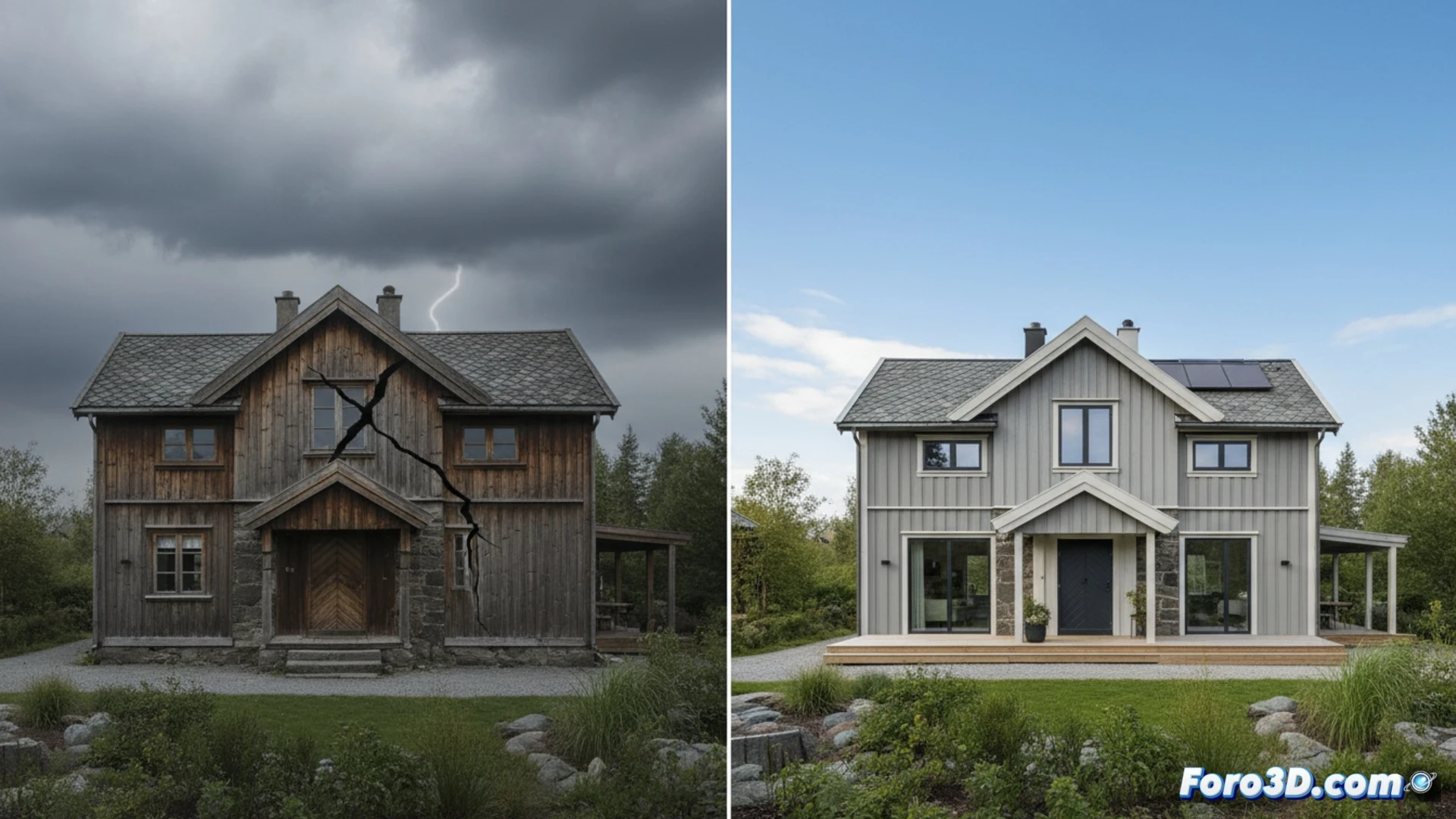
Imperceptible Integration Techniques: Cracks and Digital Renovations 🧱
The work focused on transforming the house, the central symbol of the plot. In the opening sequence, a crack running across the facade was added digitally, a visual metaphor for family tensions. For the climax, a complete transformation was achieved through digital matte painting. The original facade was redesigned in a modern Scandinavian style, combining the filmed structure with new rendered architectural elements to show a renovation full of hope. Other tasks included set extensions to expand spaces and sky replacements to control the emotional atmosphere. Each element was integrated prioritizing texture, light, and film grain to blend in completely.
The True Power of VFX: Serving the Story 🎭
The case of Sentimental Value demonstrates that the deepest impact of visual effects often lies in their invisibility. Unlike pyrotechnic spectacles, here the technology is completely subordinated to the characters' psychology and the director's tone. Stardust's team's success is not measured by technical complexity, but by how their digital cracks and reinvented facades enhance the emotional journey without the viewer being aware of it, reaffirming that the best VFX are those that are felt, not seen.
How are imperceptible visual effects designed and executed that support the emotional narrative in a realistic drama like Sentimental Value?
(P.S.: VFX are like magic: when they work, no one asks how; when they fail, everyone sees it.)