In Tel Aviv, the Dizengoff Center parking lot has become an underground camp for families fleeing the bombings. This reality, where life reorganizes underground, is a crucial case study for disaster management. 3D technologies offer unique tools to capture and analyze these improvised survival spaces, transforming observation into useful data for planning and humanitarian response.
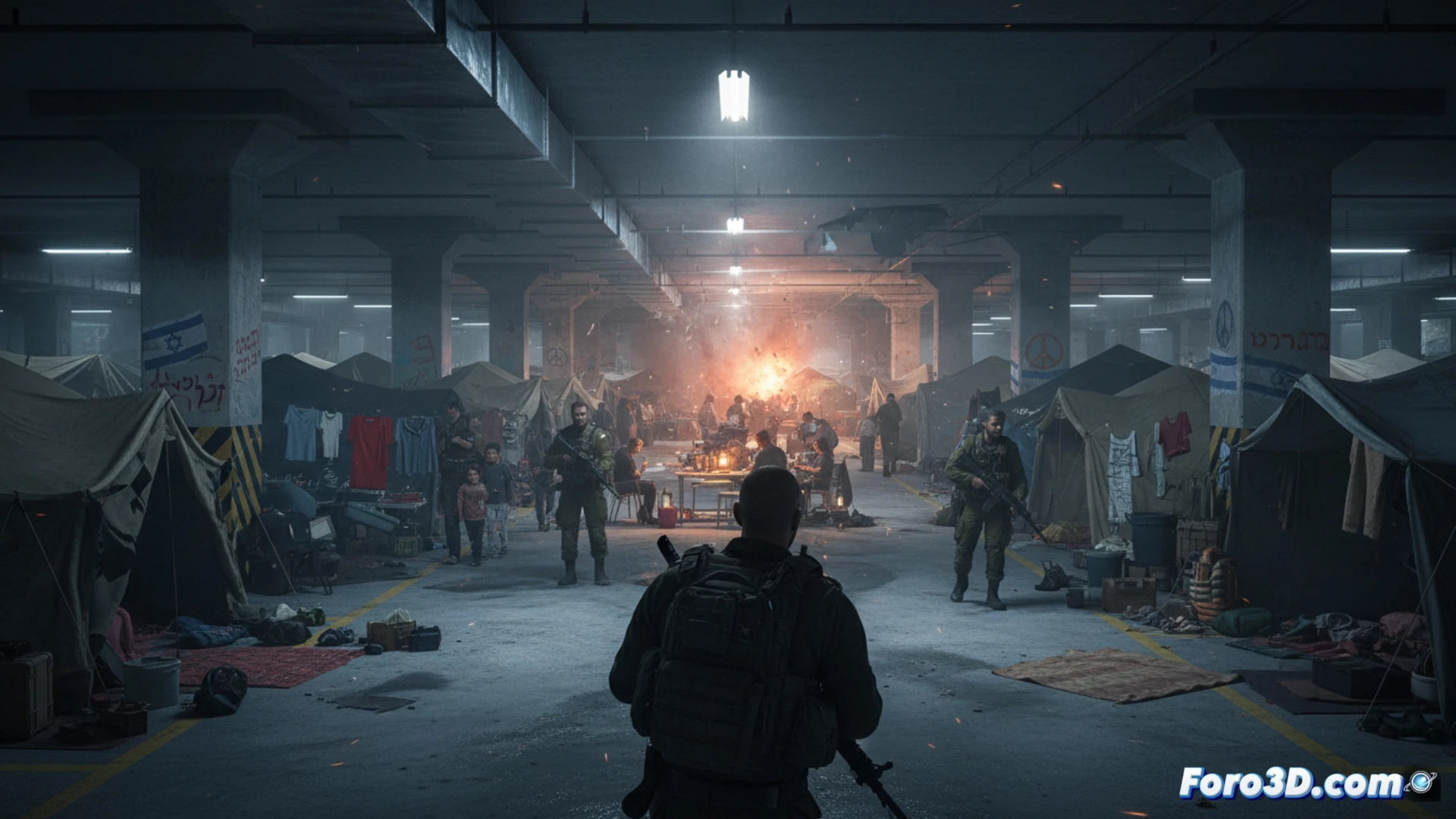
Photogrammetry and digital twins for shelter analysis 🏙️
Using photogrammetry with smartphones or laser scanners, an accurate 3D model of this transformed parking lot can be created. This digital twin documents the layout of tents, common areas, and access routes, evaluating risks such as ventilation or structural capacity. These models allow simulating scenarios, such as evacuation in the event of a direct impact, or planning the optimal use of space in future emergencies. The technology turns a chaotic situation into an analyzable environment for engineers and rescue teams.
From documentation to global awareness 📢
Beyond technical analysis, these 3D recreations have a profound narrative power. A virtual tour of the Dizengoff Center camp conveys the harshness of civilian adaptation better than any report. These tools serve to train professionals in crisis management and to raise societal awareness about the human consequences of conflicts, preserving a digital testimony of resilience amid catastrophe.
What variables would you consider for modeling this disaster?