The animated short film Imposteur, directed by Johanne Johtarot Arslan-Amar and Paps Lefranc, has established itself as one of the most moving and necessary pieces of 2025. Beyond its artistic value, it functions as a harrowing introspective document that exposes the hidden side of the 3D animation industry. Available on YouTube after its run at the Nikon Film Festival, the work unabashedly addresses the difficult working conditions and the structural crisis of the sector, resonating deeply within the professional community.
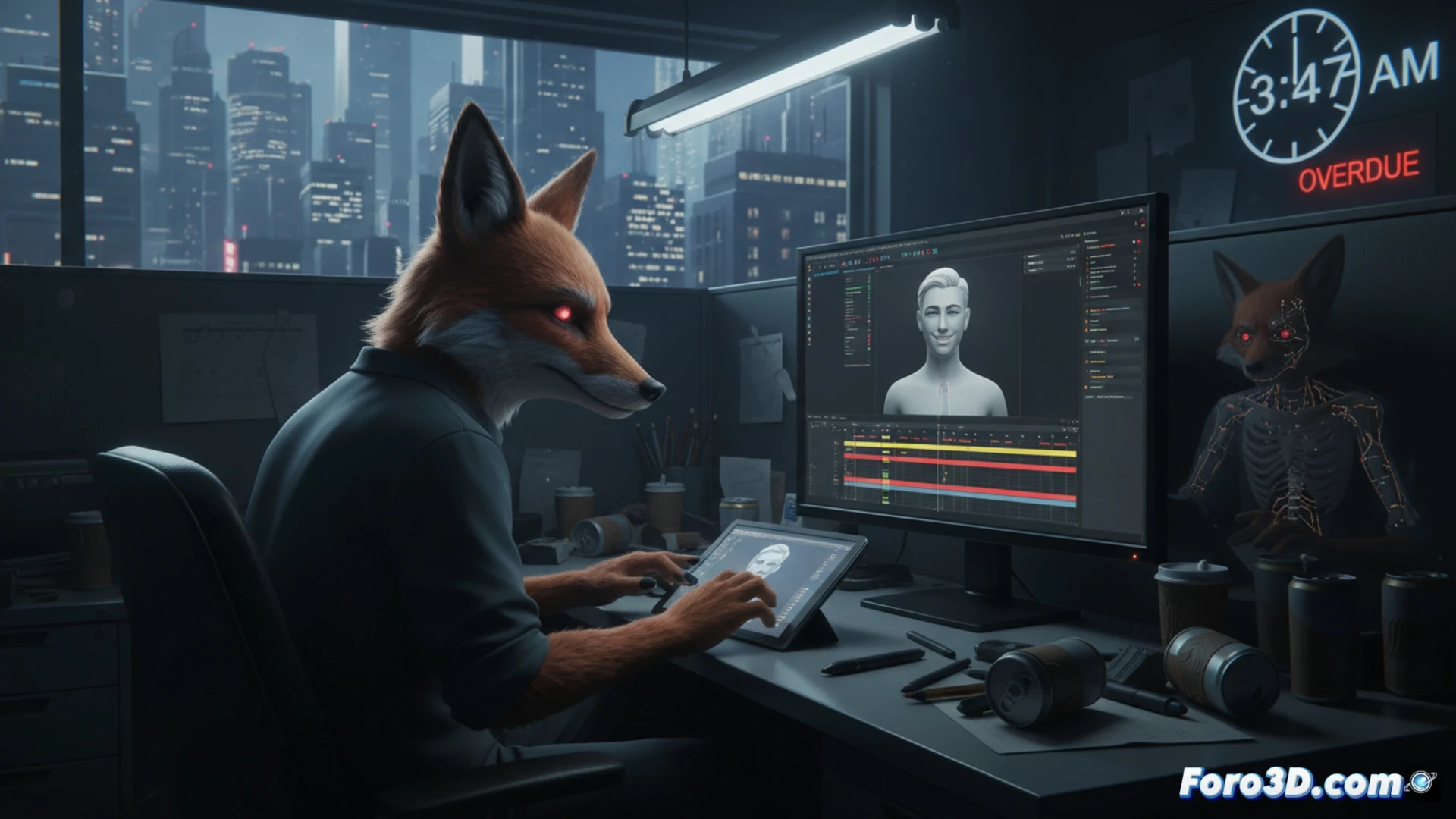
Animation as a Tool for Criticism and Self-Reflection 🎬
The power of Imposteur lies in how it uses the very language of 3D animation to criticize the industry that produces it. The film not only speaks about burnout and precariousness, but visually personifies it, integrating fragments of specialized articles into its narrative that corroborate its denunciation. This approach makes it an exceptional case study on how the production pipeline and visual techniques can be directed toward self-reflection. The work transcends pure technique to turn the creative process into the message itself, showing the human tensions behind every model, texture, and rendered frame.
A Visual Narrative for a Professional Crisis 💻
With a markedly personal tone, Imposteur crystallizes feelings shared by thousands of digital artists: impostor syndrome, devaluation, and chronic fatigue. Its importance lies in using visual narrative to communicate systemic problems, making the crisis tangible for the general public and for professionals themselves. This short film is not just a piece of cinema; it is an uncomfortable and vital mirror that forces the industry to look at itself and recognize the urgency of change in its work culture.
Can an animated short film like Imposteur catalyze an honest debate about labor precariousness and mental health within the very industry that produces it?
(P.S.: Previz in cinema is like the storyboard, but with more chances of the director changing their mind.)