Movies like The Day After Tomorrow present a frozen Earth in a matter of days, a dramatic narrative that captures the imagination. This article contrasts those representations with real geological processes. Historical events like the global glaciations of the Cryogenian were slow processes, driven by tectonics and gradual atmospheric changes over millions of years.
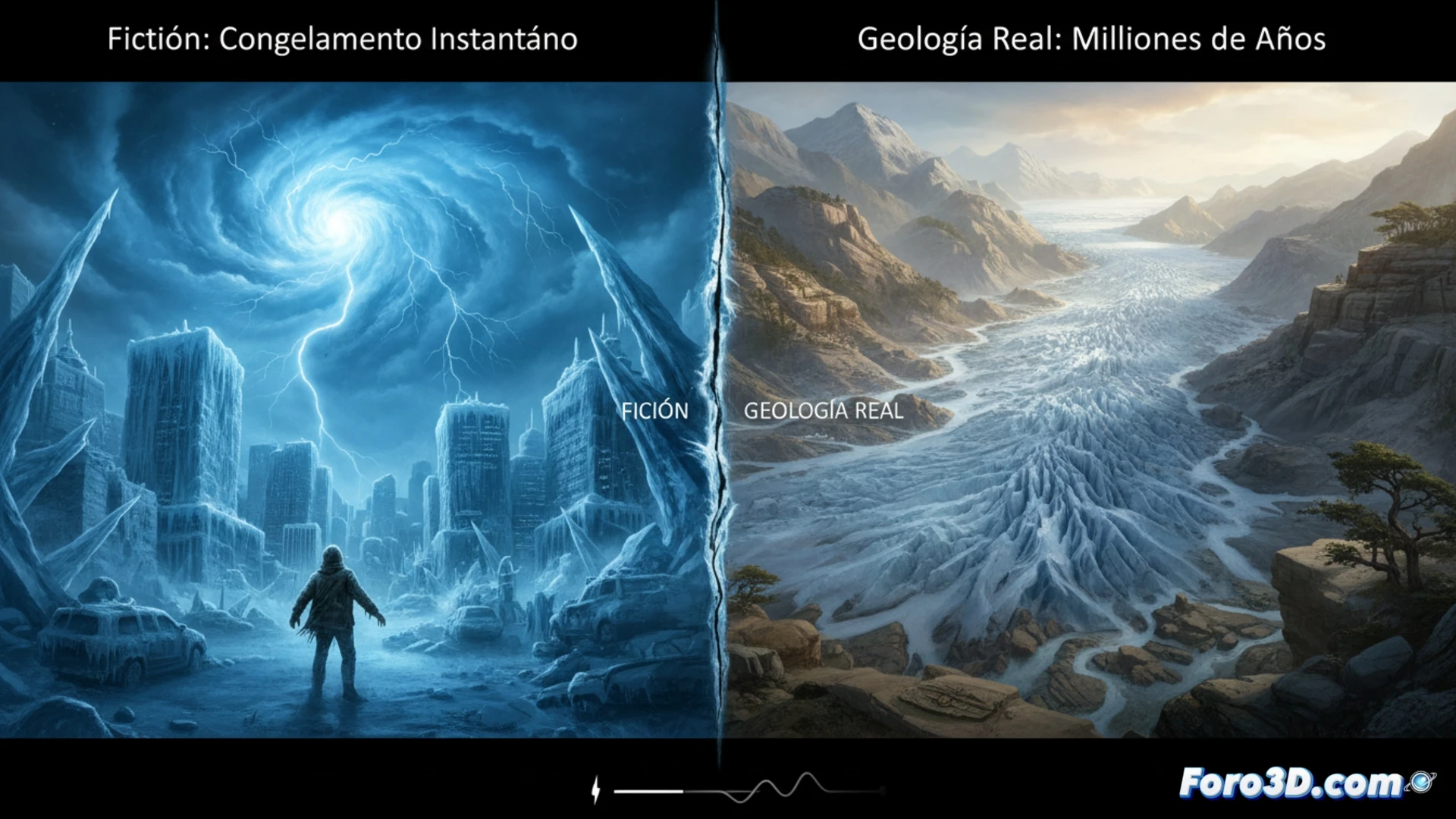
Climate mechanisms and their technical representation 🧪
Science fiction accelerates real climate mechanisms to create dramatic impact. An example is the collapse of ocean currents, a process that in reality would operate on scales of decades or centuries. Current climate models indicate that profound planetary changes, such as a global glaciation, require a conjunction of factors that develop on geological time scales, not human ones.
Installing a heat patch for the planet? 🔧
If screenwriters directed geology, we would have critical climate system updates every Tuesday. An error message: Glaciation detected. Restart the Gulf Stream in 10 seconds or all data will be deleted. Fortunately, the planet prefers a more stable operating system, where major changes come with millions of years of warning, not a countdown on screen.