Cortical Labs has managed to make a culture of 200,000 human neurons interact with Doom. The CL1 system translates the video into electrical stimuli for the cells and reads their activity to move the character and shoot. The company claims that the neurons learned to play, but this sparks a fundamental debate: is this really playing or merely a bioelectric reflex? The experiment transcends the technical to pose urgent questions about the nature of intelligence.
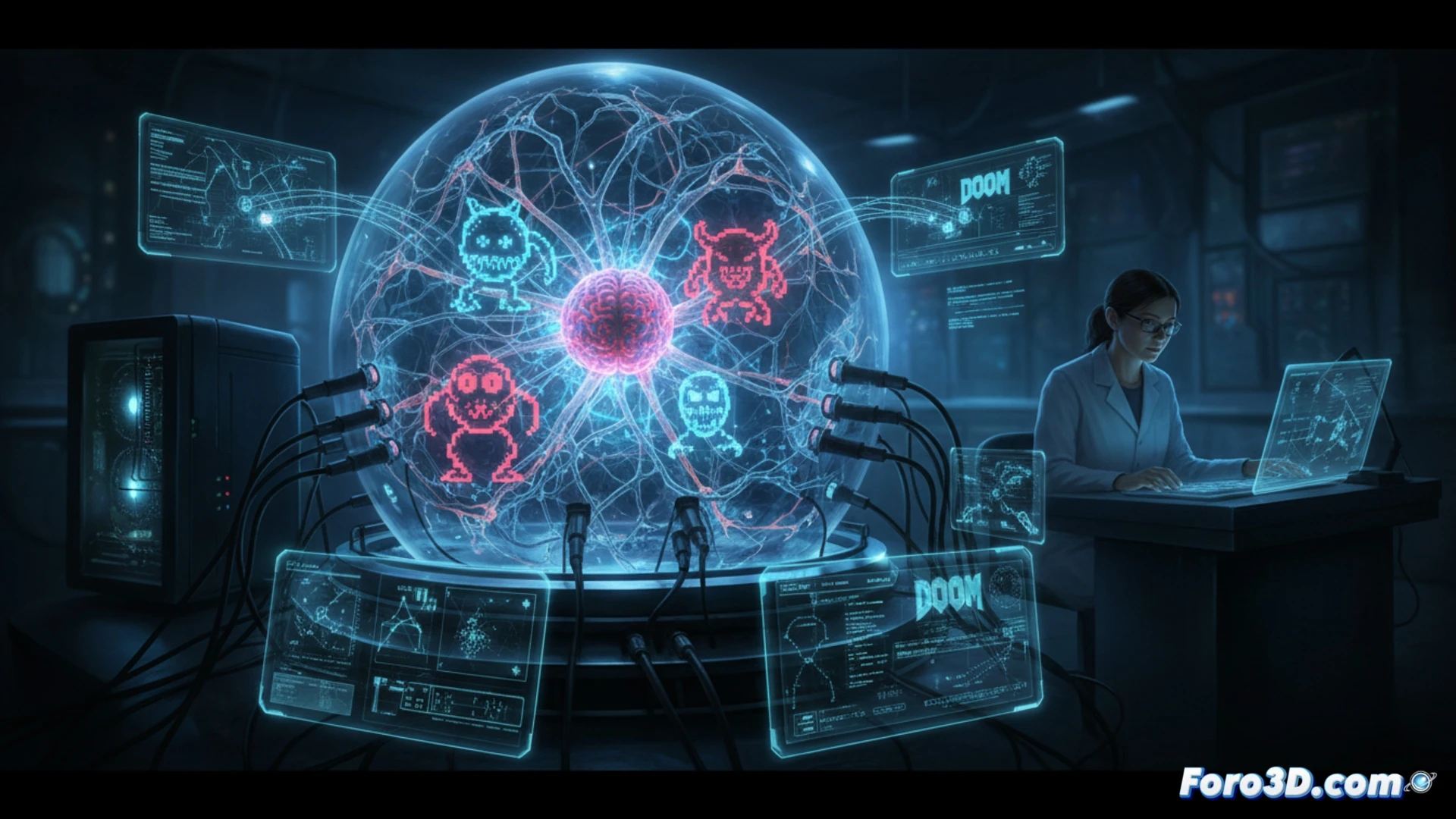
The mechanism behind the CL1 experiment 🧠
CL1 is a biological computer where neurons are cultivated on a microchip. An interface converts the game's visual signal into precise stimulation patterns on the neural network. The resulting electrical activity from the cells is decoded and translated into game commands. Although more complex than the Pong precedent, the process is abstract and direct, without strategic thinking. The system essentially trains the neurons through stimuli and feedback in a closed environment, a process closer to conditioning than to cognitive learning.
Redefining concepts on the biotechnological frontier ⚖️
This milestone forces a reevaluation of concepts like learning, consciousness, and even play. If a set of cells can learn in a digital environment, where do we draw the line? The ethical implications are vast: from the moral consideration of these neurons to the future of brain-machine interfaces that integrate biological tissue. It's not about whether it played well, but where this convergence between the organic and the artificial leads us, blurring the boundaries of what we consider intelligent.
Does the integration of human neurons into computational systems represent the first step toward a new hybrid intelligence or simply a sophisticated laboratory tool?
(P.S.: trying to ban a nickname on the internet is like trying to cover the sun with a finger... but digital)