A team of Swiss researchers has succeeded in manufacturing human auricular cartilage in the laboratory using 3D bioprinting techniques. This cultivated tissue, generated from the patient's own cells, demonstrates mechanical properties and elasticity comparable to natural cartilage in preclinical tests. The advance is proposed as a future revolutionary alternative to current painful reconstruction methods, which require extracting cartilage from the patient's ribs.
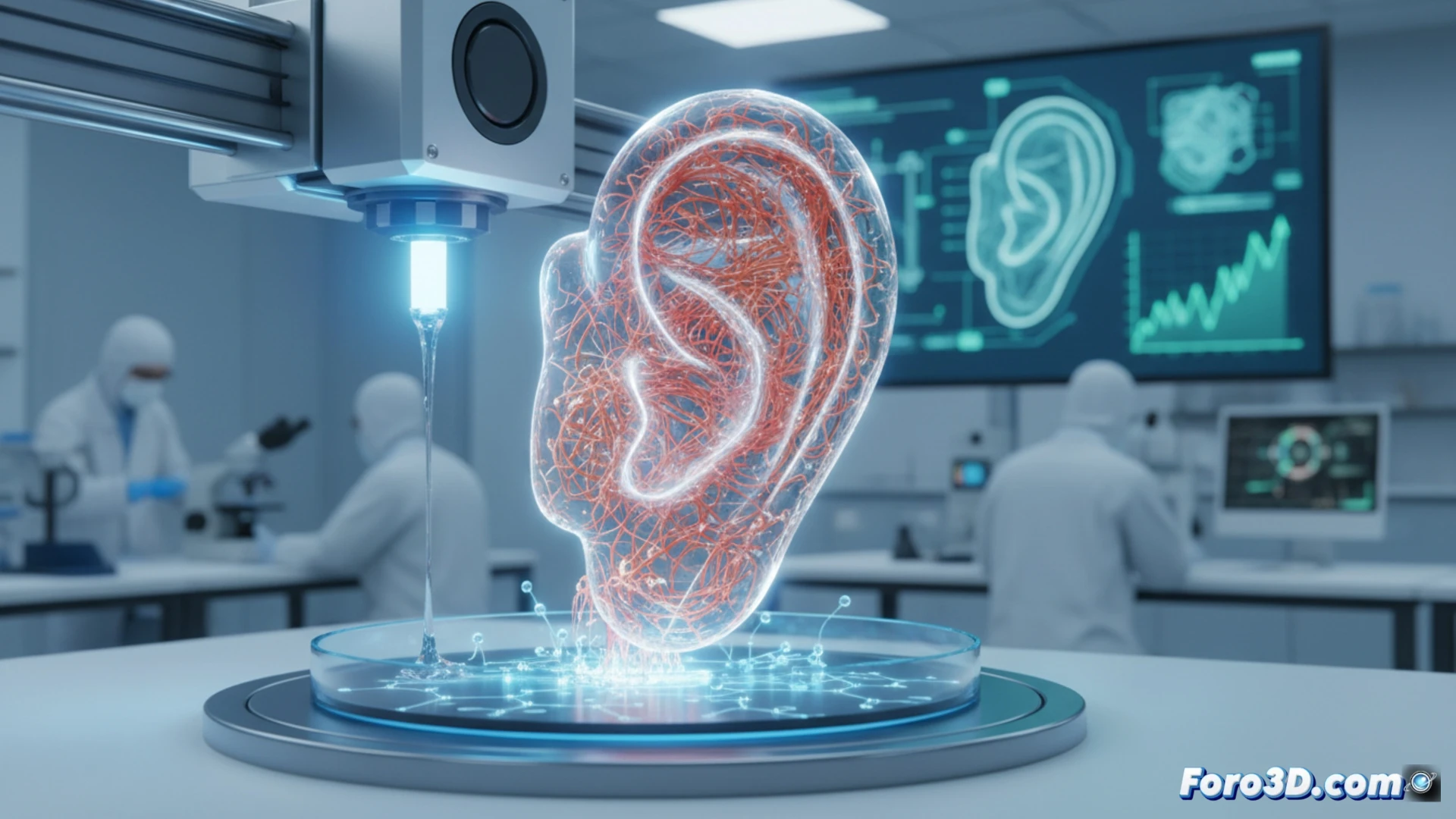
From cell culture to bioprinting: the technical process 🧪
The process begins with the extraction of a small sample of cartilage from the patient. Its cells are multiplied in the laboratory to obtain a sufficient number. Then, they are mixed with a specialized bioink that acts as a support. This mixture is 3D printed to give the precise shape of an ear. The printed structure is not functional immediately; it must mature in a bioreactor or incubator for several weeks. During this period, the cells generate extracellular matrix, developing crucial components such as type II collagen, which provides strength. The main current technical challenge is to achieve tissue production of elastin, the key protein for permanent flexibility.
A five-year horizon for reconstructive surgery ⏳
The scientists estimate that resolving the elastin challenge could take about five years, after which clinical trials in humans could begin. The implantation of this bioprinted cartilage would represent a qualitative leap in reconstructive surgery, eliminating morbidity in the rib donor site and offering more natural and flexible results. This project consolidates the role of 3D bioprinting as a pillar of personalized regenerative medicine.
Will personalized 3D bioprinting of auricular cartilage revolutionize facial reconstruction and plastic surgery in the next decade?
(PS: If you 3D print a heart, make sure it beats... or at least doesn't have copyright issues.)