Pixar's movie Hoppers has achieved a historic milestone, grossing 88 million dollars in its first weekend, the studio's best opening. Acclaimed by critics with a 94% on Rotten Tomatoes, its success demonstrates the relevance of original stories. The plot, where a girl transfers her mind to a robotic beaver to save nature, is a clear example of how 3D technology serves innovative and visually ambitious narratives.
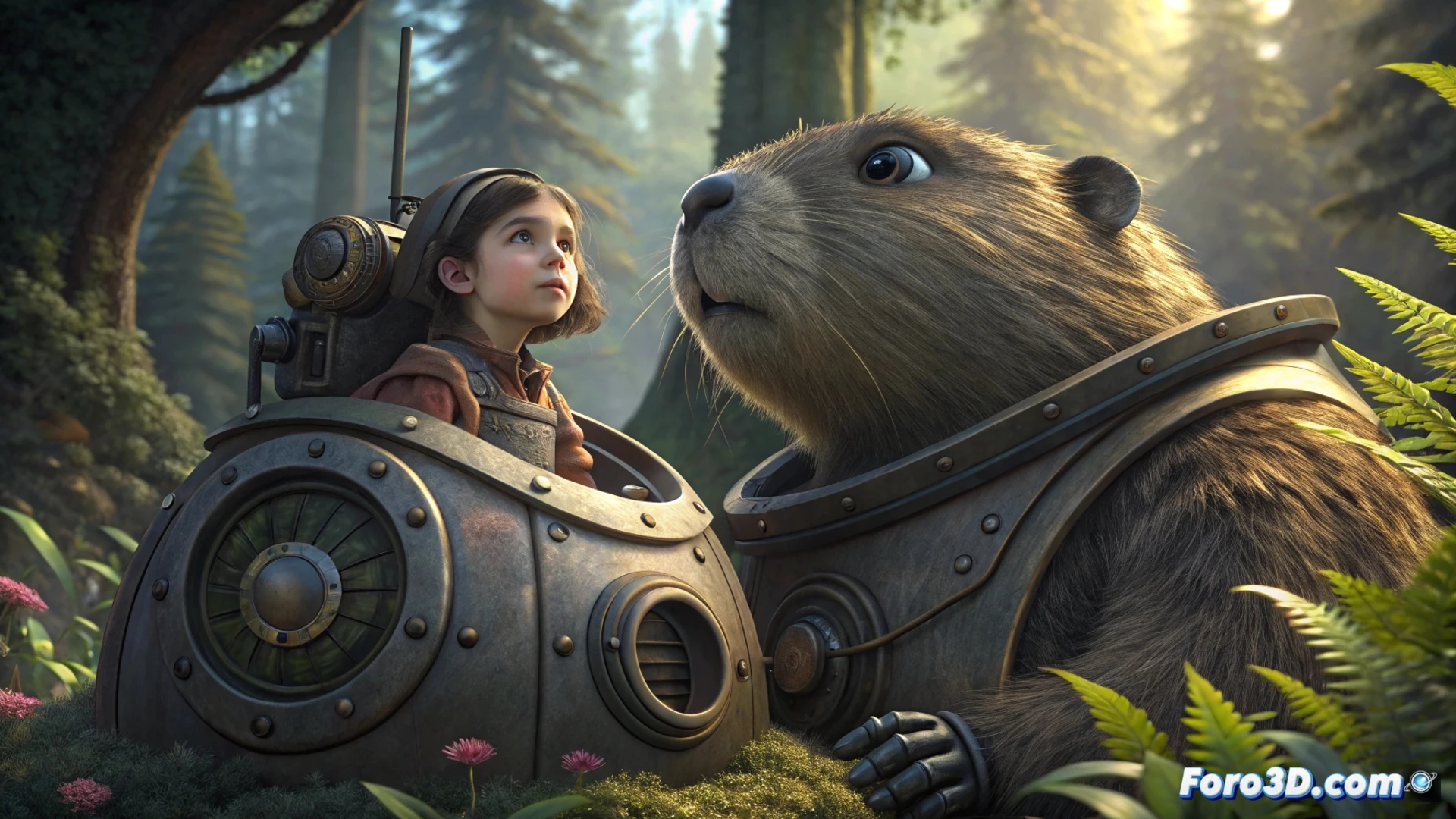
3D Technology in Service of Storytelling: The Case of the Robotic Beaver 🤖
The technical heart of Hoppers lies in the creation of its protagonist: a believable and expressive robotic beaver. Here, 3D modeling, texturing of metallic and organic surfaces, and complex rigging animation merge. Pixar not only models a machine but endows a hybrid character with soul. The animation of its fur, interaction with digital natural environments, and facial expressiveness require high-quality rendering to convey genuine emotions. This technical-narrative achievement is fundamental for the fantastic premise to feel tangible and emotionally connect with the audience.
A Vote of Confidence for Innovation in Animation ✨
The triumph of Hoppers sends a crucial message to the industry: the public values and rewards original ideas backed by exceptional technical mastery. In a market saturated with sequels, this success reaffirms that 3D animation is a medium to explore new stories, not just a commercial end. Pixar demonstrates that betting on narrative and visual innovation, supported by cutting-edge digital art, remains the most solid path to critical and commercial success.
How does Pixar's visual storytelling and technical mastery in Hoppers redefine the potential of original 3D animated cinema to connect with global audiences?
(P.S.: Previz in cinema is like the storyboard, but with more chances for the director to change their mind.)