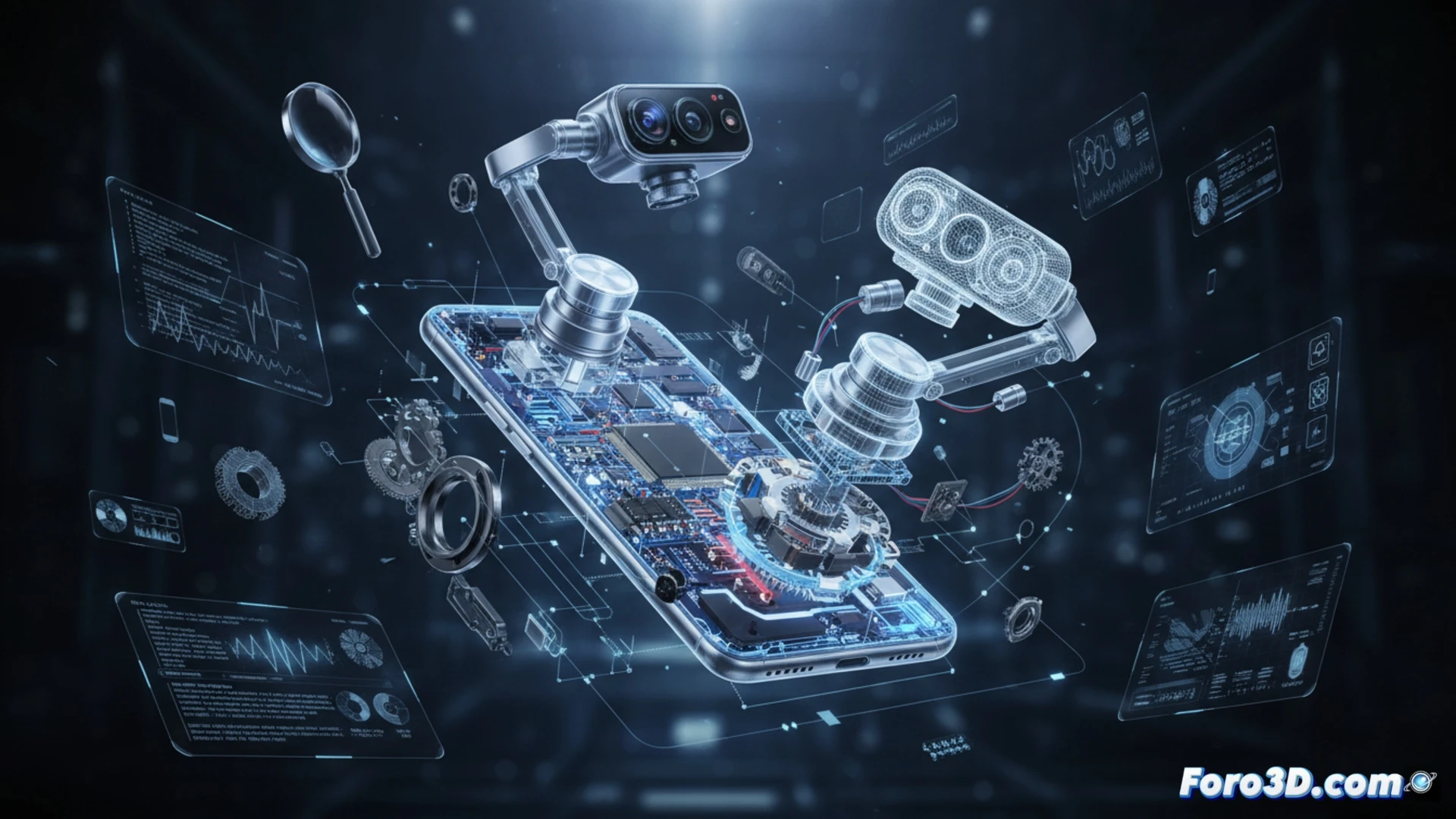
Honor has presented an experimental prototype called Robot Phone, which integrates a three-axis robotic gimbal that deploys from the back of the phone. Controlled by AI, this physical mechanism automates video and photo capture, tracking subjects and maintaining focus. As a reverse engineering object, this concept is fascinating: it represents a complex and miniaturized electromechanical system, encapsulated in a mobile form factor, whose design and operating principle deserve to be digitized and studied before it perhaps disappears without reaching the market.
Challenges in Digitizing a Deployable Mechanism 🤔
The reverse engineering of this device poses significant technical challenges. The first step would be to 3D scan the mechanism both at rest and deployed, which requires techniques that accurately capture very small moving parts and their spatial relationships. The resulting CAD model must simulate the kinematics of the three-axis gimbal, the internal motors, and the deployment system. An accurate digital twin would allow analysis of stresses, ranges of motion, and potential failure points, as well as understanding how the AI controls the physical hardware. This digitization would preserve the concept for future study, even if the hardware is never mass-produced.
Preserving Innovative Concepts through Digital Twins 💾
The true utility of reversing this prototype goes beyond technical analysis. Creating an interactive and functional 3D model of the Robot Phone serves to archive an innovative solution at an early stage of its development. This digital twin becomes an educational and inspirational tool for the community, allowing exploration of the integration of robotics into everyday devices. In a niche like reverse engineering, documenting and virtually disassembling these pioneering ideas is crucial for advancing original design and understanding the boldest technological trends.
What reverse engineering methodologies would be key to analyzing and replicating the three-axis robotic gimbal control system of the Honor Robot Phone prototype?
(P.S.: if the CAD model doesn't fit, you can always say it's industrial tolerance)