The Honda HR-V e:HEV is a compact hybrid SUV that prioritizes efficiency and functionality. Its fuel consumption of 5.3 liters and its reliability are notable, but its development is a case study for 3D technology. From the aerodynamics of its coupé-style silhouette to the ergonomics of its interior, every detail is optimized through digital modeling and simulation, demonstrating how these tools are fundamental in modern automotive engineering.
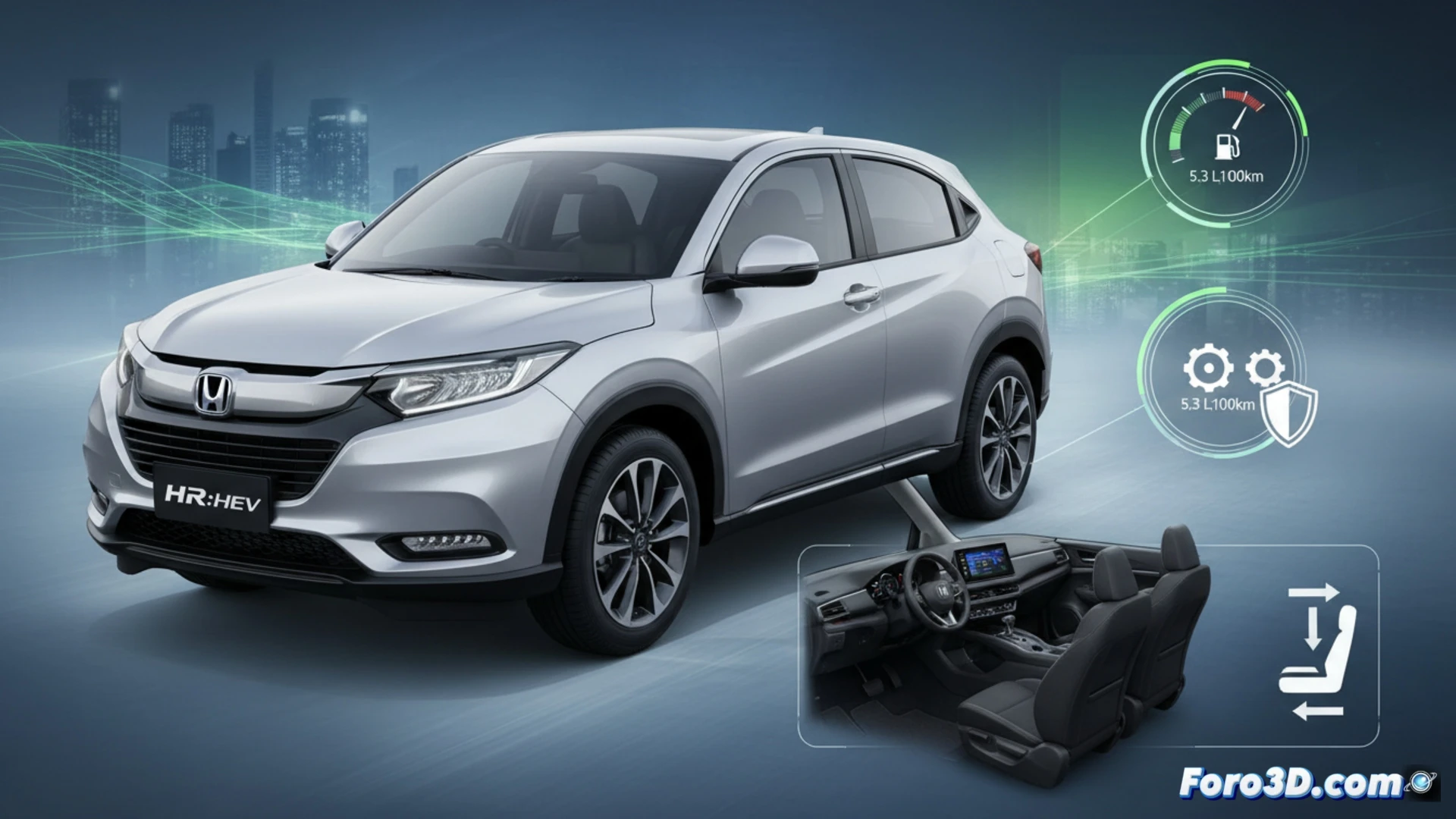
3D Simulation: the heart of the hybrid system and modularity 🧠
The true innovation of the HR-V is designed and validated in virtual environments. The e:HEV hybrid system, with its complex power control unit, is modeled in 3D to simulate energy flows, thermal management, and durability before it physically exists. Similarly, the famous magic seats are an exercise in 3D-assisted engineering, where their kinematics, structural strength, and multiple configurations are tested in a virtual space, ensuring their unique versatility and robustness.
3D as a bridge between engineering and the end user 👁️
Beyond design, 3D is crucial for communicating these innovations. Animations and detailed renders allow explaining to the public how the hybrid system works or how the seats transform, making complex technology tangible. Thus, the HR-V is not only a product of 3D engineering, but its value is best appreciated thanks to the visualization and disclosure tools that this same technology provides.
How does 3D modeling influence the aerodynamic optimization and integration of the hybrid system in the design of the Honda HR-V e:HEV to achieve its declared low fuel consumption?
(P.S.: simulating an ECU is like programming a toaster: it seems easy until you ask for a croissant)