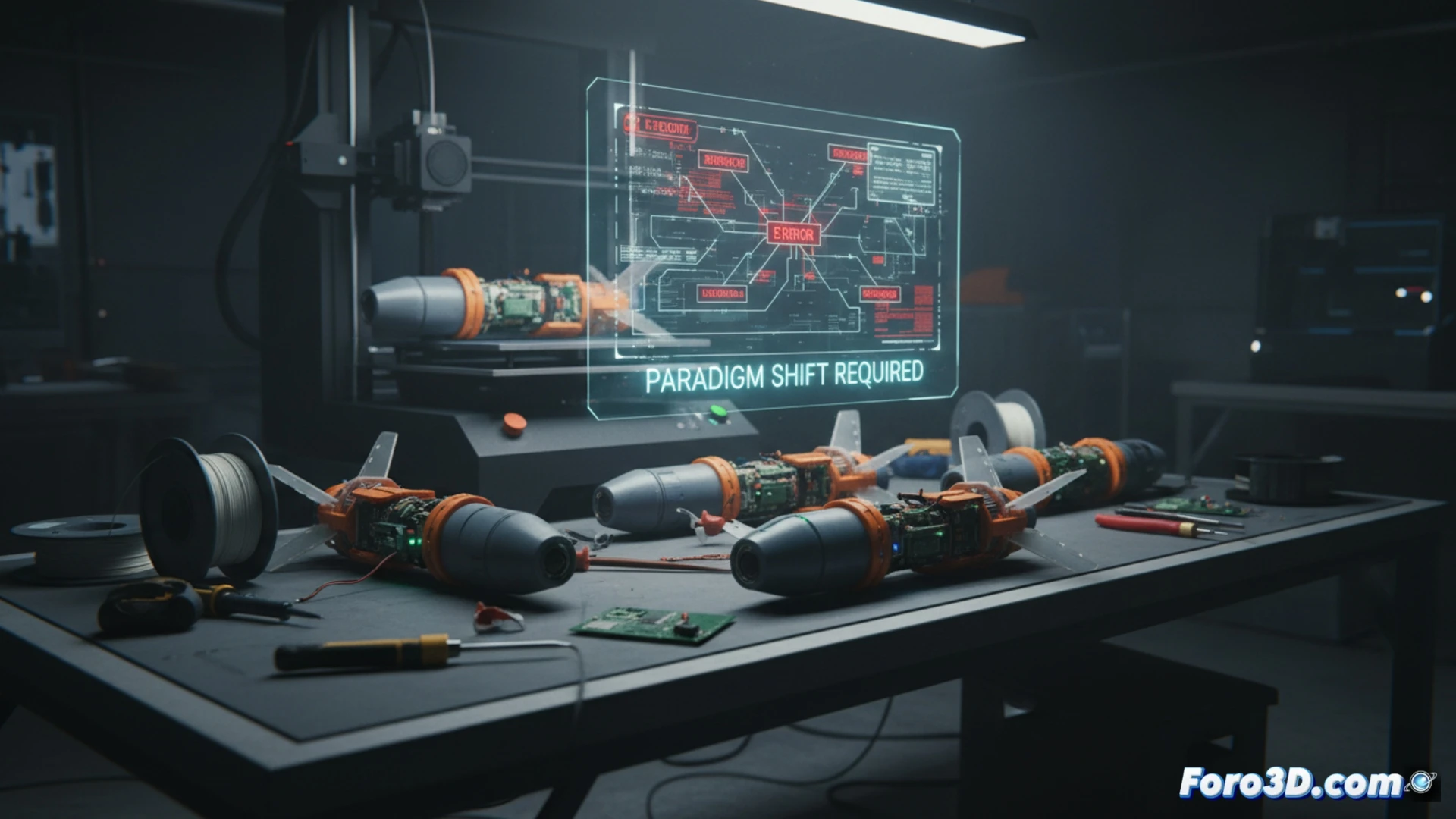
The evolution of 3D-printed weapons to homemade guided missiles marks a turning point in global security. This technological leap, achieved with accessible components and knowledge, exposes the profound incapacity of current regulatory frameworks, designed to control traditional industrial manufacturing and distribution. The challenge is no longer just a weapon, but a complete weapons system created outside any regulated channel, completely blurring existing control mechanisms.
The dematerialization of manufacturing as a systemic risk 🧨
The core of the problem is the dematerialization of the supply chain. Classical regulation acts on physical objects, tangible components, and identifiable factories. However, a digital design file, an assembly manual, and generic or locally printed parts bypass all those control points. Guidance technology, previously exclusive to the military, now relies on open-source hardware and available software. This shifts the barrier of advanced armament from access to specialized materials to technical knowledge, which is inherently more difficult to restrict and track through traditional laws.
Towards compliance for the digital manufacturing era ⚖️
The response must be equally systemic. It requires evolving from object control to capability supervision. This implies exploring digital verification frameworks for designs, accountability on file distribution platforms, and compliance standards for 3D printer manufacturers and critical components. Mitigation is not in prohibiting the technology, but in integrating technological and legal safeguards that increase the detectability and attribution of illicit acts, redefining control for a decentralized production environment.
How should digital compliance legal frameworks evolve to regulate the manufacturing and distribution of advanced 3D-printed weapon blueprints, in the face of the threat of homemade guided missiles?
(P.S.: at Foro3D we know that the only compliance that works is the one tested before, not after)