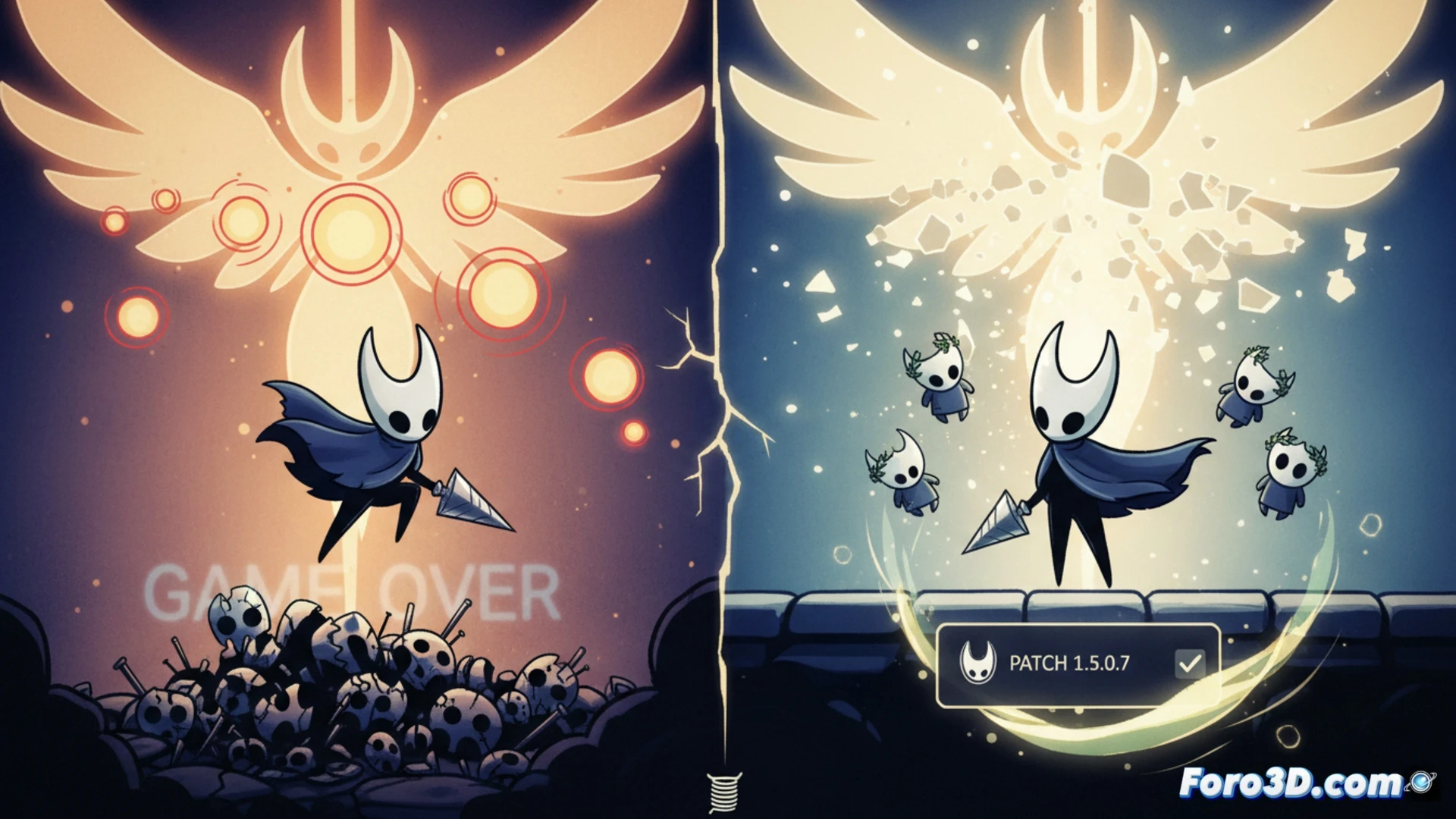
After nearly a decade, Hollow Knight receives a patch that fixes a persistent bug in the final fight against the Radiance. The glitch affected the attack orbs, whose hitbox remained active in the air for an instant longer than it should, causing hits perceived as unfair. The community, while celebrating the fix, reacts with a mix of irony and resignation, especially those who overcame the challenge on Radiant difficulty with the bug active. This adjustment arrives at a time of renewed interest, possibly driven by the anticipated sequel, Silksong. 🎮
Technical analysis of the bug and its impact on balance 🐛
The specific bug consisted of a discrepancy between the visual animation of the light orbs and their actual damage hitbox. After being dodged or destroyed, the collision zone remained active for a few additional frames, punishing the player who had already executed the correct evasion action. This type of subtle error is critical in a precision game like Hollow Knight, where balance relies on visual reading and millisecond reactions. Its persistence for years underscores the complexity of post-launch support, even for an acclaimed title. The fix, though late, ensures a fairer and more predictable boss experience, aligning the mechanics with visual feedback, a pillar of action game design.
Development lessons and community legacy 📚
This case is a study on players' adaptation to technical imperfections. Many mastered the fight by internalizing the bug's erroneous timing, demonstrating a tenacity that now becomes legendary. For developers, it highlights the importance of reviewing and polishing even finalized content, especially when an imminent sequel draws new audience to the original title. The patch does not invalidate past achievements but enriches the game's history, serving as a reminder that development is a continuous process and the player experience is its ultimate and most important metric.
How does the correction of long-standing bugs in established games affect the player experience and the preservation of the developer's original design?
(P.S.: game jams are like weddings: everyone happy, no one sleeps, and you end up crying)