The automotive industry, still recovering from the semiconductor shortage of the pandemic, faces a new global crisis. The trigger is the conflict in Iran, which threatens to disrupt the supply of helium, a gas critical for chip manufacturing. One third of the world's helium production, a byproduct of natural gas, comes from Qatar, whose export capacity has already suffered attacks. Analyses indicate that a prolonged war lasting more than two months would trigger a critical situation, with serious supply problems, increased costs, and long waits for vehicle delivery.
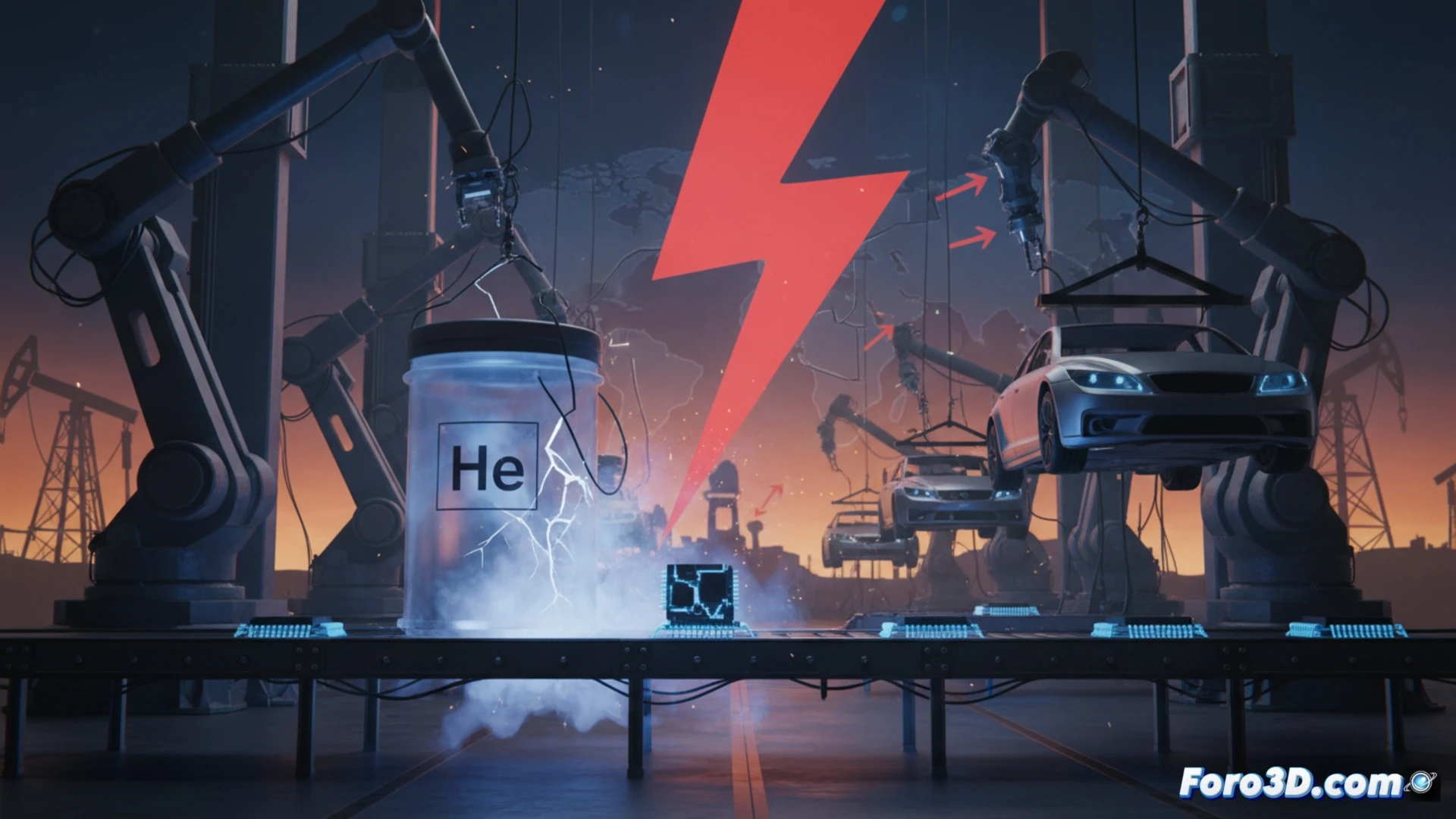
3D Visualization of the Critical Route and Failure Points 🗺️
To understand the vulnerability, we propose a 3D model that maps the critical helium route. The visualization would start from the gas liquefaction plants in Qatar, follow the maritime route through the Strait of Hormuz, a first high geopolitical risk node. Then, it would trace the distribution to semiconductor plants in Asia, Europe, and America, and finally to vehicle assembly plants. A complementary interactive model could simulate the domino effect: an interruption in the Persian Gulf would first paralyze the production of specific chips, then premium car assembly lines, and progressively affect the entire industry, evidencing the fragility of each link.
The Fragility of Global Interdependence ⚖️
This potential crisis goes beyond the automotive sector. It evidences the dangerous concentration of critical resources in unstable regions and the hyperdependence on extremely thin and optimized supply chains. The lesson is clear: resilience must take priority over utmost efficiency. Diversifying sources of materials like helium and the strategic reevaluation of inventories are geoeconomic imperatives for an industry that can no longer afford to ignore political risk maps.
How would you simulate the impact of a conflict in a region on global production? 🚗💥