For the 3D and post-production professional, the screen is their final canvas. The arrival of HDR formats has complicated the choice, as it's not just about viewing content, but ensuring that our renders, textures, and lighting are displayed with absolute fidelity. Understanding the differences between HDR10, Dolby Vision, and HDR10+ is crucial for selecting a monitor that not only displays vibrant colors, but preserves the artistic intent in every shadow and highlight detail, regardless of the device where the end client views the work.
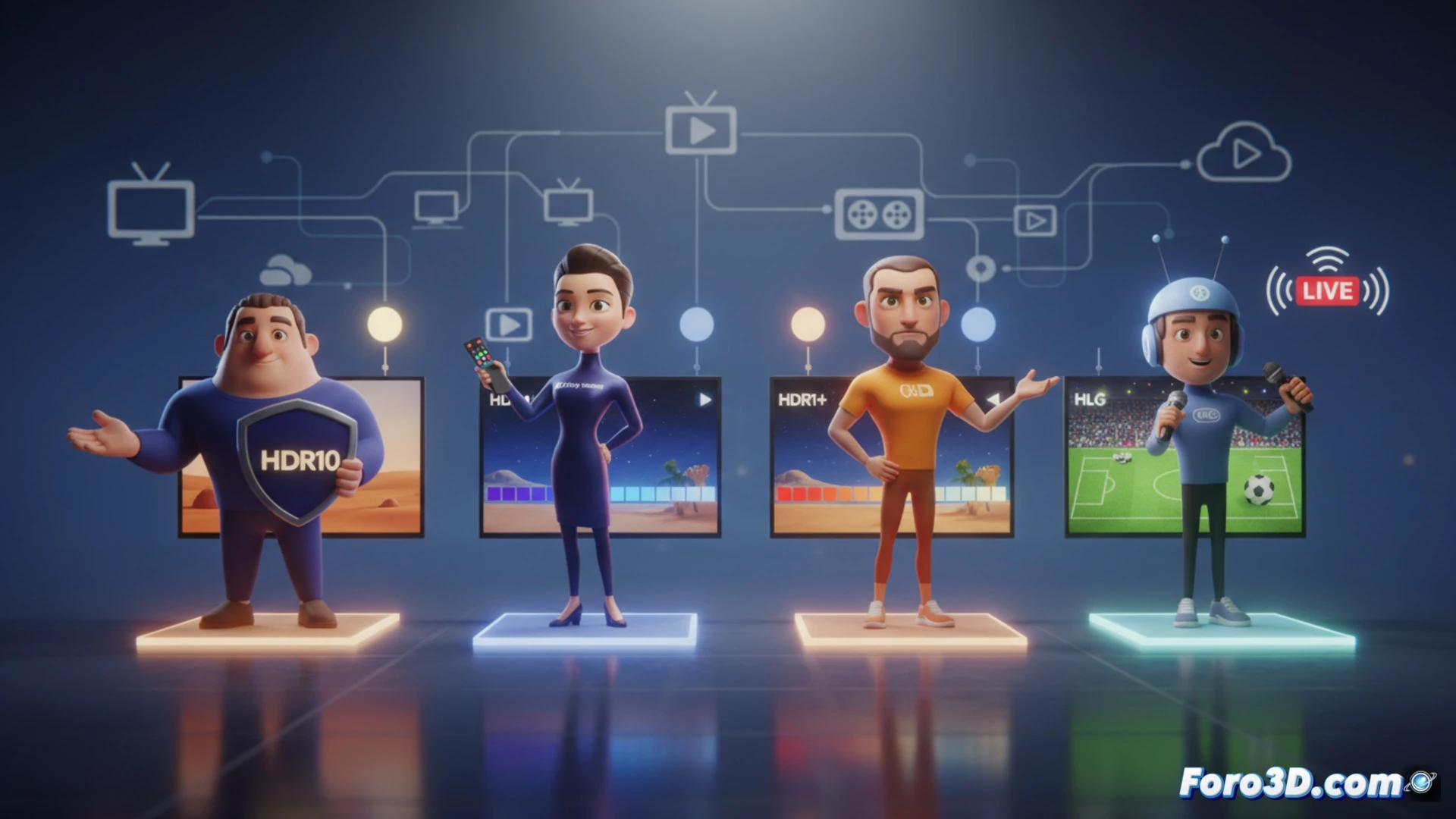
Technical Analysis: HDR10, Dolby Vision, and HDR10+ for 3D Workflow 🧪
HDR10 is the base standard, mandatory on TVs and common on monitors. It uses static metadata: a single maximum brightness and color setting for the entire content. In 3D, this can cause scenes with high dynamic range to lose detail in extreme lights or darks when exporting. Dolby Vision and HDR10+ use dynamic metadata, adjusting brightness and color scene by scene or even frame by frame. This precision is invaluable for evaluating complex renders with real HDR lighting, ensuring that what we see on screen is exactly what we've created. For a professional monitor, prioritize support for HDR10+ or Dolby Vision, sustained high brightness (minimum 600 nits, ideal 1000), and wide coverage of gamuts like DCI-P3 and Adobe RGB.
The Professional Choice: Fidelity Over Compatibility 🎯
The final decision should not be based solely on which format Netflix supports, but on what our pipeline needs. If your work culminates in streaming, a monitor with Dolby Vision can offer the most accurate reference. For more diverse projects, HDR10+ is a solid open alternative. The ultimate goal is to invest in hardware that guarantees visual coherence: that the texture adjustments, global lighting, and particle effects you make translate faithfully to any medium, from cinema to video games, without surprises in the darkest tones or brightest reflections.
How does the choice of a specific HDR standard (HDR10, Dolby Vision, HLG) affect the 3D texturing, rendering, and post-production workflow, beyond its usual use in video consumption?
(P.S.: Your CPU heats up more than the Blender vs. Maya debate)