Two years ago, Huawei officially launched HarmonyOS, a strategic move forced by the US blockade that deprived it of Google services. What began as a layer over Android has evolved, according to the company, into a 100% proprietary code base. Today, it stands as a unified ecosystem for phones, wearables, and IoT devices, demonstrating extraordinary corporate resilience and marking a milestone in China's pursuit of technological autonomy against Western dependence.
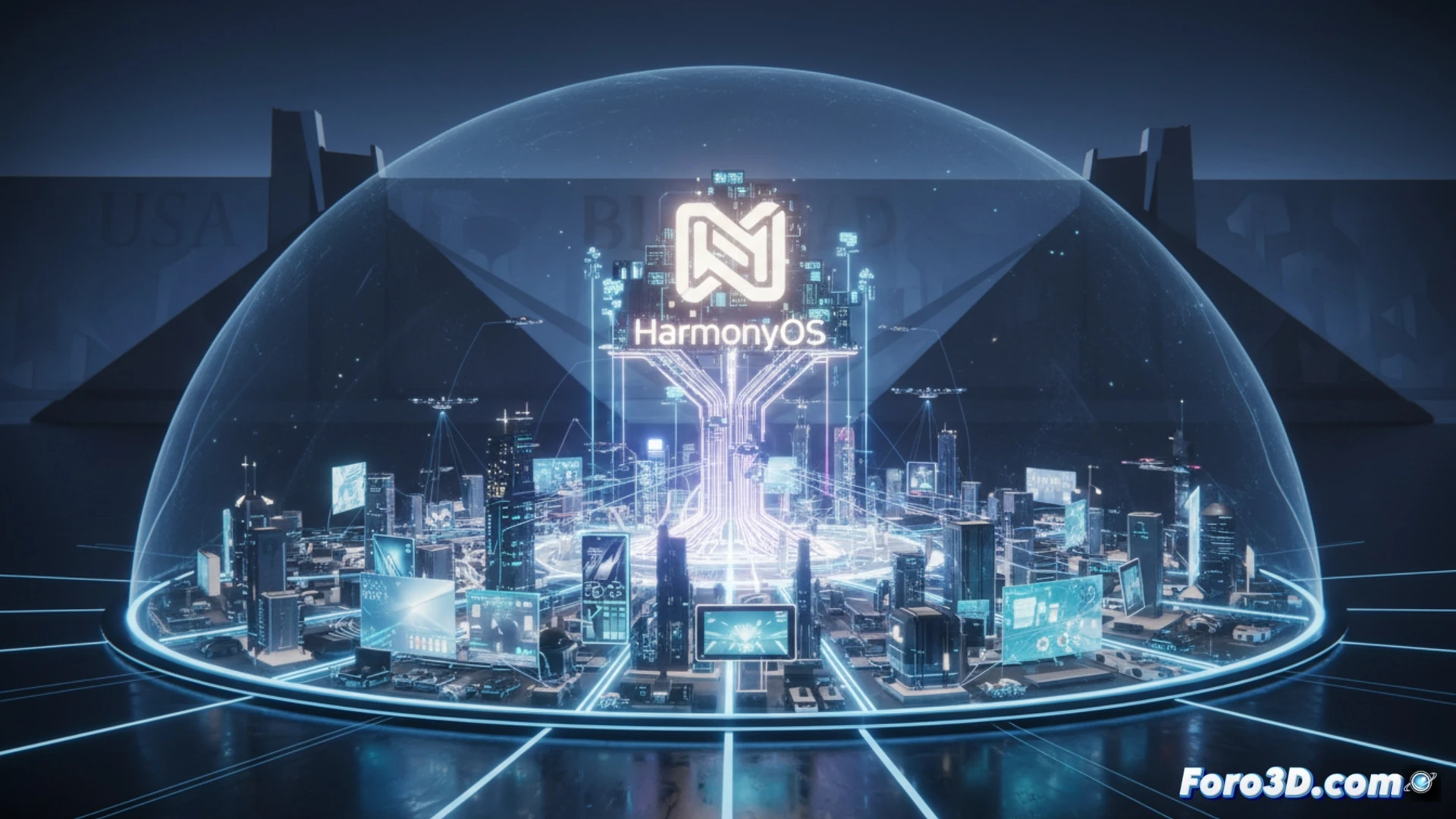
From necessity arises an ecosystem: unified architecture and overcoming fragmentation 🤔
The accelerated development of HarmonyOS addresses two major technical and market challenges. First, the creation of a competitive native applications ecosystem from scratch. Huawei announces that by April these apps will reach the quality of iOS and Android, with the stated goal of surpassing them in user experience. Second, and perhaps its most powerful advantage, is the liberation from Android's endemic fragmentation. By controlling both hardware and software, Huawei ensures massive and uniform update rates, offering a stable and coherent environment. This allows it to compete in its own league, optimized for its hardware and initially focused on dominating the Chinese market.
More than an operating system: geopolitical implications and a new global benchmark 🌍
HarmonyOS transcends the technical. It is a case study on digital sovereignty, where geopolitical pressure forced indigenous innovation. Its success in China proves that viable alternatives to Western duopolies can be built. Although its focus is regional currently, it sets a dangerous precedent for Google and Apple: the possibility of majority markets operating completely outside their ecosystems. Huawei is not just seeking to be a substitute, but to found an independent and open technological standard, redefining the rules of global competition in software and challenging the established technological hegemony.
Can technological sovereignty driven by sanctions, like HarmonyOS, create a truly open and innovative digital ecosystem, or does it perpetuate new silos and global fragmentation?
(P.S.: at Foro3D we know that the only AI that doesn't generate controversy is the one that's turned off)