A serious humanitarian and logistical crisis is unfolding in the Persian-Arabian Gulf. Nearly 20,000 seafarers remain trapped on their ships, prisoners of a maritime blockade imposed by Iran. This situation, resulting from geopolitical escalation, not only represents a ordeal for the crews, subjected to stress and uncertainty, but also turns this strategic route for global oil into a high-risk zone, threatening the stability of the world supply chain.
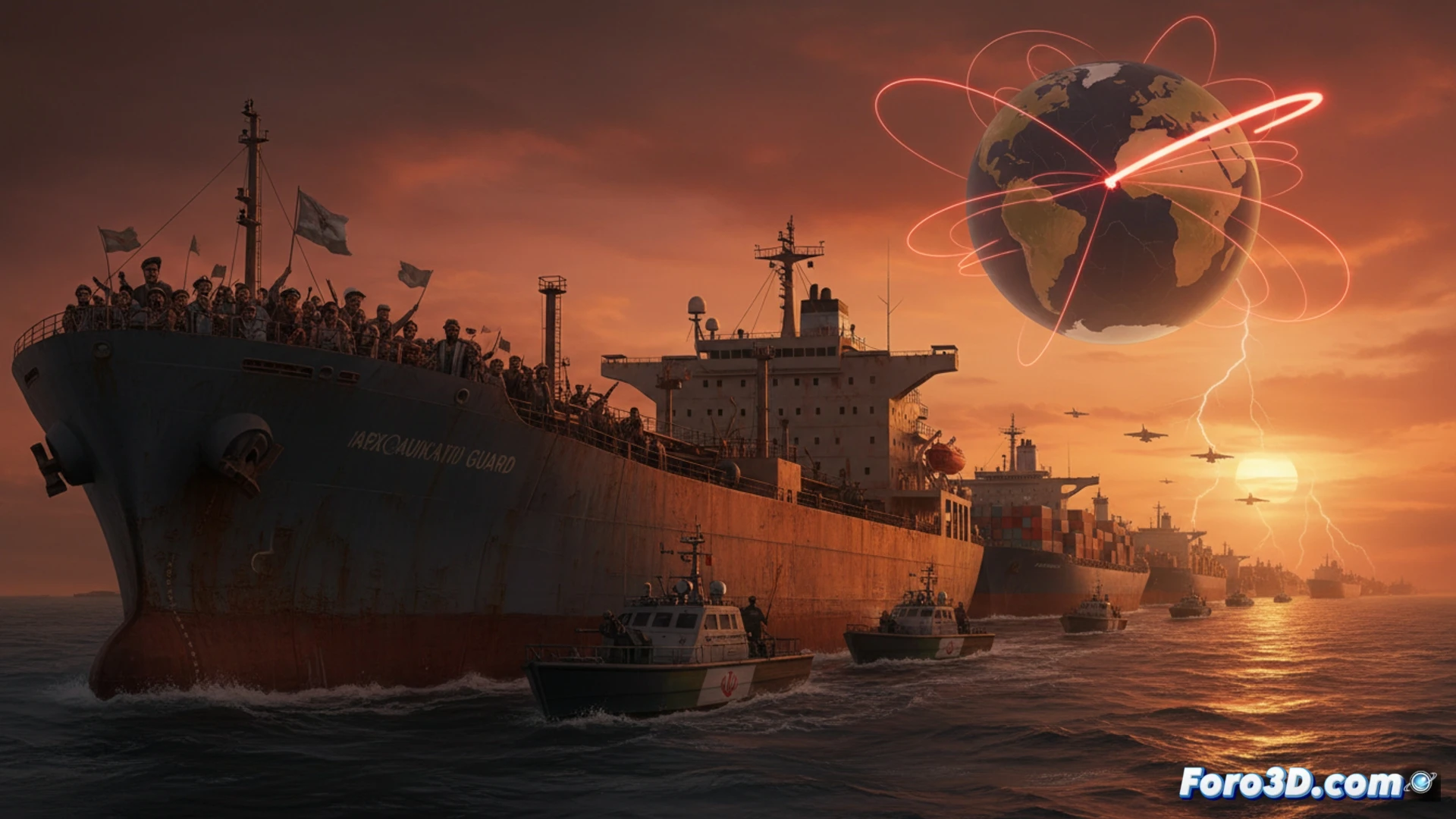
Visualizing the critical point: 3D modeling of the blockade and its logistical impact 🗺️
To understand the true magnitude of this crisis, 3D visualization is a fundamental tool. An interactive model of the blocked maritime corridor would allow geolocating the stranded ships, overlaying the main interrupted crude routes, and mapping the network of global dependencies on this bottleneck. This simulation enables going beyond the news, projecting short- and medium-term impact scenarios. We can calculate volumes of retained oil, simulate route diversions with their costs in time and fuel, and quantify the domino effect on prices and logistics of refineries and destination ports worldwide.
The tangible fragility: when geopolitics grounds globalization ⚓
This crisis, made tangible through 3D modeling, exposes the profound fragility of our interconnected system. A single geopolitical stranglehold point can paralyze tens of thousands of people and jeopardize the vital flow of resources. The situation of these seafarers is the human face of a disruption that reveals how dependent the global economy is on stability in specific maritime corridors, a lesson that must drive more robust resilience strategies for the future.
What visual metrics would you use to show geopolitical dependence on chips?