The startup Brinc has presented Guardian, a drone that aims to replace police helicopters. With 62 minutes of autonomy, 4K and thermal cameras, and global connectivity via Starlink, its proposal is radically economical: about 25 dollars per hour compared to the thousands for a helicopter. For scene analysis experts, this is not just surveillance news, but the announcement of a powerful data acquisition tool for three-dimensional forensic documentation. 🚁
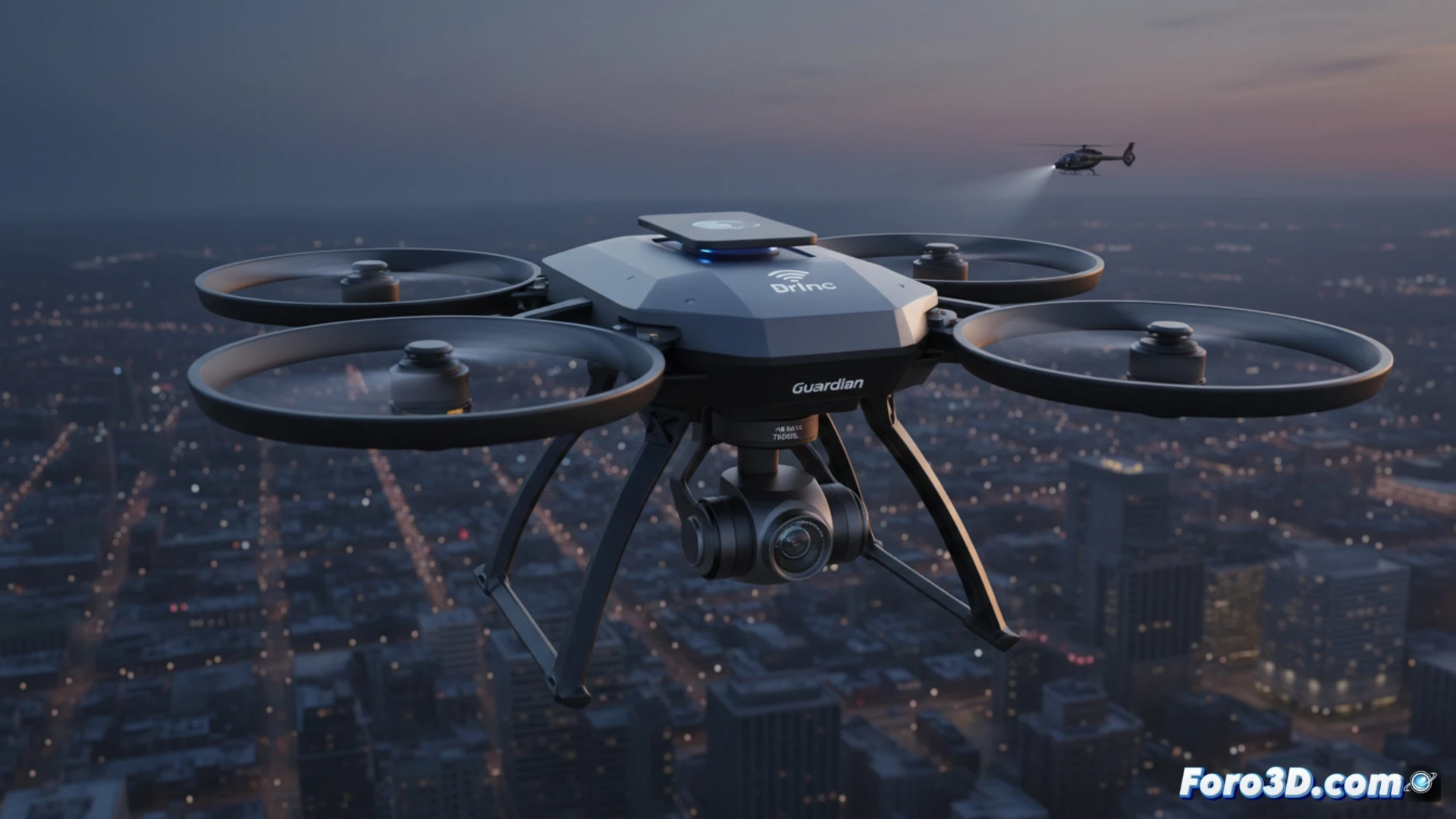
Agile data acquisition for 3D forensic models 📸
Guardian's technical capabilities position it as an ideal capture node for the 3D reconstruction of extensive or hard-to-access scenes. Its 4K cameras provide the necessary resolution to generate dense and textured point clouds through photogrammetry, while the thermal camera can reveal residual evidence or terrain alterations invisible to the human eye. The key is agility: it can be deployed in minutes, orbit a perimeter, and, thanks to Starlink, transmit the image stream in real time to a team that can already start processing in specialized software, generating a georeferenced and updatable 3D model long before investigators set foot on the site.
Democratization and dilemmas of the digital scene ⚖️
Guardian democratizes aerial forensic analysis, allowing departments with limited budgets to document crime scenes, mass accidents, or riots with a level of detail previously reserved for large units. However, this accessibility raises ethical and legal challenges regarding privacy and the massive use of biometric or personal data captured in 3D models. Its integration into the digital chain of custody will require very strict protocols so that this revolutionary documentation tool is also irrefutable evidence in court.
Can Brinc's Guardian drone revolutionize the capture and forensic analysis of crime scenes through faster and more precise 3D reconstructions?
(P.S.: In scene analysis, every scale witness is an anonymous little hero.)