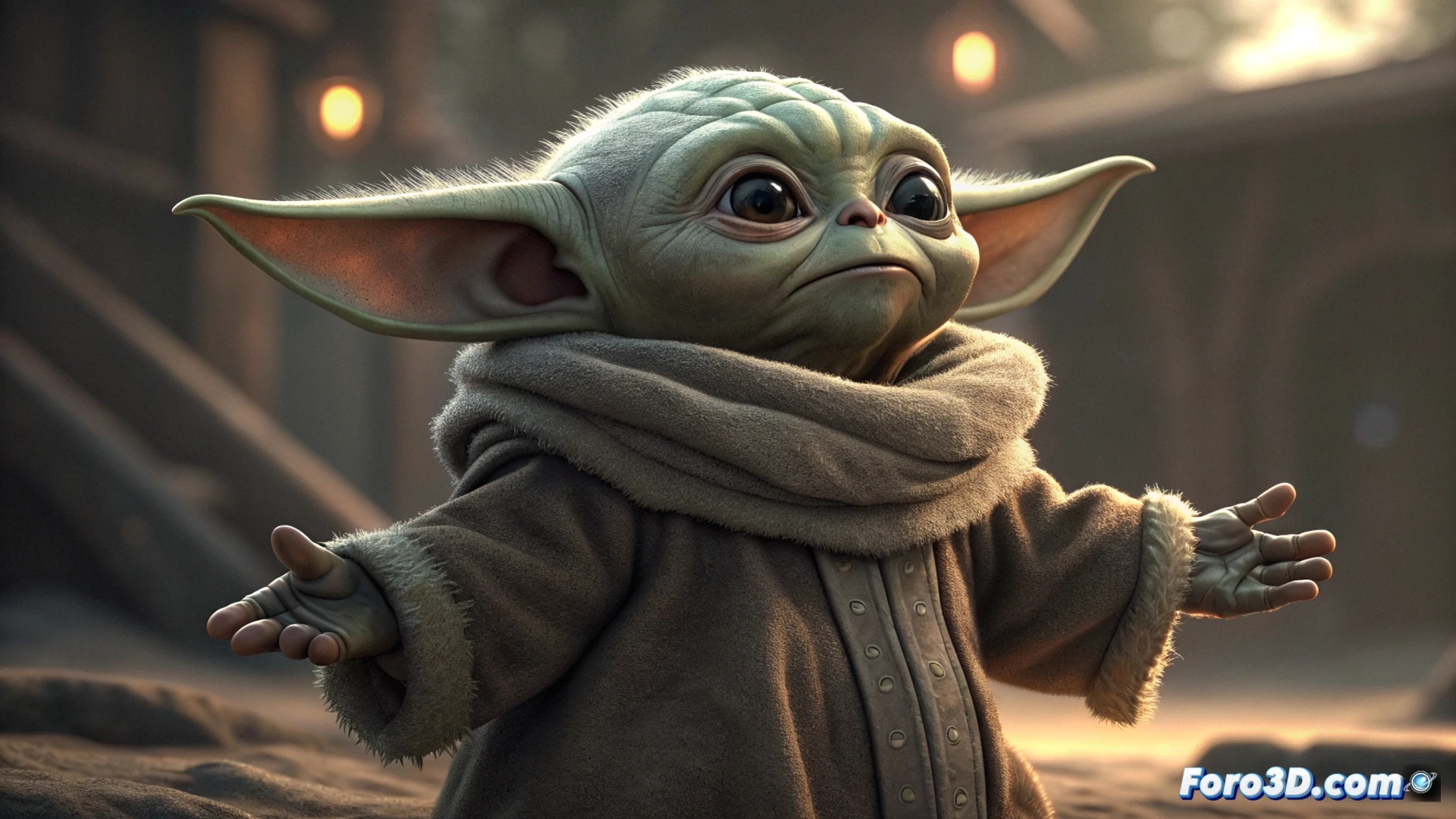
Lucasfilm confirmed that Grogu will not speak in the upcoming movie, debunking speculations from the trailer. This creative decision reinforces that his connection with the audience is purely emotional and non-verbal. In the realm of visual narrative, this represents both a challenge and an opportunity: telling an epic story through a main character who expresses himself only with gestures, guttural sounds, and body language, relying on the power of animation and acting to convey complexity.
3D Animation and Previsualization: Planning Emotion Without Dialogue 🤖
This narrative bet underscores the importance of 3D preproduction. Techniques like 3D storyboarding and previsualization (previz) are crucial for planning every glance, head tilt, or ear movement of Grogu, ensuring they convey the correct intention. Facial and body animation must be exquisite, replacing dialogue. Motion capture tools and advanced rigging allow animators to sculpt pure emotions, where a blink or a sigh carries as much meaning as a monologue, demonstrating that modern 3D cinema masters the language of the implicit.
Silence as a Character Design Tool 🤫
Keeping Grogu speechless is not a limitation, but a profound definition of his character. This choice forces the viewer to empathize on a more intuitive level, reading emotions on screen. For Din Djarin and the audience, Grogu communicates in a universal register, prior to language. This design decision, backed by impeccable technique, reminds us that the essence of visual storytelling lies in showing, not telling, and that the most iconic characters often speak loudest in silence.
How can the decision to keep Grogu as a non-verbal character in the upcoming movie enhance visual narrative and the building of his relationship with the Mandalorian?
(P.S.: Previz in cinema is like the storyboard, but with more chances for the director to change their mind.)