The success in the Greta engine tests by the ESA is not just an engineering achievement, but a triumph of digital simulation. Before the physical hardware existed, a comprehensive digital twin of the engine was subjected to thousands of cycles and virtual scenarios. This process allowed refining the design, predicting critical points, and optimizing performance, drastically reducing the risk and cost of the real test campaign. Greta is a paradigmatic example of how digital twins are already indispensable in space development.
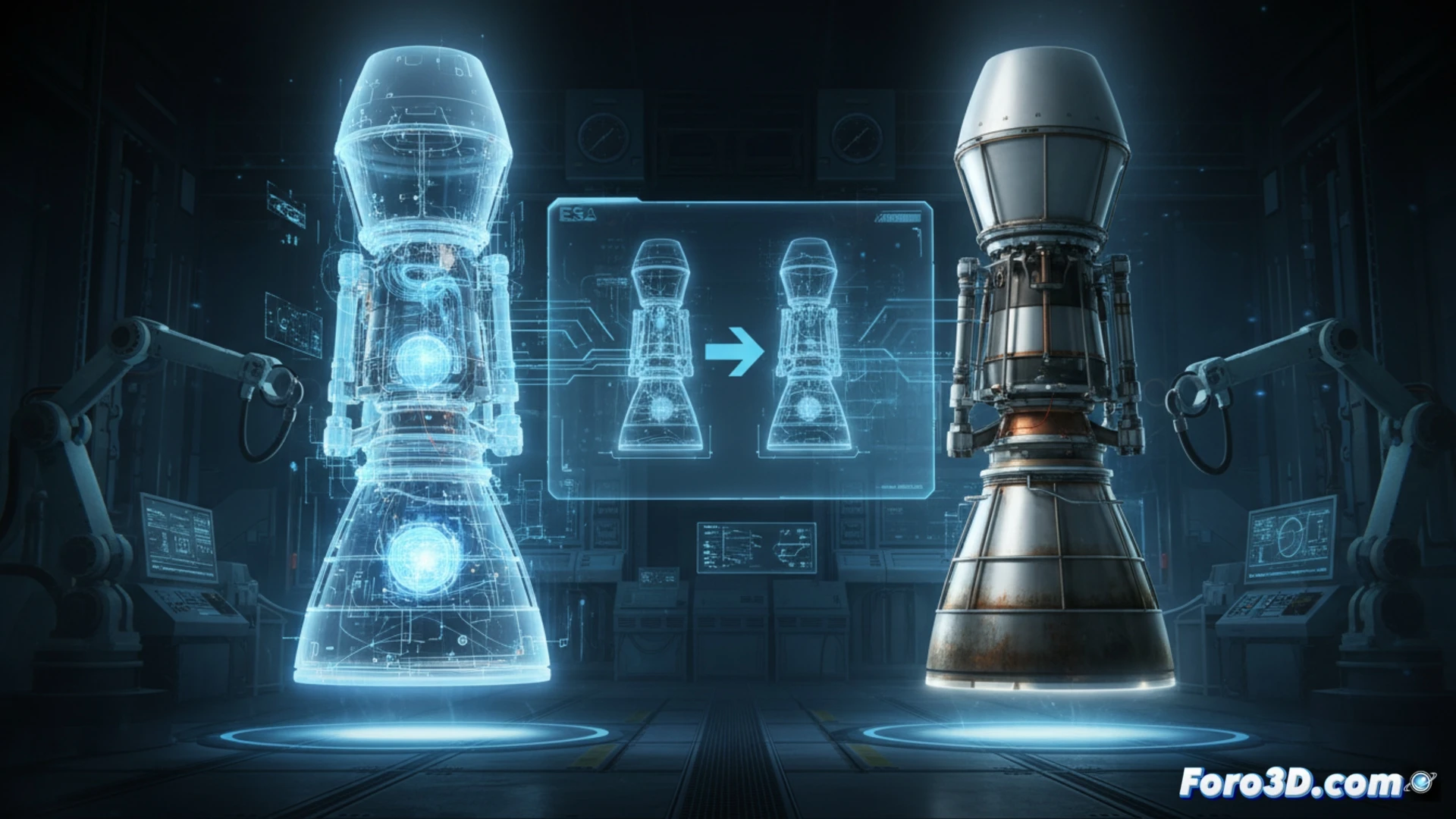
From bits to propulsion: simulation as the primary test bench 🚀
Greta's digital twin was not a static model, but a dynamic system that emulated with high fidelity the extreme physics of cryogenic combustion, thermal and mechanical stresses, and material behavior. Engineers were able to simulate limit conditions and potential failures without endangering any physical prototype. This virtual validation allowed arriving at ground tests with a already mature design, where the trials confirmed what the model had predicted. Thus, the test campaign was not to discover problems, but to certify what the digital twin had already forecasted, accelerating development and ensuring reliability from the concept.
Strategic autonomy built with data 💻
Beyond technical savings, this approach consolidates European strategic autonomy. The ability to develop and validate complex technologies internally, supported by digital twins, reduces dependence on external know-how. Critical knowledge is encapsulated in digital models that can evolve for future launchers. Greta demonstrates that tomorrow's space sovereignty is built today with a solid foundation of data, simulations, and virtual validation.
How are digital twins revolutionizing the design and validation of critical systems like the ESA's Greta rocket engine? 🤔
(P.S.: don't forget to update the digital twin, or your real twin will complain)