In the second installment of Lisa Cheese, The Rock God Complex, Kevin Alvir transcends the anecdote to offer a masterclass in graphic narrative. This visual novel explores the protagonist's musical obsession, using the comic medium not only to tell, but to sensorially capture ambition and creative crisis. Its analysis is crucial for any professional in film and animation, as it breaks down, in panels and page compositions, principles equivalent to 3D previz and storyboarding, showing how rhythm, emotion, and theme are built through the visual.
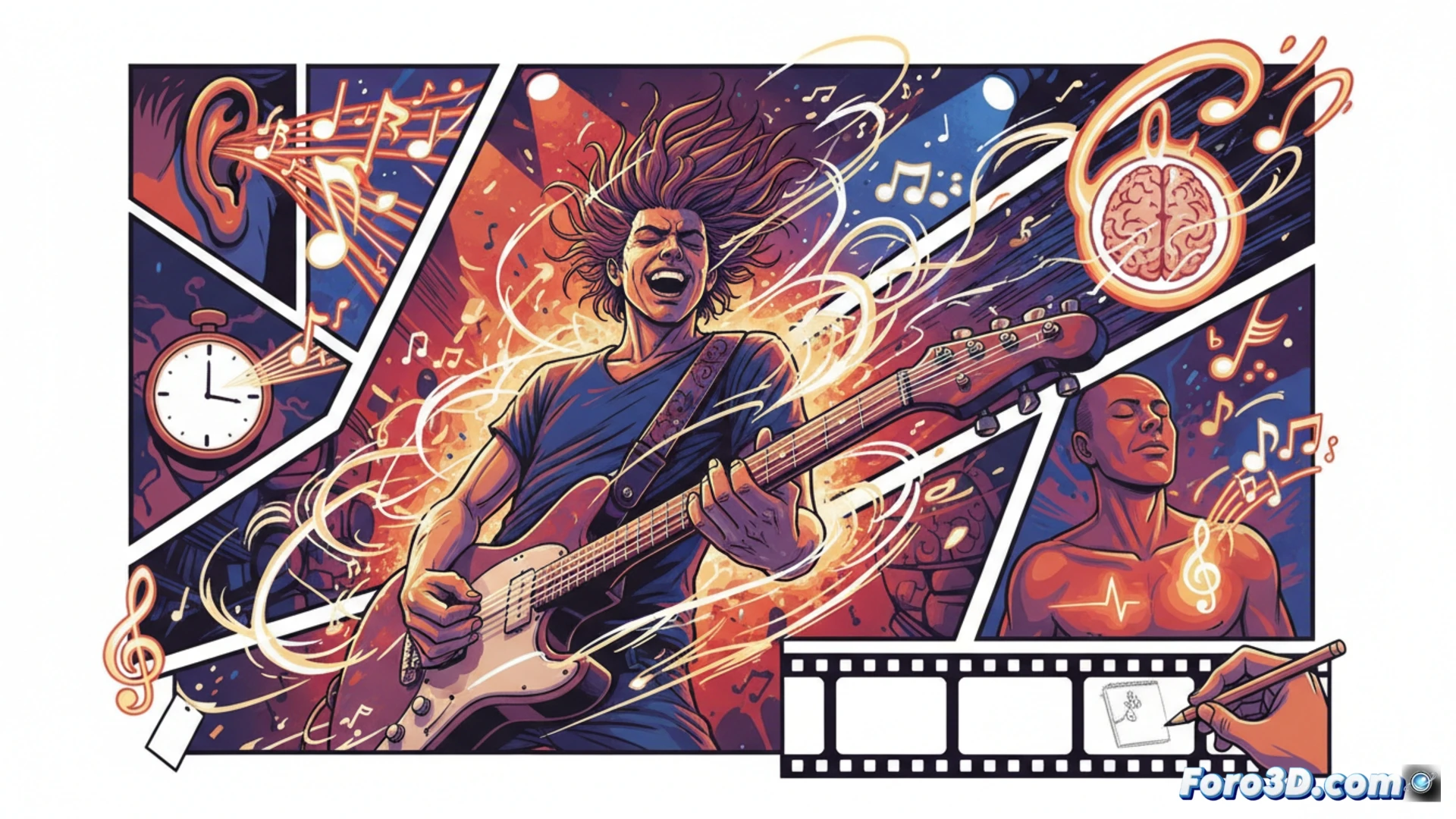
From Panel to Storyboard: Visual Composition and Sequencing 🎬
Alvir handles the page as a film director handles the sequence shot or montage. His distinctive style, with expressive lines and intelligent use of negative space, functions as the concept art of a production. Composition decisions, such as the use of fold-out pages for moments of musical ecstasy or the fragmentation of panels during identity crises, are analogous to the decisions of a cinematographer and an editor. The ghost guitar, a supernatural element, is visually integrated with ethereal strokes that challenge the "realism" of the environment, a visual preproduction technique that defines internal rules for fantastic elements, similar to planning VFX effects in 3D graphic novels. Each transition between panels is calculated to control the reading rhythm, imitating cinematic pacing.
The Preproduction of the Psyche: Visualizing Abstract Themes 🧠
The greatest achievement of this work is how it materializes intangible concepts. Artistic ambition and pressure are not explained with dialogue; they are visualized. We see Lisa compressed by the panel margins, or her figure distorted by a wide-angle lens perspective in moments of anxiety. This reflects the central process of preproduction in film and animation: translating the script's emotion into a concrete image. The Rock God Complex thus serves as an exceptional case study on how graphic narrative tools, siblings of the storyboard, are fundamental for building not only a story, but the psychological experience of a character.
How does Kevin Alvir use visual language and image composition in The Rock God Complex to build the character's psychology and advance the narrative beyond dialogue?
(P.S.: Previz in film is like the storyboard, but with more chances for the director to change their mind.)