In the 90s, creating expansive 3D worlds like those in Tomb Raider III was a battle against the hardware. Without modern GPUs, every polygon and visual effect required an ingenious solution. The Core Design team not only built memorable levels but implemented a set of software rendering techniques that maximized the limited power of the era's CPUs. This analysis unravels the creative engineering behind three key pillars: the portal system, purposeful distance fog, and the celestial sphere, demonstrating how restriction was the mother of invention.
Optimization Techniques: Portals, Fog, and the Fake Sky 🧠
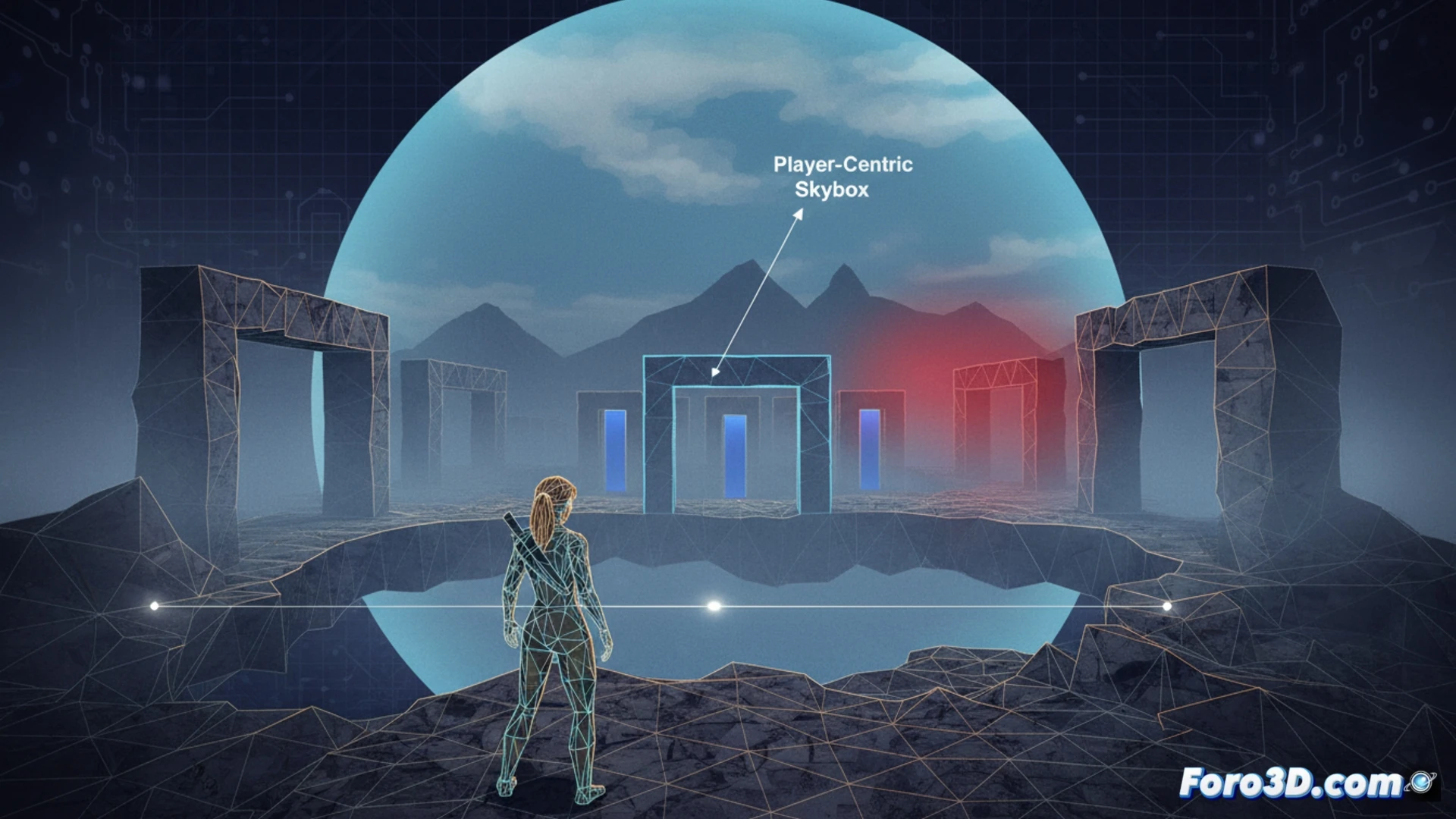
The core of the engine divided the world into "rooms" connected by portals. This visibility system determined which rooms were visible from the camera's position, discarding large portions of geometry due to occlusion that didn't need to be rendered, a vital processing saving. Distance fog, beyond atmosphere, was a practical tool. Along with a dynamically adjusted near clipping plane, it limited the number of polygons drawn in the distance. For the sky, they used a textured celestial sphere centered on the player, rendered without writing to the depth buffer. This allowed simulating an infinite horizon without accidentally occluding level geometry, an elegant and efficient trick.
Lessons from the Software Rendering Era 💡
These solutions go beyond nostalgia; they are lessons in lateral thinking applied to development. The creators understood that optimization was not just fast code, but data design and intelligent visual deception. The portal system influenced level design, the fog defined the ambiance, and the celestial sphere solved a technical problem with elegance. In an era of seemingly unlimited graphical power, remembering these methods underscores the importance of efficiency and pure creativity, principles that remain valid for any developer facing a technical bottleneck.
How did the Tomb Raider III engine manage to render complex 3D environments in real-time without the support of a dedicated GPU? 🤔
(P.S.: a game developer is someone who spends 1000 hours making a game that people complete in 2)