The partial U.S. government shutdown, now on its 42nd day, is a palpable example of democratic dysfunction. The Republican rejection in the House of a bipartisan Senate bill has stalled funding for key agencies. This analysis breaks down the conflict, where the Democratic refusal to fund ICE and CBP without immigration reforms clashes with the Republican demand for full funding, an impasse that only Trump's executive order has partially circumvented.
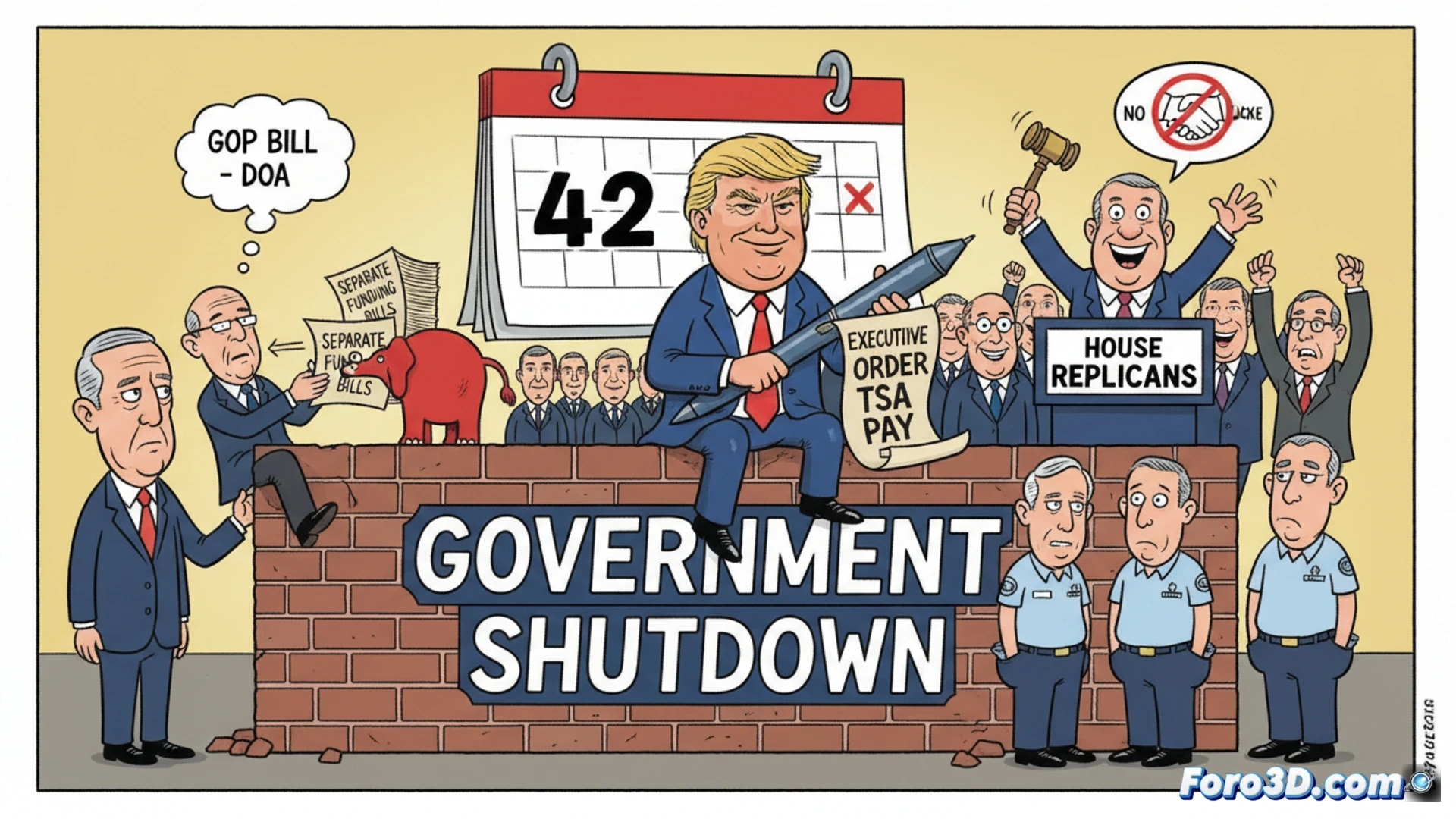
Visualizing the Legislative Labyrinth: From Proposal to Executive Order 🗺️
To understand this blockade, we propose an interactive 3D visualization that traces the path of legislative failure. The model would start with the Senate bill, showing its journey to the Lower House and its rejection by President Johnson. Then, it would map the Republican counterproposal and the veto announced by Senator Schumer, creating a stalemate node. Finally, an emerging branch would illustrate the presidential executive order as a non-legislative escape route. This tool would make partisan veto points and the alteration of institutional checks and balances tangible.
When Politics Paralyzes: Lessons for Citizen Participation 🧠
This case demonstrates how polarization can hijack basic government mechanisms, shifting the solution from the legislative to the executive realm. For citizens, understanding these flows is crucial. Visualizing dysfunction is not just a technical exercise, but a first step toward demanding accountability and functionality from institutions, reinforcing that democracy requires operational channels beyond unilateral decrees.
Could digital democracy mechanisms, such as direct citizen voting platforms on budgets, have prevented or shortened the U.S. government stalemate?
(P.S.: At Foro3D we believe in democracy... and that the render always finishes before the elections) ⏱️