A genetic analysis of remains found in Gothic necropolises in Bulgaria (4th-5th centuries) challenges the traditional view of this people. The Goths did not form a homogeneous group of Scandinavian origin, but a diverse community. The DNA shows varied ancestors: from Scandinavia and the Caucasus to Anatolia, North Africa, and East Asia. This indicates that Gothic identity was cultural, not biological, perhaps cohesive by Arianism.
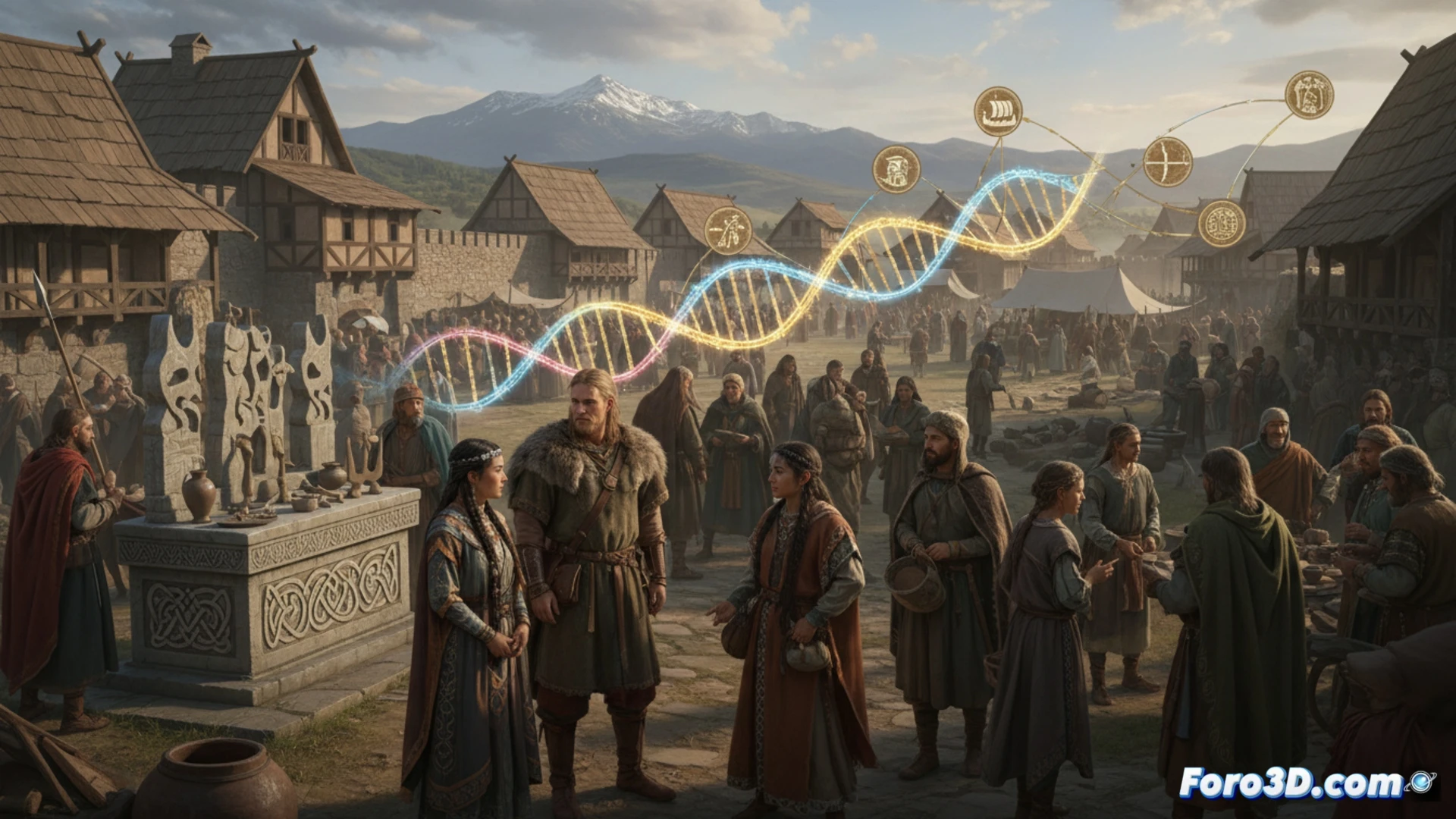
Massive sequencing technology unravels history 🧬
The research was based on high-coverage ancient DNA sequencing, extracted from bone remains from two Bulgarian sites. Using whole-genome capture techniques, the data were compared with global reference databases of ancient and modern populations. Principal component analysis algorithms and admixture models (ADMIXTURE) allowed quantifying ancestry proportions. This technical approach surpasses the limits of traditional archaeological studies, offering unprecedented resolution on population movement and mixing in Late Antiquity.
The Goths: the first server multicultural in history 🤝
With this data, it seems that the famous Gothic migration was less a departure of a closed clan and more a historical rollick that picked up people along the way. Imagine the ad: Warriors wanted to cross Europe. No Scandinavian pedigree required; prior experience in the Caucasus, Anatolia, or beyond valued. Common identity and Arian theological debates offered. What we call barbarian invasions might actually be Europe's first great collaborative and open-source project. In the end, their greatest achievement was not sacking Rome, but creating a cohesive team with a common style guide.