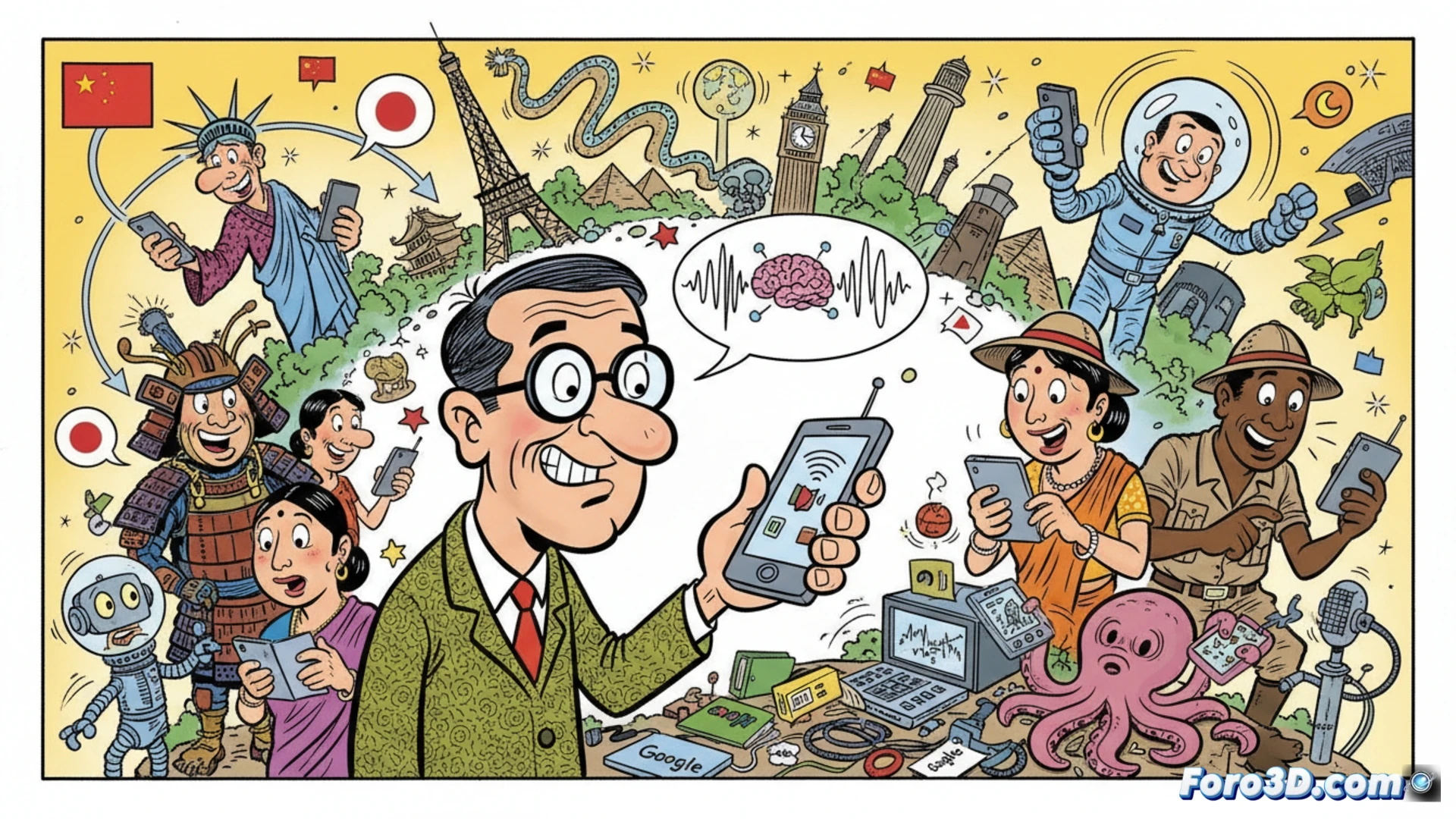
Google has brought its Search Live feature to over 200 countries, transforming search into a conversational and multimodal experience. Users can now point their camera at any object or scene and hold a voice dialogue in their language with an AI about what they see. This tool, accessible from the Google app and Lens, processes audio in real time to eliminate artificial pauses, offering responses based on web results and maintaining the conversation context. It represents a fundamental leap in how we interact with digital information. 🌍
Gemini 3.1 Flash Live: The Engine of Natural Interaction ⚡
The technical heart of this expansion is the new Gemini 3.1 Flash Live model. Its main advance is native real-time audio processing, which enables nearly instantaneous responses and eliminates the awkward pauses of turn-based systems. This model is not only multilingual but also detects emotional nuances in the voice and allows interruptions, approaching the fluency of human conversation. By grounding its responses in real web results, Google seeks to balance conversational immediacy with a verifiable informational base, although this does not exempt it from possible biases or errors in the indexed sources.
Beyond Search: Toward an Omnipresent Assistive AI 🤖
The globalization of Search Live is not just a functionality upgrade; it is a strategic step in the race for assistive AI. It transforms the mobile into an omniscient contextual companion, reducing friction between curiosity and response. This raises profound implications about digital accessibility and the future obsolescence of traditional interfaces. However, its global testing phase also reveals caution in the face of challenges in scaling a system that promises truthfulness, but whose ultimate source is the vast and sometimes chaotic web ecosystem.
How will Google's global conversational search change the way we access and trust information, and what implications does it have for the creation of consensus and polarization in digital society?
(P.S.: tech nicknames are like children: you name them, but the community decides what to call them)