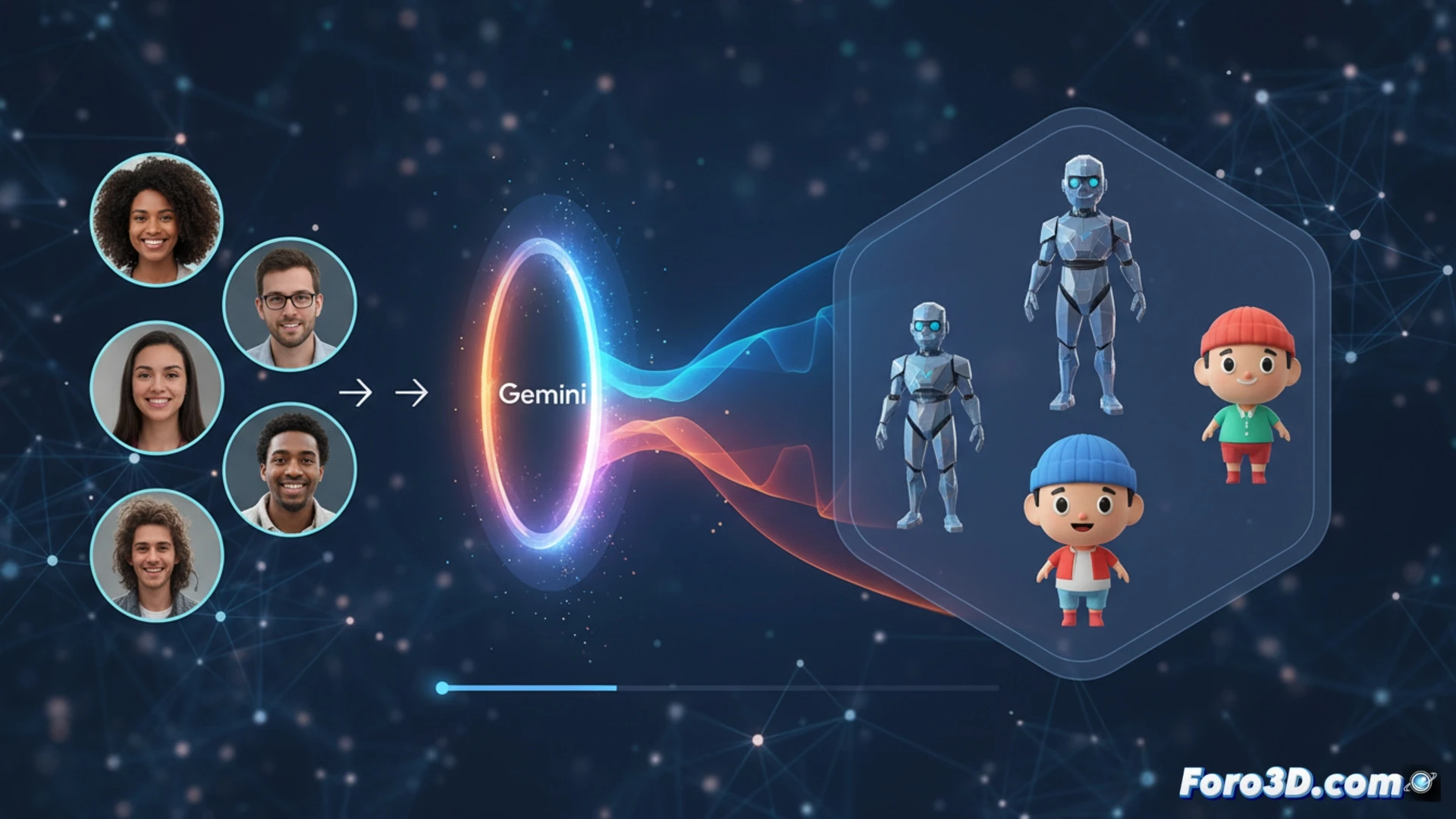
An analysis of the Google Gemini app's code has revealed that the company would be developing a tool to create 3D avatars from users' photographs. This feature, still in the exploration phase, would use the model's artificial intelligence to generate a personalized three-dimensional representation. The ultimate goal is to integrate these digital humanoids into chats, virtual assistants, and other services, offering a new layer of visual identity and personalized interaction in digital environments.
From 2D Photo to 3D Model: The Technical Process and Its Context 🤖
Although Google has not detailed the algorithm, generating a 3D avatar from one or several 2D photos commonly involves computer vision techniques and neural networks. The system must infer the three-dimensional structure of the face and head from flat information, estimating depth, features, and textures. This aligns with existing tools like MetaHuman or some generative AI solutions, but its potential native integration into the Google ecosystem is what makes it distinctive. The key will be in fidelity, processing speed, and the model's adaptability to different angles and expressions for real-time use.
Mass Personalization and the Future of Digital Identity 👤
This exploration by Gemini points to a step toward the democratization of digital humanoids. By simplifying creation to a simple photo upload, it could bring high-quality 3D avatars to millions of users, not just professional studios. This redefines digital personalization, transforming interaction with assistants and in virtual environments from something abstract to an experience with a unique visual identity. It also raises debates about the privacy of biometric data and the authenticity of our digital representations.
Could the integration of Gemini into 3D avatar creation democratize the development of digital humanoids and change the industry standard?
(P.S.: check the rigging before recording, don't let it happen to us like with the UV-less textures!)