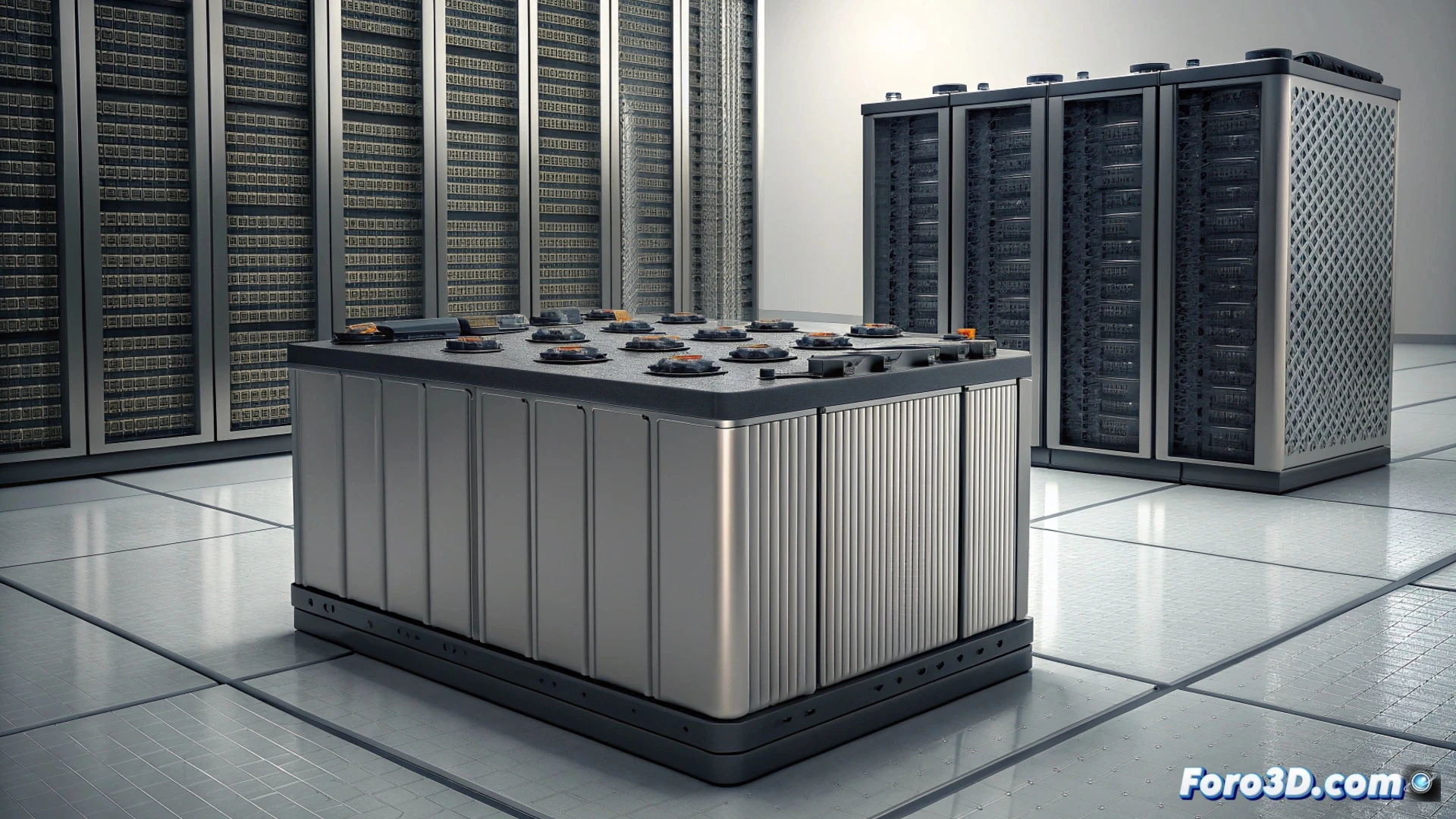
Google has announced a one billion dollar investment in Form Energy to deploy the world's largest battery, iron-air based, in a data center. This system, capable of supplying 300 MW for 100 hours, uses the reversible oxidation of iron, an abundant and cheap material. The move transcends the technical: it is a geopolitical strategy to reduce dependence on lithium batteries, whose supply chain is concentrated and volatile, and to ensure the stable energy demanded by its explosive artificial intelligence consumption.🔋
The Supply Chain Battle: Iron vs. Lithium⚔️
Visualizing these two supply chains in 3D is revealing. Lithium's shows extraction concentrated in the Lithium Triangle (Argentina, Bolivia, Chile) and processing dominated by China, creating bottlenecks and geopolitical risks. In contrast, the iron chain is dispersed, with globalized production and reserves (Australia, Brazil, China, India) and a mature industry. Iron-air technology trades energy density for supply security. For Google, this material diversification is insurance against disruptions, ensuring the continuous operation of critical infrastructures like its data centers.
Strategic reconfiguration of tech companies🧠
This project with Xcel Energy is not just an investment in storage, it is a case study in corporate energy sovereignty. Big tech companies, driven by AI's energy demand, no longer just buy clean energy, but shape technologies to control their base supply. By funding alternatives to critical materials, they seek to decouple from geopolitical tensions and build resilience. It is a step toward autonomous infrastructures, redefining energy security in the digital era.
How does Google's bet on massive energy storage with iron reconfigure the geopolitics of critical supply chains for artificial intelligence?
(PS: visualizing the global supply chain is like following a trail of breadcrumbs... in 3D)